Should You Repair or Replace Your Roof in Tulsa, OK?
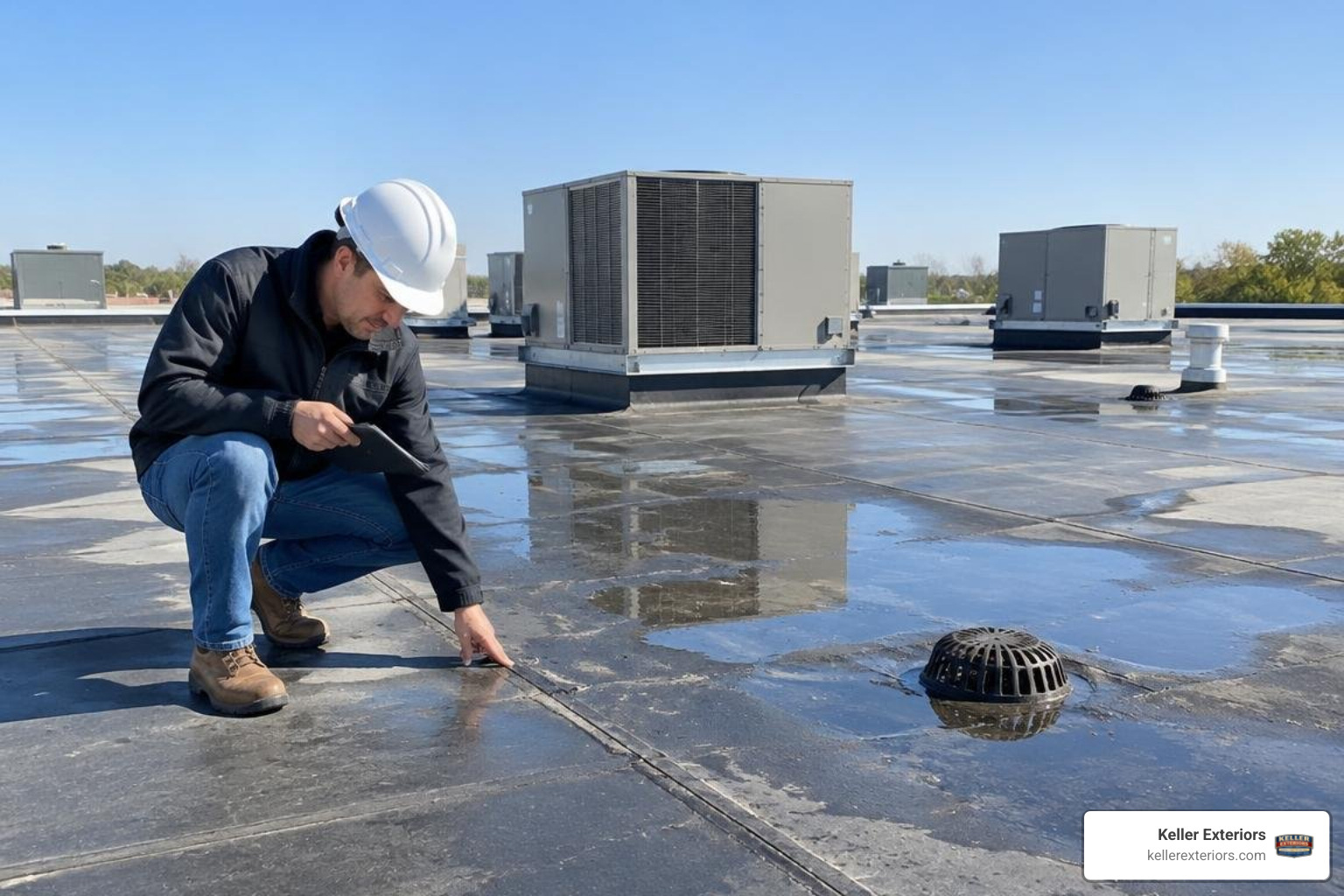
Repair a roof when the damage is limited and the rest of the roof is sound. If you spot a leak, move belongings away from the water, catch drips, and take photos. Then have a roofer check the shingles, flashing, attic, and roof decking before choosing a fix. Widespread damage, repeated leaks, or a sagging roof may point to replacement instead.
Tulsa, OK storms can leave obvious shingle damage or hidden leaks. The right choice depends on what failed, how much of the roof is affected, and how much useful life it has left.
I’m Robert Keller, owner of Keller Exteriors, with more than 25 years in home improvement, including hands-on experience with house roof repair and other exterior work. Here’s a simple way to start weighing repair against replacement.
House roof repair terms to know:
- Emergency roof leak containment
- Cracked roof tile and shingle patching
- Diagnosing hidden water intrusion
Key Factors in House Roof Repair vs. Full Replacement
Making the call between a targeted repair and a full roof overhaul comes down to a few practical metrics. Property owners in Tulsa, OK, Broken Arrow, OK, and Jenks, OK often wonder if a small leak warrants an entire system tear-off.
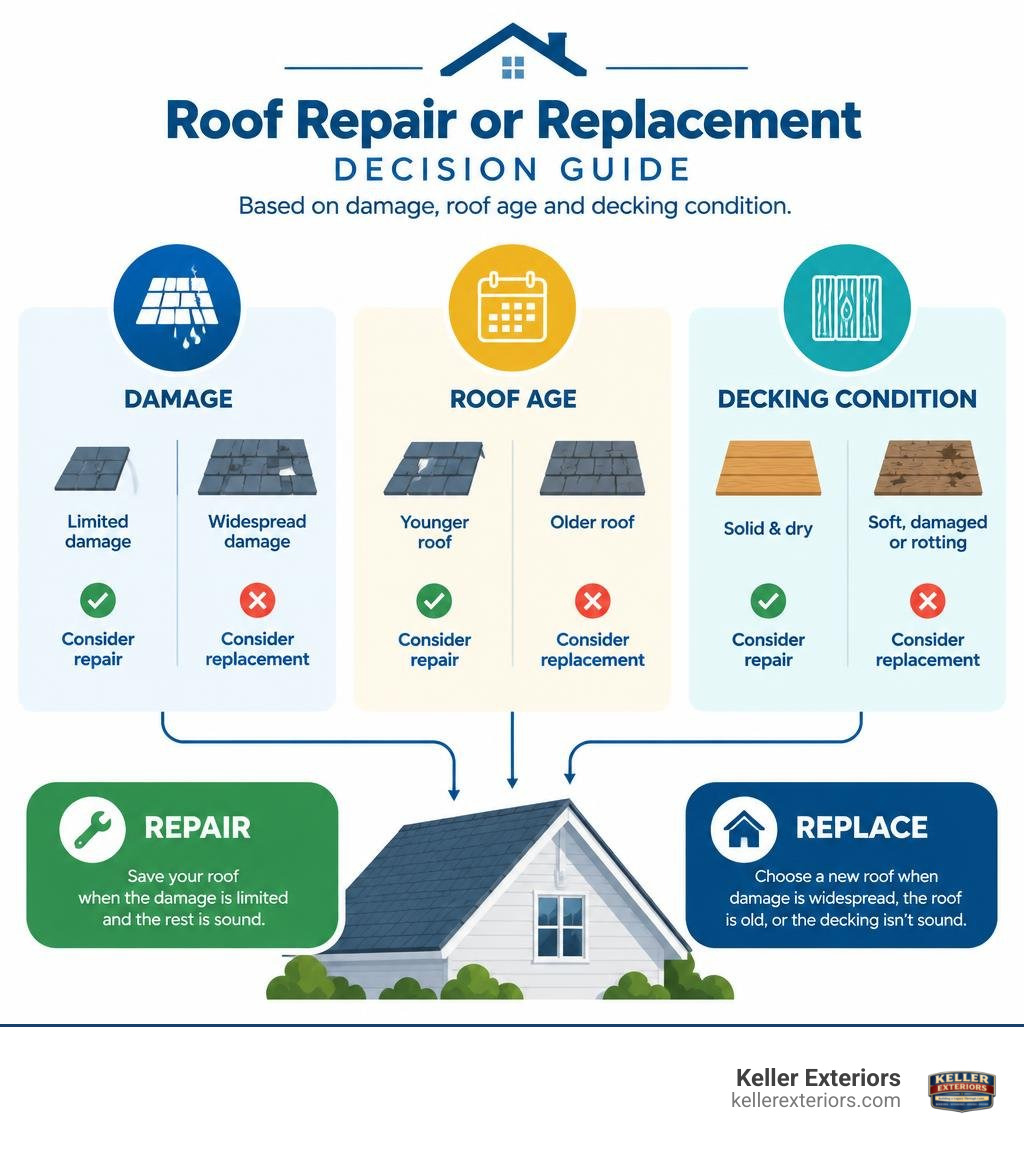
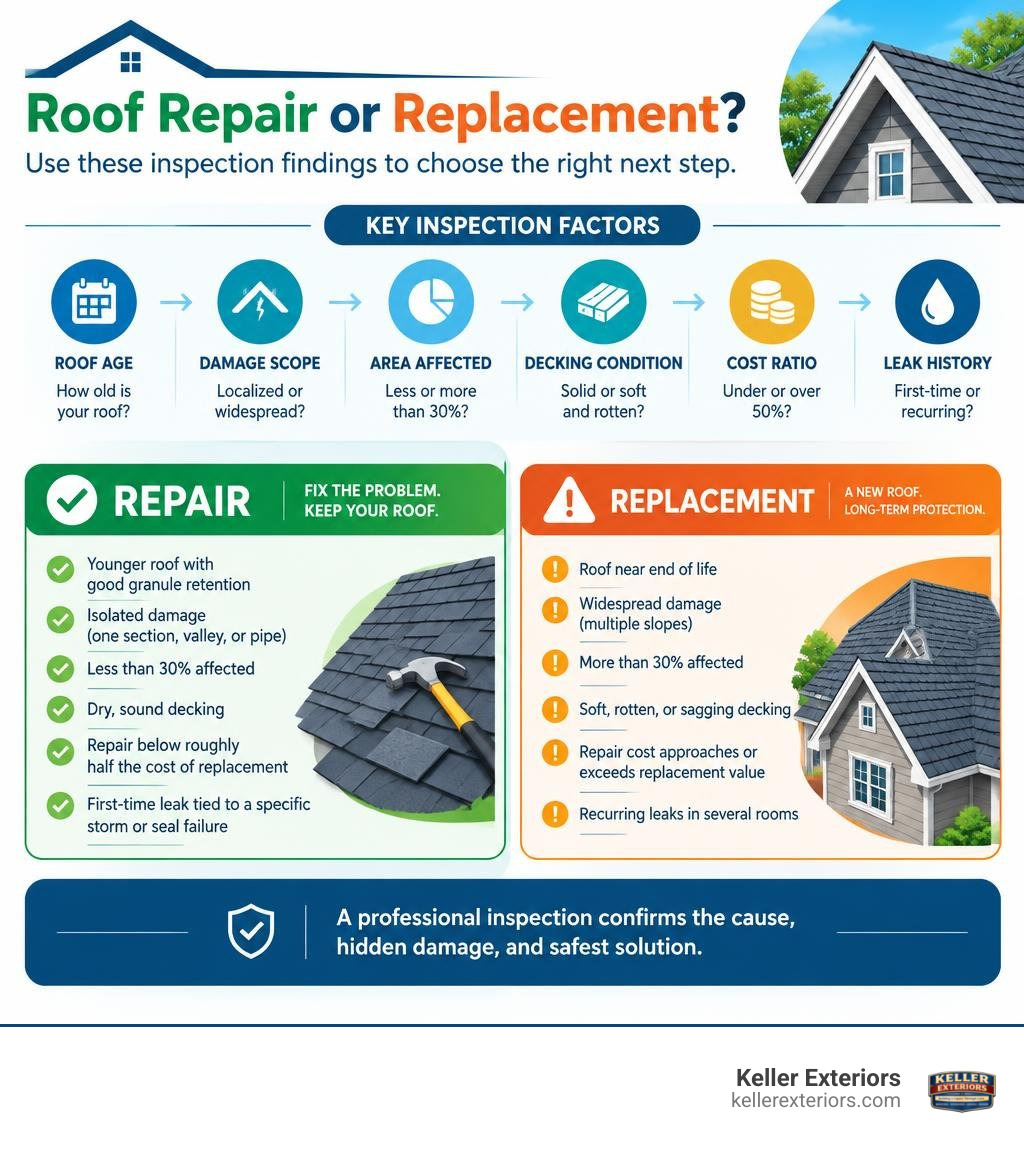
To determine the right path, we look closely at three main factors: overall age, the physical area affected, and the structural condition beneath the shingles. Isolated issues rarely justify full replacements when the core materials are still healthy.
| Assessment Factor | When to Choose Repair | When to Choose Replacement |
|---|---|---|
| Roof Age | Under 10 to 15 years old with good granule retention | Over 20 years old or near the end of material life |
| Damage Scope | Isolated to one section, valley, or pipe penetration | Widespread across multiple roof slopes |
| Area Affected | Less than 30% of the total roof surface | More than 30% of the total roof surface |
| Decking Condition | Solid, dry, and structurally intact wood sheathing | Spongy decking, widespread rot, or sagging rafters |
| Cost Ratio | Estimated repair is under 50% of total replacement | Estimated repair exceeds 50% of total replacement |
| Leak History | First-time leak caused by an isolated storm or seal failure | Chronic, recurring leaks appearing in several rooms |
The 50% cost rule and the 30% roof-area damage threshold serve as helpful industry guidelines rather than rigid laws. If an estimate for repairs approaches half the cost of an entirely new system, putting that investment toward a replacement is generally the wiser financial move.
Similarly, when storm damage or physical wear compromises more than 30% of your total roof plane, patching individual sections can leave your home vulnerable to mismatched materials and secondary leaks down the road.
Evaluating Cost: When House Roof Repair Makes Financial Sense
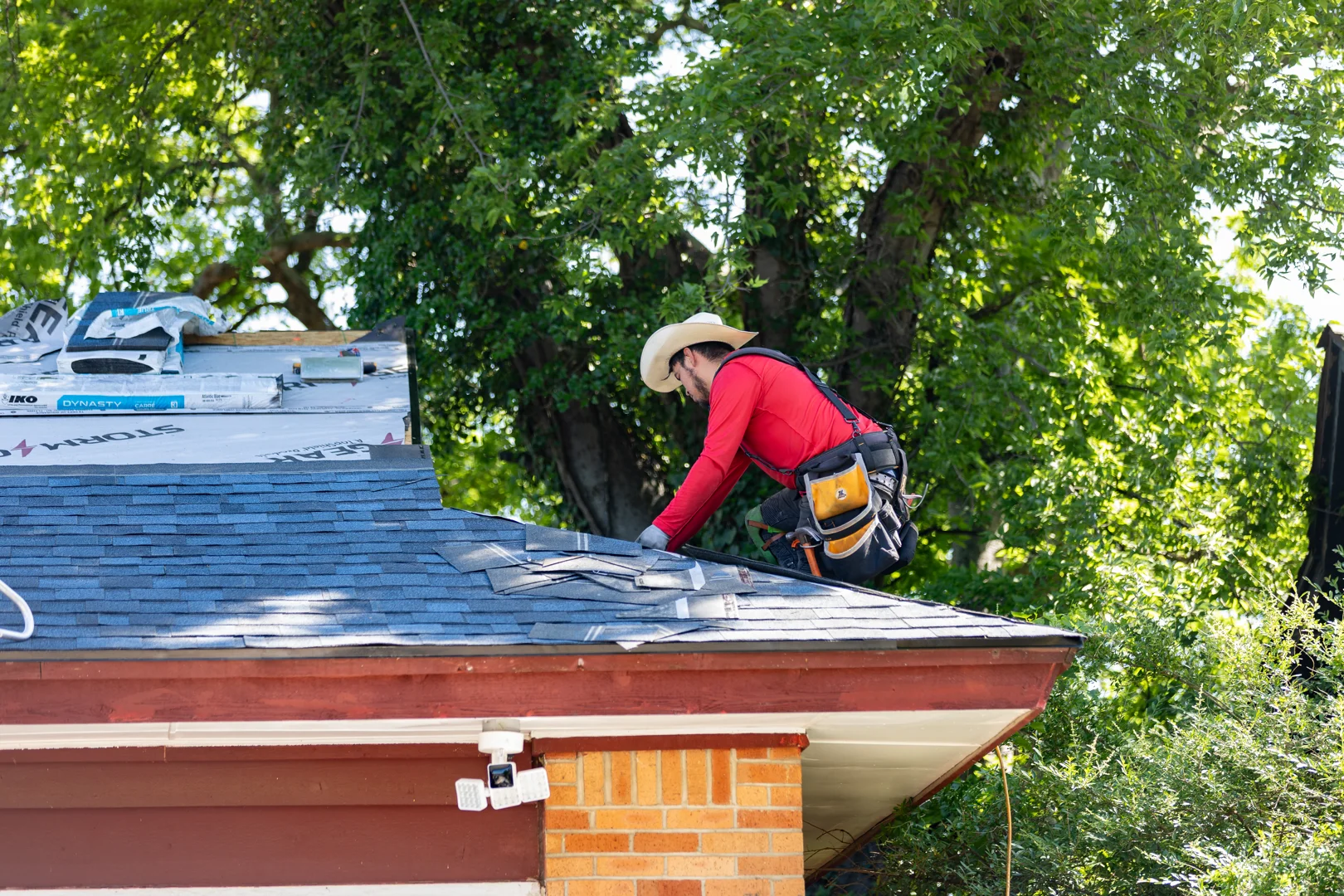
House roof repair makes great financial sense when the damage is localized and the underlying structure remains completely sound. For example, if high winds rip off a dozen shingles on a five-year-old roof in Owasso, OK, a targeted patch restores full protection without disrupting the rest of the slope.
Addressing small issues early keeps money in your pocket. A roof patch guide can help you recognize when a small, localized problem may be repairable. A single failed pipe collar or a minor flashing gap can be corrected quickly, whereas ignoring it allows water to rot the roof deck and ruin interior drywall.
When you schedule timely professional roof repair, you isolate the problem area, extend the overall lifespan of your current roofing system, and avoid the capital expense of an unscheduled re-roof.
When Widespread Damage Demands Complete Replacement
There comes a point where continued patching turns into throwing good money after bad. Our replacement options explain the factors that can make a new roof the more practical choice. Standard 3-tab asphalt shingles generally offer an expected lifespan of 15 to 25 years, while modern architectural shingles can provide 25 to 35 years of reliable service depending on ventilation, quality of installation, and local weather patterns.
When materials reach the end of their operational life, they become brittle, lose protective granules, and shed their ability to seal properly.
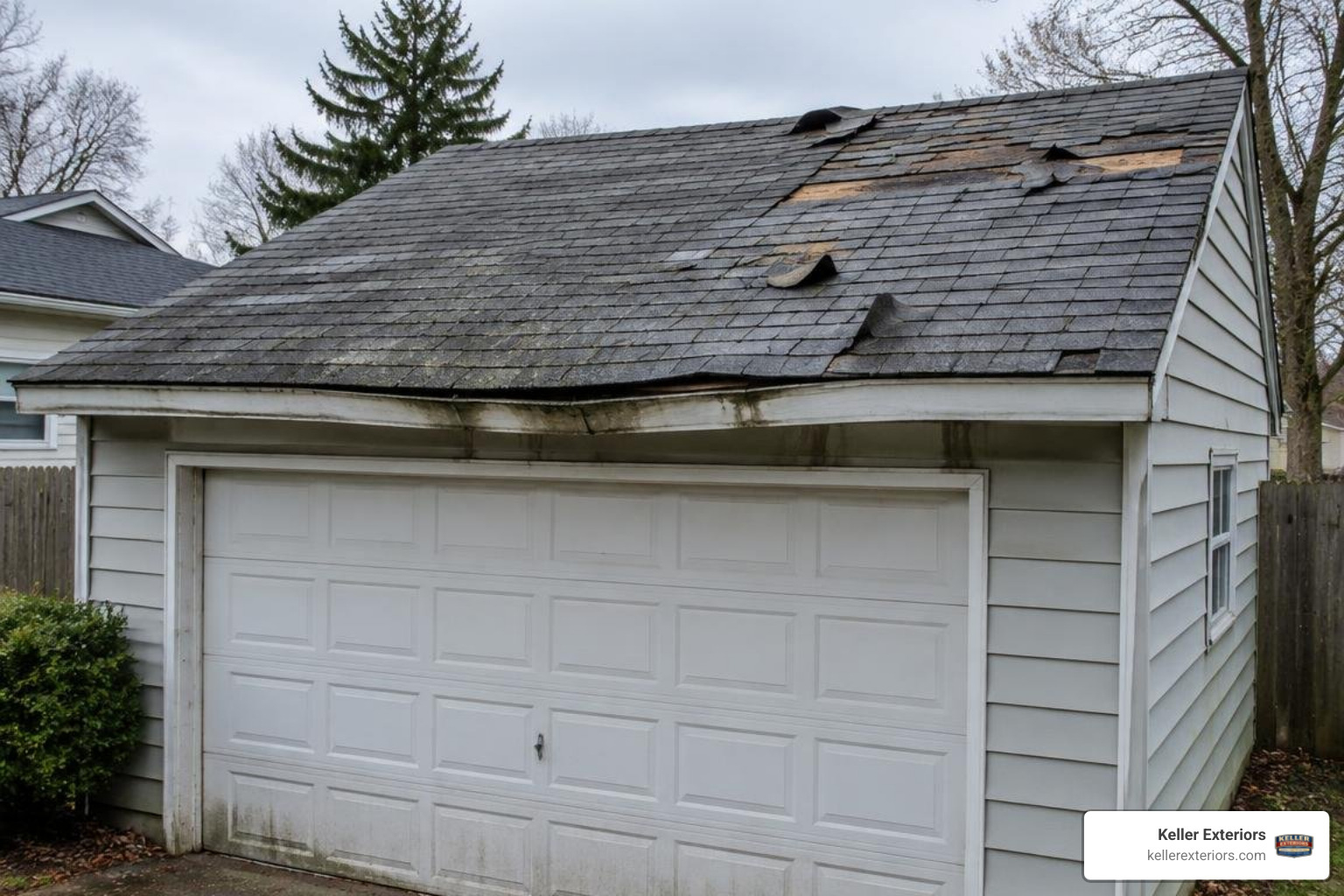
If severe hail fractures shingles across every slope, or if you notice sagging ridge boards and spongy decking while walking in the attic, spot repairs will not solve the underlying structural distress. In these scenarios, investing in a complete roof replacement ensures your home receives brand-new underlayment, fresh ice-and-water shielding, and a fully warrantied barrier capable of withstanding Oklahoma’s severe weather seasons.
Common Roof Leak Sources and Diagnostic Signs
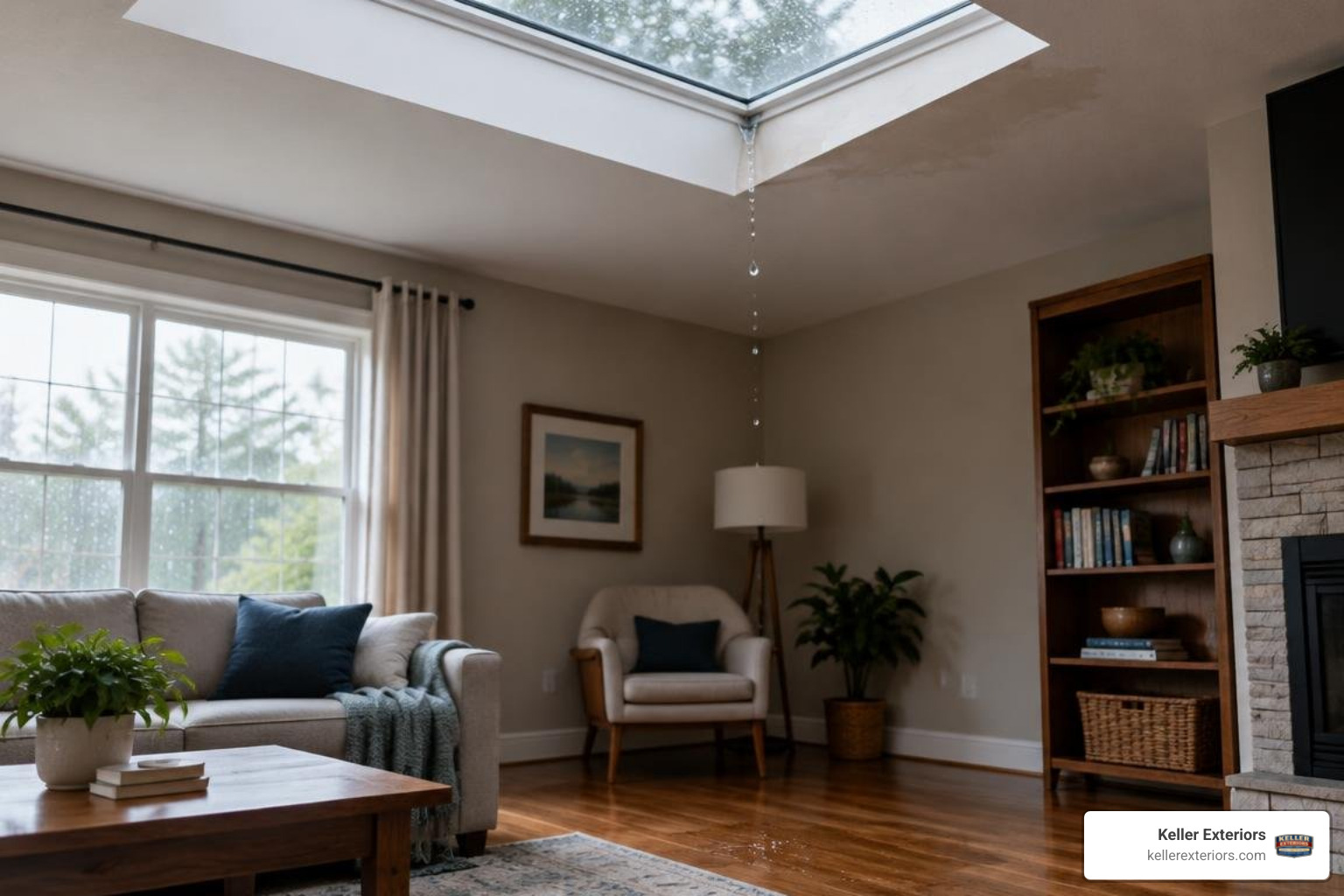
Water is persistent, and it always takes the path of least resistance. A roof leak checklist can help you narrow down likely entry points before an inspection. In many cases, the spot where water drips through your ceiling is several feet away from the actual breach on the roof surface. Water commonly enters through a tiny crack, runs down the top of a rafter or electrical conduit, and pools on the drywall until it breaks through.
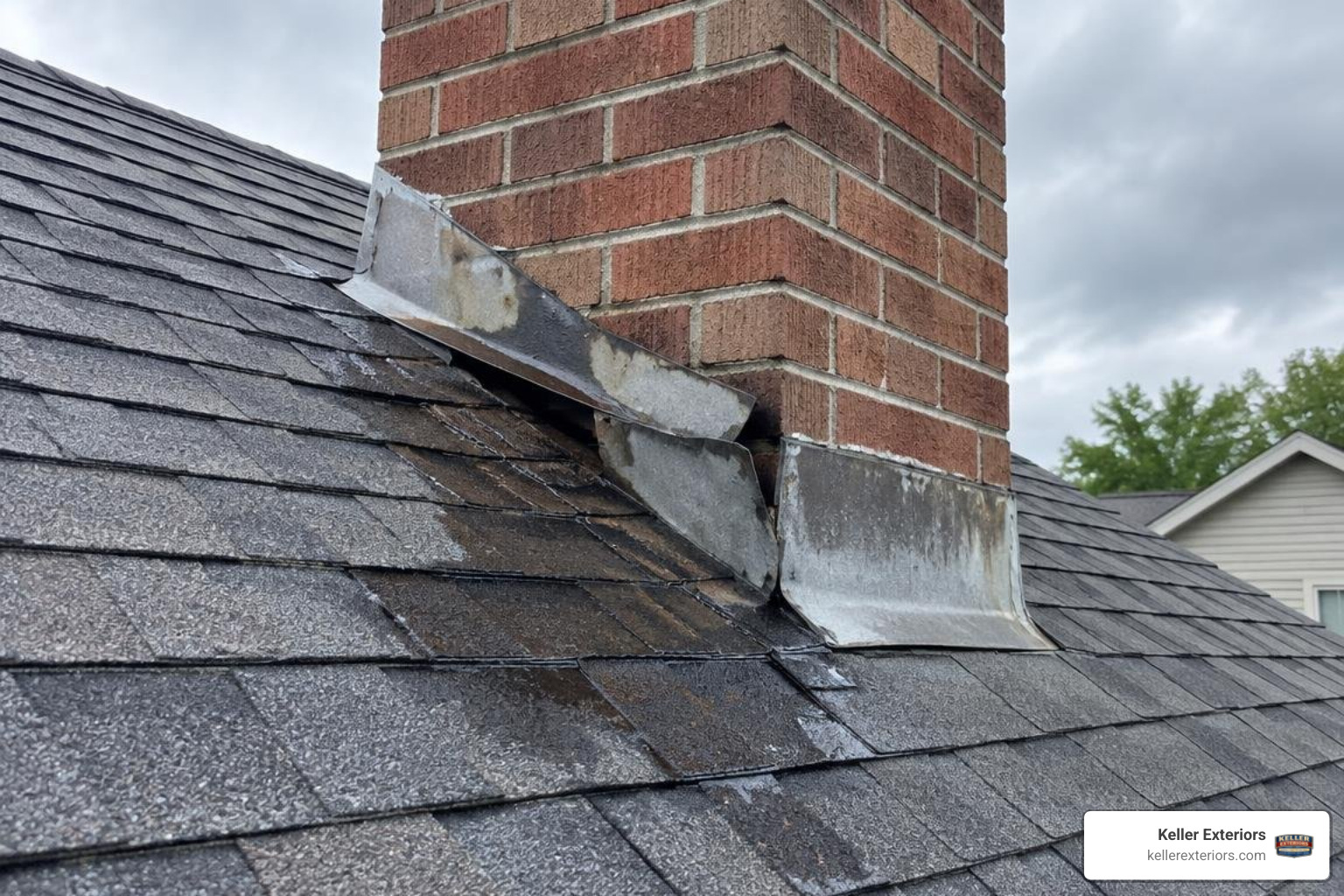
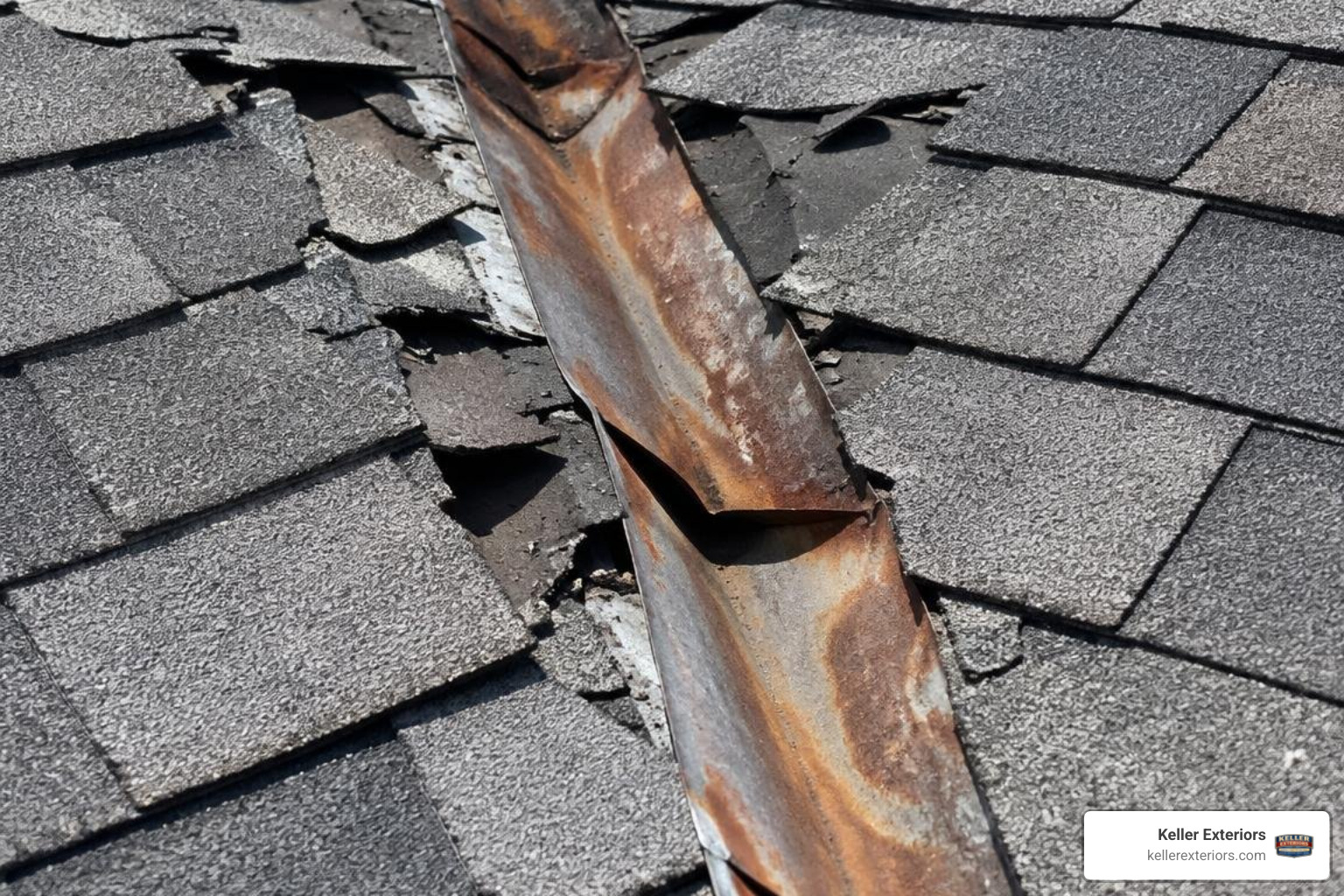
Flashing failures represent one of the most common culprits for active roof leaks. Thin pieces of galvanized steel or aluminum are installed along joints, roof intersections, dormers, and masonry to deflect running water away from sensitive seams. Over time, seasonal thermal expansion, dried sealants, or improper initial fastening can cause these metal transitions to lift or pull away from the surface.
Plumbing vent pipe boots are another frequent weak point. The rubber neoprene collar surrounding your plumbing exhaust pipe takes the brunt of direct ultraviolet sunlight. After 10 to 15 years, that rubber turns brittle, splits, and creates a direct opening for rainwater to pour straight down the exterior of the pipe and into the attic below.
Understanding how to pinpoint a roof leak involves checking these vulnerable transition areas first rather than assuming the shingles themselves failed.
Identifying Exterior Shingle and Flashing Failures
A visual ground-level check with a pair of binoculars often reveals early signs of trouble. Look for step flashing along brick walls that has started to rust or pull loose. Chimney crickets, which are small peaked structures built behind wide chimneys to divert water runoff, must have seamless flashing to prevent pooling.
High winds across Sand Springs, OK and Bixby, OK can also cause wind uplift, breaking the adhesive sealant strips underneath shingles and leaving them flapping or missing entirely. If you suspect recent high winds compromised your roof layout, reviewing asphalt shingle damage can help you recognize missing tabs, lifted edges, and compromised ridge caps before the next front rolls through.
Recognizing Hidden Moisture and Decking Rot
Exterior damage tells only half the story; hidden interior signs often reveal water damage long before an active drip hits your floor.
Key indoor warning signs include:
- Yellow, brown, or ring-shaped water stains forming across ceiling drywall and upper wall corners.
- Wet, compressed, or matted attic insulation that has lost its thermal efficiency due to hidden moisture.
- Persistent musty or earthy odors coming from attic vents, crawlspaces, or upstairs closets.
- Dark, discolored wood on the underside of roof decking or white and black fungal growth clinging to rafters.
- Rotted, soft, or spongy fascia boards along the roofline where gutters attach.
If you observe any of these warning signs, attic airflow guidance can help you understand how ventilation relates to the health of the decking and underlayment.
Practical Repair Solutions: DIY Potential vs. Professional Execution
It is natural for homeowners to consider whether a roof leak can be tackled over a weekend. While minor maintenance tasks are achievable for handy property owners, safety must always come first.
Working on a roof involves serious fall hazards, slick surfaces, and steep angles. Under federal safety standards established by OSHA 1926.501, professional crews use dedicated harness systems, anchor points, and fall-arrest gear on steep slopes to protect workers.
Understanding the technical nuances between temporary fixes and permanent structural repairs is essential before climbing a ladder. Quick sealing may offer temporary relief, but complex flashing and valley repairs require professional training and specialized safety gear.
DIY-Safe Maintenance and Quick Fixes
If your roof has a low, easily accessible pitch and conditions are completely dry, certain minor fixes can be managed safely without extensive construction tooling:
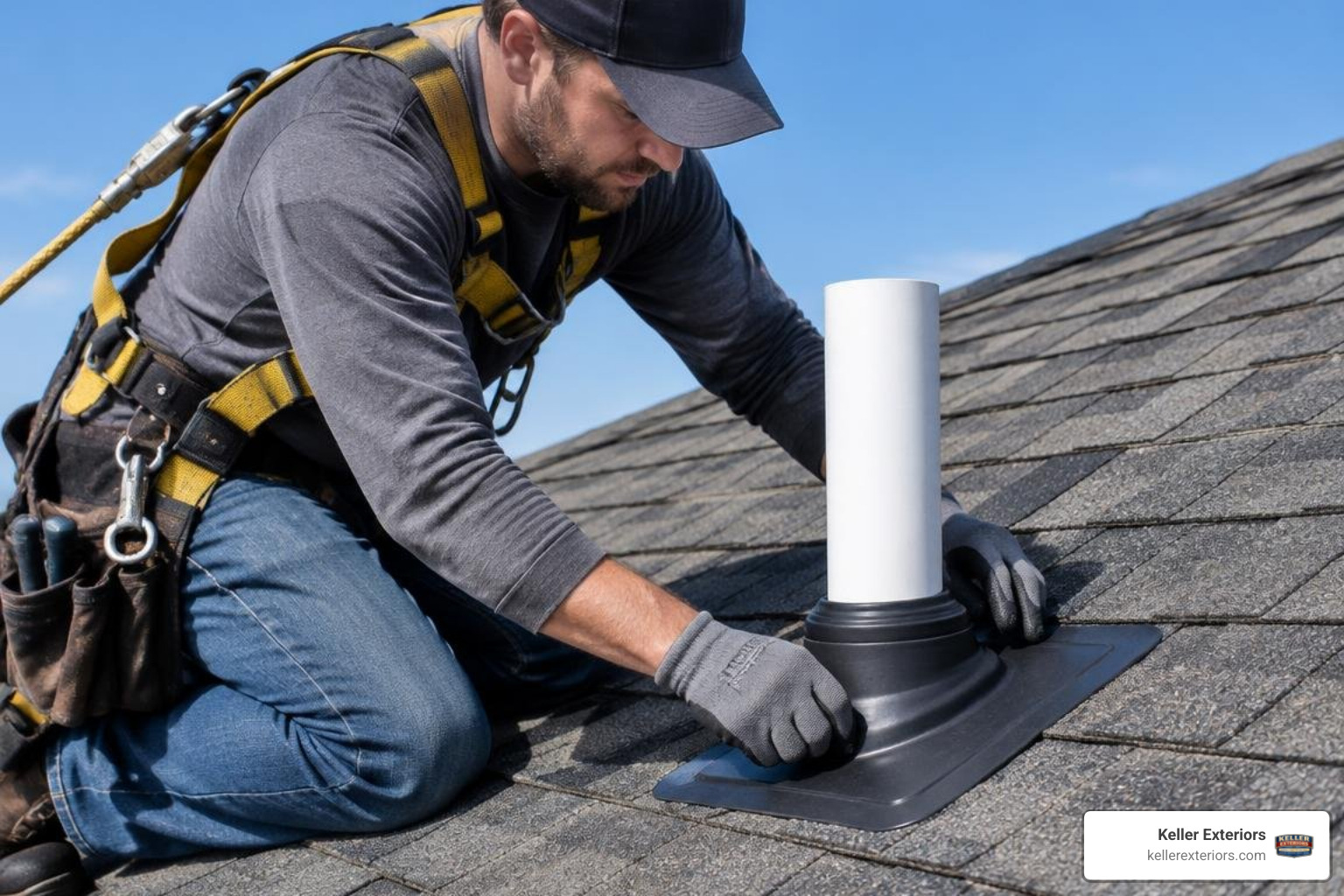
- Plumbing Boot Retrofit Collars: When a vent pipe’s rubber gasket has cracked, installing a heavy-duty retrofit collar over the existing pipe creates an immediate, watertight barrier without tearing into surrounding shingles.
- Single Shingle Replacement: If a single shingle tab tore off and you can safely access the area, carefully breaking the seal on adjacent shingles, pulling the damaged nails with a pry bar, sliding a matching piece into place, and hand-nailing it is a practical weekend project.
- Indoor Emergency Diverters: Setting buckets under leaks, moving valuable furnishings, and poking a small nail hole in the center of a sagging ceiling drywall bulge to relieve accumulated water pressure are ideal indoor actions.
When it comes to putting tarps over large exterior sections during active storm conditions, ground-level mitigation is best. Leave steep roof access, elevated structural work, and heavy tarp anchoring to equipped pros.
Planning Long-Term House Roof Repair and Material Compatibility
A lasting roof repair requires using the correct materials designed for your specific roof assembly. One common mistake is using standard silicone caulk on asphalt shingles. Silicone does not bond cleanly with granular asphalt and degrades quickly under high UV exposure. Instead, professionals rely on premium polyurethane or tripolymer sealants that remain flexible through hot summers and freezing winters.
Material compatibility also involves matching discontinued shingles. Shingle manufacturers update their product lines, color blends, and physical dimensions every few years. If your roof features discontinued 3-tab or older dimensional shingles, simply nailing in a modern shingle might result in an improper fit that compromises water drainage.
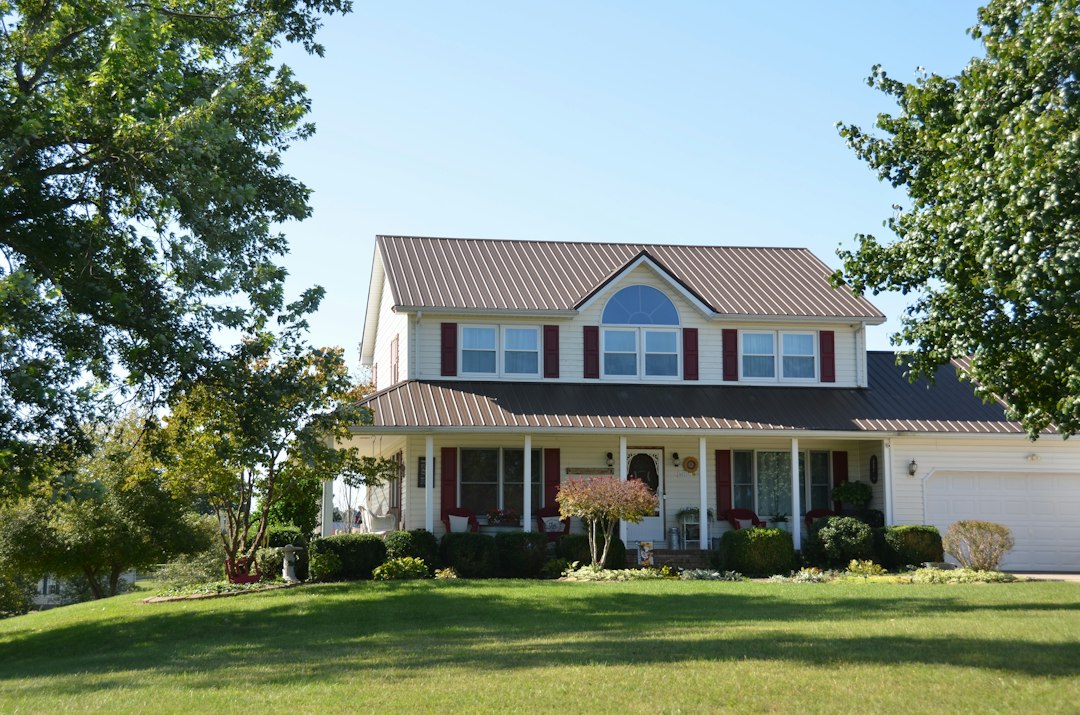
Whether maintaining an asphalt shingle system or working with durable metal roofing panels, choosing components that integrate seamlessly with your existing layout is the key to a long-lasting repair.
Managing Insurance Claims and Oklahoma Storm Damage
Green Country weather can change on a dime. From rapid springtime hail cores sweeping across Claremore, OK and Coweta, OK to destructive straight-line winds in Bartlesville, OK, roofing systems in our area face severe environmental stress.
When hail strikes a roof, it compresses the fiberglass mat underneath the asphalt coating, knocking away mineral granules and leaving dark, circular bruises. These impact points expose the raw asphalt to direct sunlight, accelerating decay and eventually leading to leaks months down the road.
Because hail and wind damage represent sudden, unexpected events, they are generally classified as covered perils under standard homeowners insurance policies. Navigating the claims process requires clear photographic evidence, professional documentation, and active communication with your insurance adjuster.
Clear photos and emergency leak guidance can help you document visible damage, protect the affected area, and prepare for a conversation with your insurer.
Documenting Severe Storm and Hail Impacts
After a severe weather event, proper documentation makes all the difference when dealing with an insurance adjuster:
- Take clear, wide-angle photos of your home from ground level, noting any displaced shingles or dented gutters.
- Photograph any soft-metal damage around the property, such as dents on aluminum ridge vents, air conditioning condenser fins, or metal mailbox covers.
- Keep a detailed log noting the exact date and time the storm occurred.
- Check the attic space for fresh water drips or damp decking boards immediately following the storm.
When sudden damage leaves your living spaces exposed to the elements, knowing what steps to take during a ceiling leak can help you reduce indoor water exposure while permanent insurance claims are evaluated.
Navigating Covered Perils vs. Normal Wear and Tear
It is critical to distinguish between sudden storm losses and long-term wear and tear. Standard insurance policies are designed to cover unforeseen catastrophic events like fallen tree limbs, tornados, hail impact, and wind uplift. They do not cover gradual deterioration resulting from deferred maintenance, aging sealants, or moss accumulation.
Insurance adjusters evaluate the roof to determine whether water infiltration resulted from an identifiable covered peril or general aging. Having an itemized, professional inspection report that outlines specific impact points, dates of loss, and component-level failures helps ensure your claim is reviewed fairly and comprehensively.
Frequently Asked Questions About Roof Repair and Replacement
How do I know if my roof leak is an emergency?
A roof leak is considered an active emergency when water is rapidly entering your living spaces, pouring through ceiling fixtures, or causing ceiling drywall to bow noticeably under weight. Immediate interior containment and professional response help prevent widespread structural wood rot, destroyed attic insulation, and costly electrical damage.
Does homeowners insurance cover roof leak repairs?
Homeowners insurance typically covers roof leak repairs if the water intrusion was directly caused by a covered sudden peril, such as wind-torn shingles, severe hail strikes, or a fallen tree branch. Damage resulting from gradual wear, old age, or lack of routine homeowner maintenance is usually excluded under standard policies.
How long does a typical roof repair last compared to replacement?
A properly executed component repair, such as replacing a damaged flashing run or installing a new pipe boot, can last 10 to 20 years provided the surrounding roofing materials have remaining service life. In contrast, quick surface patches with basic mastic or caulk are short-term fixes that often fail within two years.
What is the 50% rule for roof repairs?
The 50% rule is an industry guideline stating that if the total cost to repair damaged roofing sections equals or exceeds 50% of the cost to install a completely new roof, replacement is generally the more sensible long-term financial decision.
Can you replace just one section of a roof?
Yes, you can replace a single slope or localized section of a roof if the rest of the structure is in great shape. However, keep in mind that slight color variations may exist between new and weathered shingles, particularly if the original shingle line has been updated or discontinued.
What are the main signs that roof decking is rotted?
Key signs of damaged or rotted roof decking include a visible dip or sag in your roofline, soft and spongy sensations underfoot when walking on the roof, dark water stains on the wood sheathing inside the attic, and loose roofing nails that pull free easily from the wood.
How often should residential roofs in Oklahoma be inspected?
Given the frequent severe weather, hail, and high heat across Oklahoma, residential roofs should receive a professional inspection at least once a year, as well as immediately following any major severe storm or significant hail event.
Can a roof leak be fixed from the inside of the attic?
No, a roof leak cannot be permanently stopped from inside the attic. While you can divert water temporarily into a bucket, the water has already breached the outer protective layer. The root cause must be diagnosed and repaired on the exterior roof surface to prevent continuous decking rot.
Why do plumbing vent boots fail before the rest of the roof?
Plumbing vent boots typically feature a flexible neoprene rubber collar that degrades, dries out, and cracks due to intense solar heat and UV radiation long before asphalt shingles reach the end of their design life.
When should a homeowner hire a professional instead of attempting a DIY roof repair?
Homeowners should always call a professional whenever a roof has a steep pitch, involves complex structural transitions like valleys and chimneys, requires structural decking replacement, or whenever attempting the repair poses safety concerns without proper fall-arrest gear.
Making the Right Choice for Your Tulsa Home
Choosing whether to repair a localized problem or invest in a brand-new roof does not have to be stressful. By understanding the age of your materials, the extent of the damage, and the structural health of your decking, you can make a sound decision that protects your home and fits your household budget. When repairs are minor, targeted fixes preserve your investment; when wear is widespread, replacement delivers decades of reliable protection.
Keller Exteriors provides roof repair, roof replacement, roof inspections, and storm-damage support for homeowners in Tulsa, OK, Broken Arrow, OK, Owasso, OK, Jenks, OK, and nearby communities. Schedule roof service today to discuss the condition of your roof and the next appropriate step.