What to Do When Your Skylight Starts Leaking
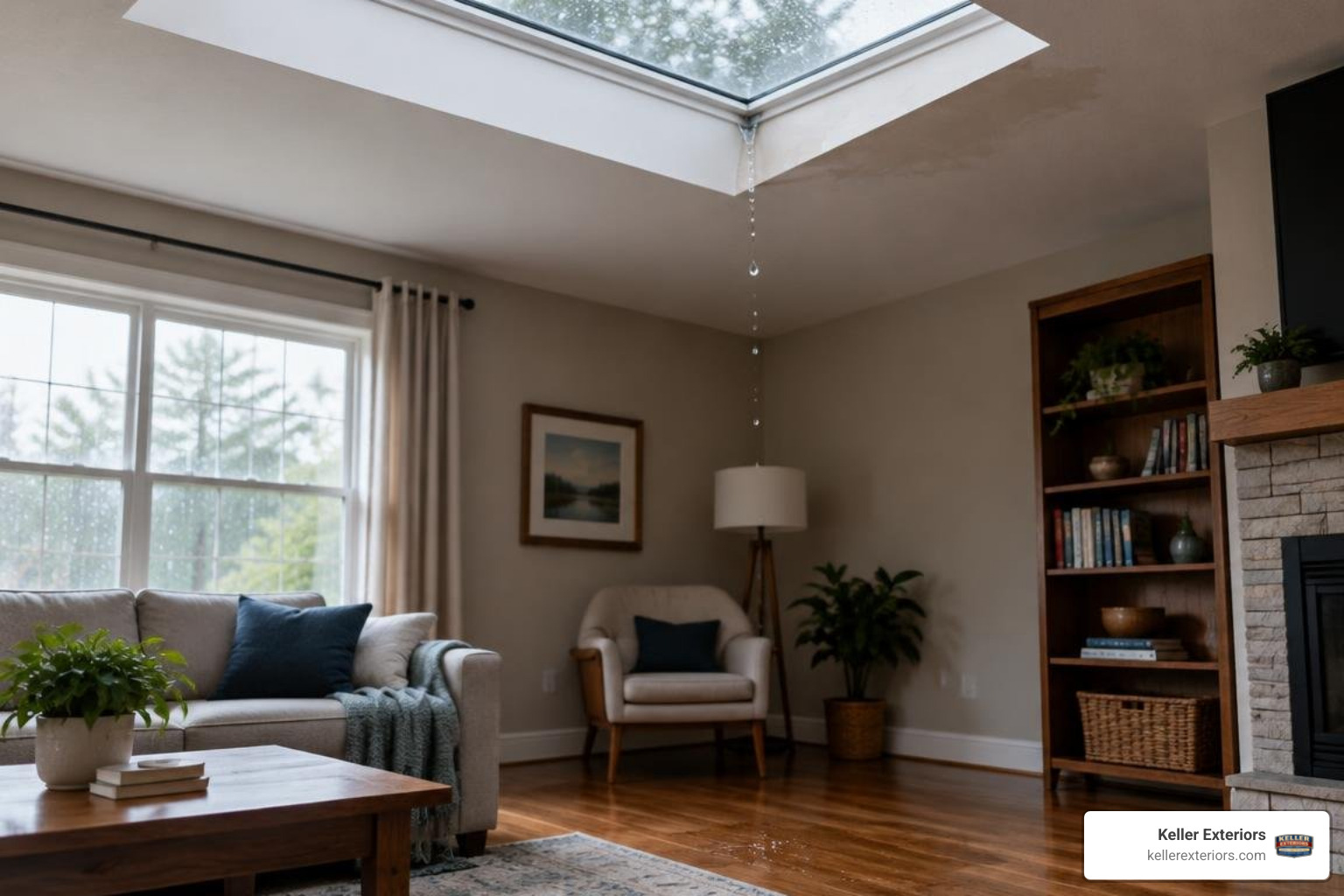
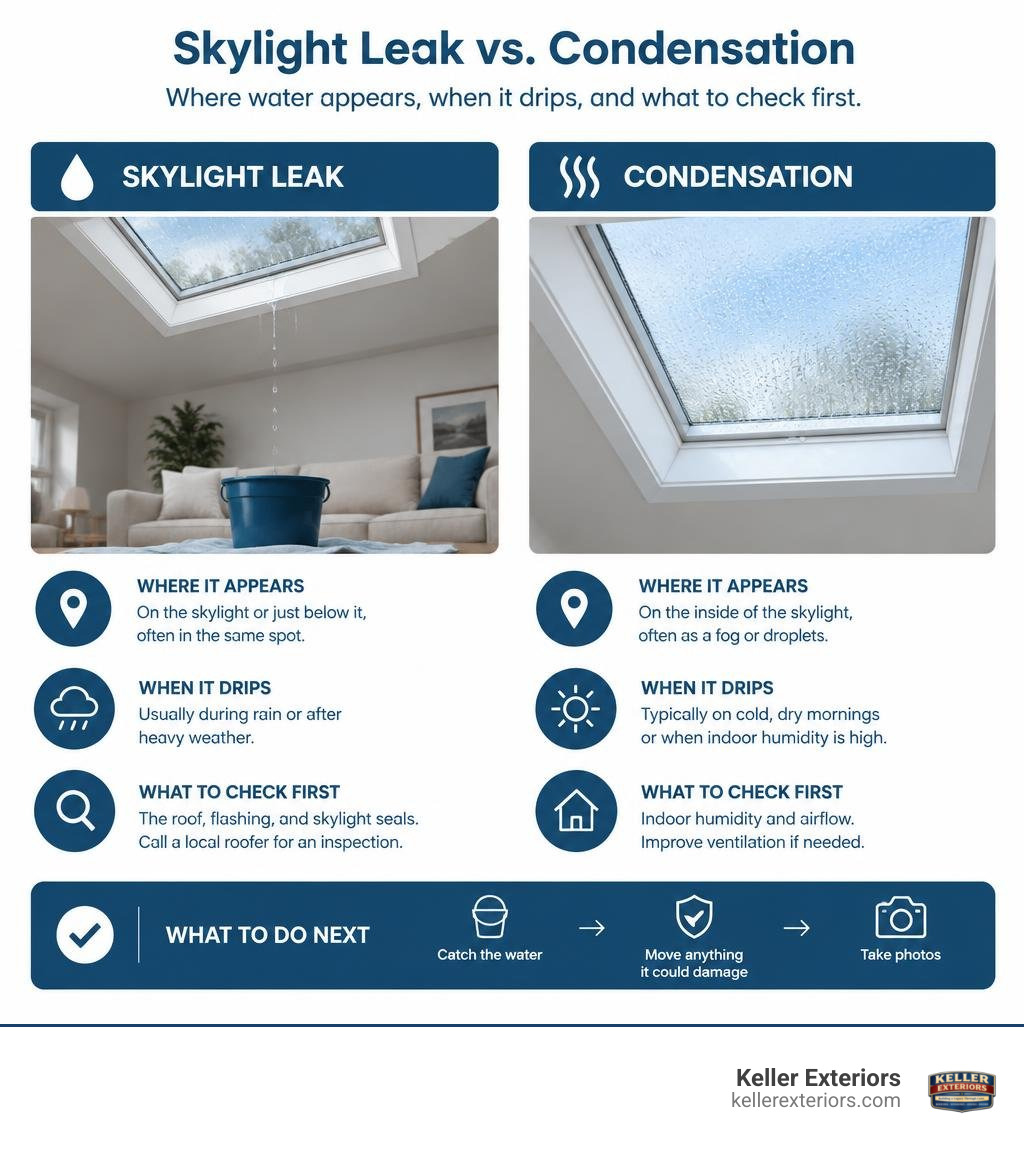
Catch the water, move anything it could damage, and take photos. If the drip starts during rain, ask a local roofer to inspect the skylight, flashing, and nearby roof. If moisture appears only on cold, dry mornings, check indoor humidity and airflow first. It may be condensation, not a roof leak. Stay off a wet roof.
A sound skylight may only need flashing or seal repair. Cracked glass or a rotted frame may call for replacement.
I’m Robert Keller, owner of Keller Exteriors, with more than 25 years of experience in exterior home improvement. When property owners need local leaking skylight repair, finding out whether the water came through the roof or formed inside is the essential first step. Understanding how skylight leaks develop helps you describe the problem accurately to a contractor before any work begins.
Diagnosing the Drip: Condensation vs. Skylight Roof Leaks
Natural light transforms living spaces, but seeing water drip down your skylight shaft causes instant stress. Water traveling along a ceiling or pooling on your hardwood floor demands quick attention, yet not every water drop indicates an exterior roof failure. In many homes across Green Country, moisture issues originate indoors due to humidity and temperature differences.
Understanding whether water penetrates your roofing system from the outside or collects on the glass from inside helps you take the right corrective action. When moisture enters from outside, identifying the source requires tracing water past underlayment, shingles, and flashing curbs. When warm, humid indoor air rises into the skylight shaft, it contacts the cold pane, creating droplets that mimic a roof leak. Checking attic airflow and mechanical ventilation helps rule out simple condensation before you start tearing into roofing layers.
Warning Signs Your Skylight Needs Immediate Attention
Catching structural moisture early prevents minor fixes from turning into extensive interior restorations. Watch for these clear warning signs around your skylight opening:
- Dark brown water rings or spreading stains on the ceiling drywall
- Bubbling, peeling, or cracking paint along the drywall returns of the skylight light well
- Soft, spongy drywall that sags under light pressure
- Active drips during rainfall, sleet, or snowmelt
- Musty odors or visible black mold spots accumulating along the interior trim
- Persistent fogging or trapped moisture between double-pane insulated glass units
If water has already saturated your ceiling drywall, promptly repairing the ceiling leak keeps mold from spreading into ceiling framing and attic insulation.
Condensation vs. Active Leaking
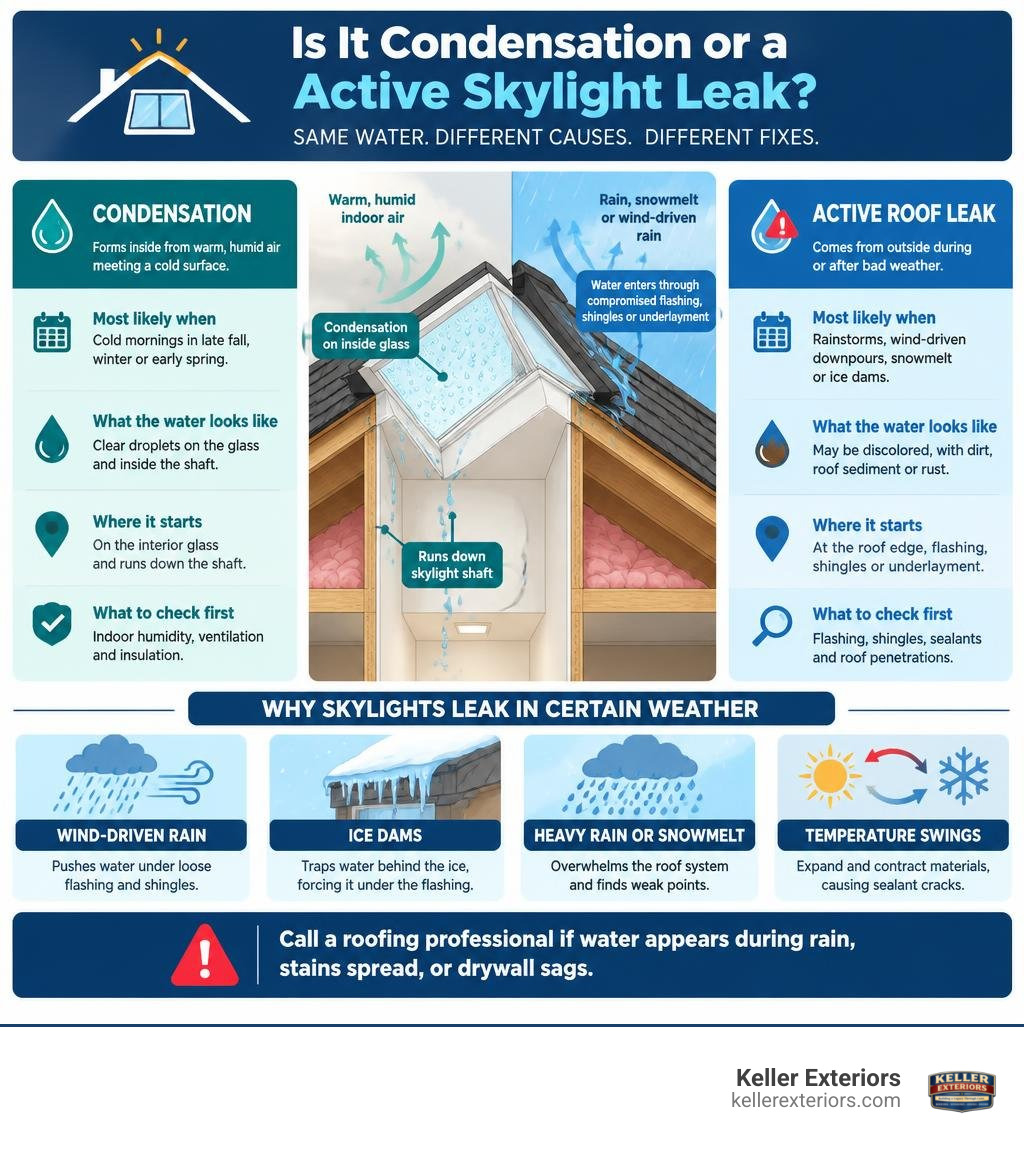
Distinguishing between condensation and an exterior leak comes down to timing and weather patterns. Condensation forms primarily on cold mornings during late autumn, winter, or early spring. Because warm air holds more moisture than cold air, indoor humidity naturally travels upward into the skylight shaft. When that warm air hits cold glass or uninsulated metal framing, moisture condenses into visible beads. If enough moisture builds up, it drips down the wall without a single drop of rain outside.
An active roof leak behaves differently. True leaks occur during or immediately following rainstorms, wind-driven downpours, or rapid snow thaws. The water often appears discolored, carrying dirt, roof sediment, or rust from corroded fasteners. Condensation, on the other hand, consists of clear water forming across the interior surface of the pane. Improving bathroom ventilation, running dehumidifiers, and ensuring proper insulation around the shaft usually resolves condensation problems without roof work.
Why Leaks Occur in Specific Weather Conditions
Many homeowners find it confusing when a skylight only drips during certain storms. A skylight might stay dry during a gentle vertical drizzle but leak heavily during intense thunderstorm gusts. Wind-driven rain drives moisture horizontally, forcing water upward underneath loose flashing aprons and unsealed shingles.
In winter, ice dams cause similar issues. When heat escapes into your attic, snow on the upper roof melts and flows down toward the colder eaves and skylight curb. The water freezes again, creating a dam of ice that traps runoff behind it. This standing water backs up underneath the flashing laps and enters your home through nail penetrations. Extreme temperature swings also cause roofing materials, sealants, and metal flashings to expand and contract at different rates, splitting aged caulking seals during flash freezes.
Common Causes of Skylight Leaks and Structural Failures
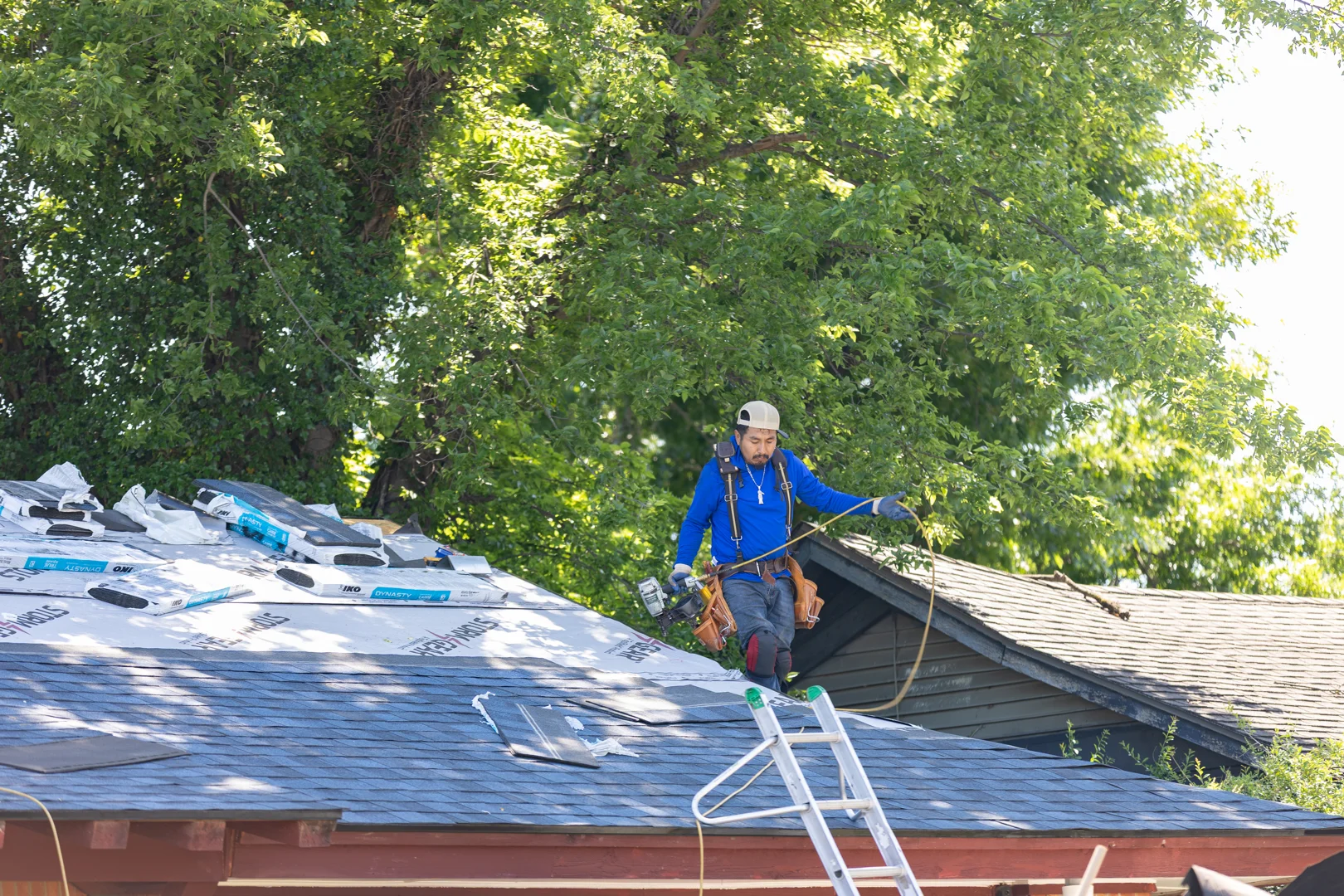
Skylights sit on roof slopes, interrupting the natural downward shedding of water. Because water must divert around all four sides of the curb, these roof penetrations require watertight sealing. When components age or weather degrades materials, water finds the path of least resistance.
Flashing Failure and Degraded Sealants
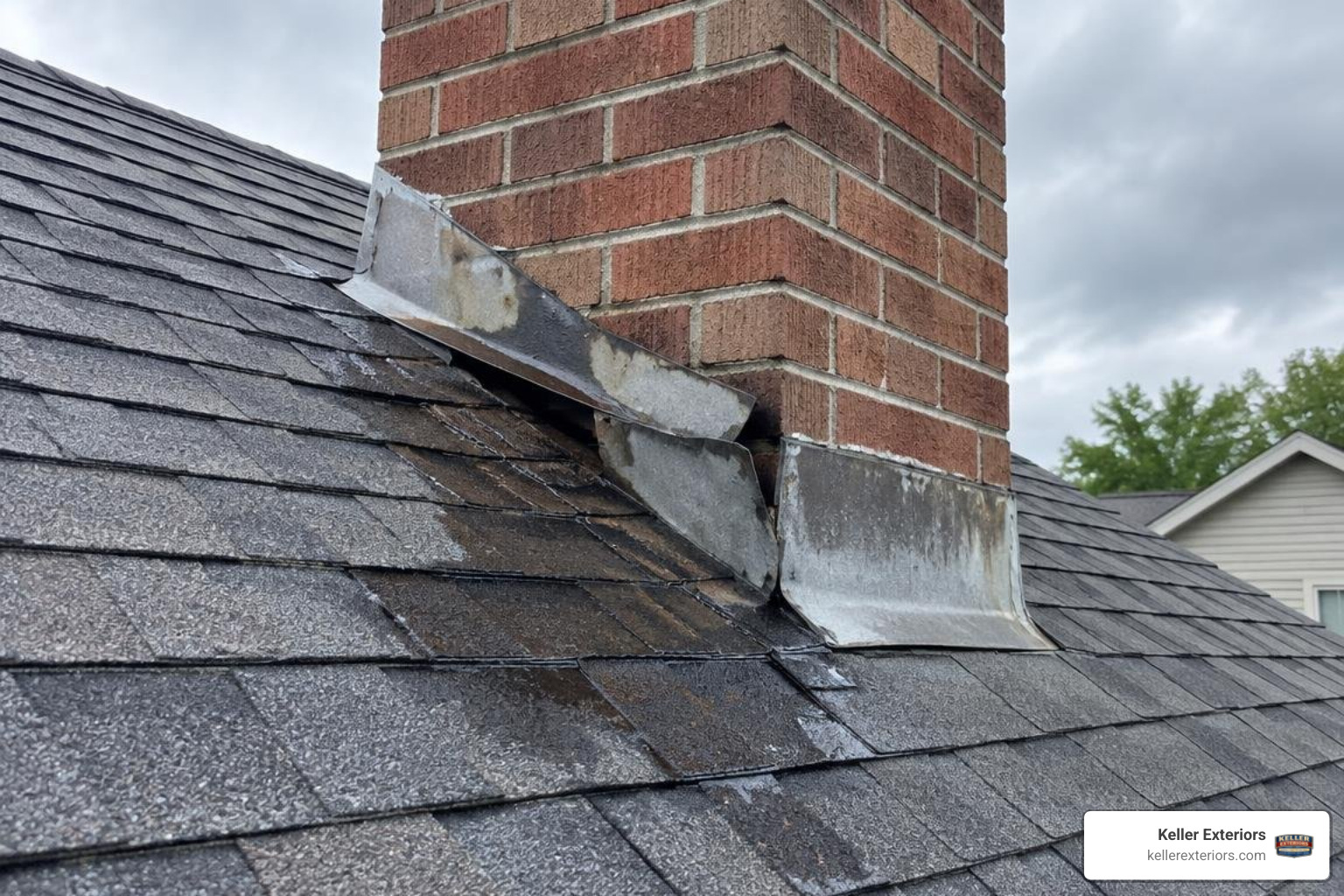
Flashing failure represents the leading cause of skylight leaks. A proper installation relies on a multi-part flashing system: a sill flashing at the bottom, step flashing woven into each shingle course along the sides, and a saddle or header flashing across the top.
Over time, exposure to intense summer heat and UV rays breaks down the factory seals and caulking. Standard sealants dry out, shrink, and crack, leaving gaps where water slips behind the metal barrier. When water bypasses the step flashing, it rots the underlayment and plywood decking beneath, channeling water directly into your ceiling framing.
Hail, Fallen Debris, and Storm Damage
Northeast Oklahoma experiences volatile weather patterns, including severe hailstorms and damaging straight-line winds. Large hail strikes can crack glass panels, shatter acrylic domes, or dent metal flashing profiles, breaking the factory seal between the glass and frame. Falling tree limbs punctuate or dislodge the curb frame, allowing heavy rain to rush directly into the opening. After severe weather sweeps through, promptly following emergency leak repair steps helps protect structural framing from rot and keeps interior spaces safe.
Improper Installation and Aging Gaskets
Even premium materials fail if installed incorrectly. Skylights require precise deck integration, self-adhering waterproof membranes, and manufacturer-specified flashing kits. Common installation errors include:
- Fastening nails driven through exposed flashing surfaces rather than under shingle overlaps
- Omitting ice and water protective underlayment around the raised curb
- Reusing corroded, bent flashing from a previous roof system
- Clogging the factory weep holes designed to drain incidental condensation to the exterior
Skylights deliver a service lifespan of 15 to 20 years. As units reach this age threshold, rubber gaskets lose their elasticity, become brittle, and fail under heavy rain loads, requiring professional structural attention.
Skylight Repair vs. Replacement: Making the Right Decision
Deciding whether to repair your existing unit or invest in a modern replacement depends on the unit’s age, the condition of the frame, and the exact failure point. If the glass remains intact and the wood curb shows no rot, resealing the perimeter or replacing the surrounding flashing kits provides a cost-effective, long-term solution.
If the sealed glass unit has failed, showing permanent fog or white mineral film between the double panes, replacement is required. Insulated glass units cannot be resealed in the field once the factory argon gas escapes. Units with rotted wood frames, severe corrosion, or cracked structural glass also warrant a complete unit replacement.
| Project Scope | Typical Fix Method | Ideal Scenario | Expected Durability |
|---|---|---|---|
| Resealing & Gaskets | High-grade sealant application & gasket swaps | Frame and glass are sound; minor seal cracks | 3 to 7 Years |
| Flashing Replacement | New step flashing, sill pans, & water membranes | Intact skylight unit with corroded or loose flashing | 10 to 15 Years |
| Glass Unit Replacement | Pane replacement within sound existing frame | Impact cracks or seal fogging on modern frame | 15 to 20 Years |
| Full Unit Replacement | Complete curb-mounted or deck-mounted unit swap | Rotted wood frame, unit over 15 years old, roof overhaul | 20+ Years |
Evaluating Costs for Local Leaking Skylight Repair
Every roofing project carries unique structural conditions, and repair costs vary based on factors such as roof pitch, accessibility, unit size, and whether water has damaged surrounding wood decking. Resealing a simple gasket or applying new commercial sealants represents a straightforward service. Flashing repairs require removing surrounding roofing shingles to install fresh sheet metal, requiring more labor.
Extensive leaks that have rotted the curb framing or damaged interior drywall require larger restorative scopes. While full unit replacements require a larger initial investment than minor repairs, they provide fresh manufacturer warranties and modern energy-efficient glass coatings that lower heating and cooling loads. Requesting an on-site professional estimate helps determine the most economical path forward.
Should You Replace Skylights During Roof Replacement?
Homeowners often ask if they should replace existing skylights when replacing their main roof. The answer is almost always yes. When our team removes old shingles during a roof project, the skylight flashing, curb, and underlayment become fully accessible.
Synchronizing your skylight replacement with a roof replacement saves substantial labor costs. Leaving a 15-year-old skylight in place on a brand-new roof creates a weak link. Disturbed flashing seals often fail within a few years of roof completion, forcing roofers to pull up your newly installed shingles to make repairs. Replacing both systems simultaneously ensures matching warranties and complete, watertight protection from deck to ridge.
How Long Repairs Last vs. Full Unit Lifespan
A professional repair performed with premium, UV-resistant materials and correctly lapped metal flashing provides 10 to 15 years of dependable weatherproofing. Minor caulk-only patches applied over dirty surfaces often fail within one or two seasons due to thermal expansion and contraction.
Modern skylight units feature advanced Low-E glass certified by Energy Star, impact-resistant safety coatings, and integrated condensation channels that manage indoor moisture. Upgrading to a new unit resets your system’s lifespan to 20 or more years, delivering peace of mind through every season.
The Professional Skylight Leak Repair Process
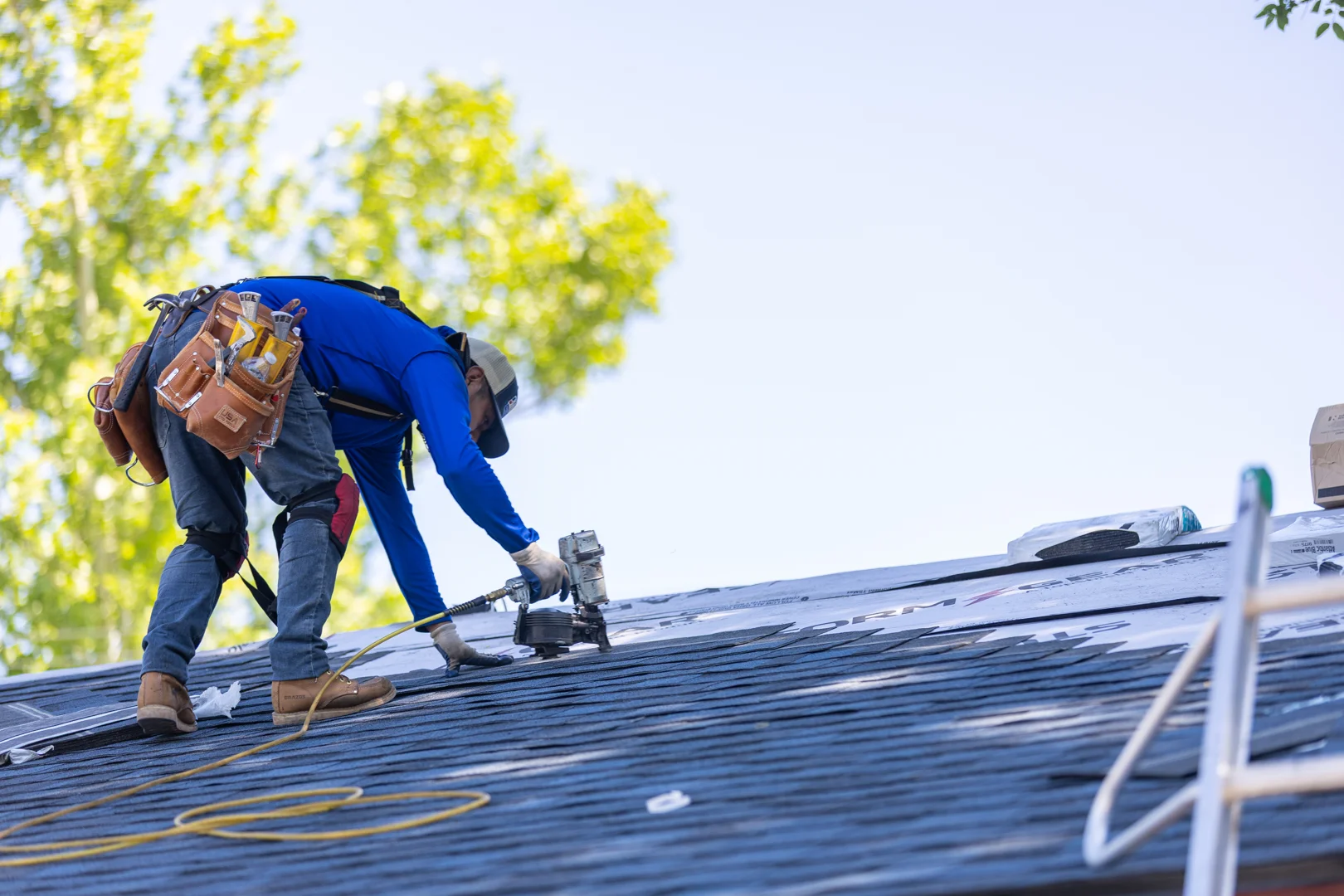
Permanent skylight repair requires methodical troubleshooting. Slapping roofing cement over old shingles only masks the problem temporarily while trapping moisture against your roof deck. Professional repairs resolve the underlying cause of water intrusion directly at the structural level.
Inspection and Diagnostic Leak Detection
The repair process begins with a diagnostic inspection. Technicians assess interior signs, checking drywall moisture levels and structural framing. Homeowners who want to spot a problem sooner can use these tips for finding a roof leak. On the roof, the crew examines the skylight dome, glass seals, curb integrity, step flashing alignment, and nearby shingles.
Contractors often use thermal imaging cameras to locate hidden pockets of trapped water behind light shafts and drywall returns. Controlled water spray testing helps pinpoint the precise elevation where water breaches the roofing assembly, differentiating between step flashing failures and glass gasket leaks. A roof inspection provides a clear, documented assessment before any tear-off begins.

Step-by-Step Reflashing, Resealing, and Component Repair
Once the failure point is identified, technicians follow a methodical workflow to restore watertight integrity:
- Shingle Removal: Carefully remove surrounding shingles around the perimeter of the skylight curb to expose the existing flashing and roof deck.
- Surface Cleaning: Strip away old, corroded step flashing, dried caulking, and compromised underlayment down to bare, clean plywood.
- Membrane Installation: Apply a self-adhering, high-temperature ice and water barrier membrane up the sides of the curb and out onto the roof deck.
- Flashing Integration: Install a heavy-duty flashing system, starting with the bottom sill, followed by woven step flashing interwoven with each shingle course, and finishing with the head flashing.
- Gasket Resealing: Replace worn exterior rubber gaskets and apply industrial-grade polyurethane or silicone sealants along critical joint connections.
- Roofing Reinstallation: Lay fresh shingles neatly around the flashing perimeter, fastening components to maintain clean water shedding.
- Verification Testing: Conduct a controlled water test to verify that the unit sheds water away from the curb without interior dripping.
How Long Does Skylight Leak Repair Take?
Most standard skylight repairs are completed in a single visit lasting two to four hours. This timeline covers shingle removal, membrane installation, reflashing, and clean-up. If the scope requires custom sheet metal fabrication, frame rebuilding, or special-order glass sizes, the process may require a full day of labor. Professional contractors apply heavy-duty weather barriers to protect your living spaces until all permanent materials are properly installed.
Finding Reliable Local Leaking Skylight Repair in Tulsa
Our region experiences intense summer heat, high humidity, bitter winter cold, and violent thunderstorm seasons. These extreme shifts place thermal stress on roof penetrations. Choosing a local specialist familiar with our specific building practices and local codes ensures repairs hold up against severe weather. Homeowners searching for local leaking skylight repair in Tulsa, OK should choose a roofing professional familiar with local building practices, storm exposure, and local roof conditions. For drainage issues that can worsen water intrusion, a gutter repair guide can help homeowners recognize when professional attention is needed.
When to Call for Emergency Local Leaking Skylight Repair
Certain situations demand immediate response to protect your property from structural damage. Call for emergency assistance if:
- Water pours actively through the skylight opening during an ongoing storm
- The drywall along your ceiling or light well begins to sag, bow, or collect standing water
- Hail or tree limbs have shattered or cracked the exterior glass, exposing your home interior
- Electrical fixtures or ceiling fans near the skylight shaft begin sparking or shorting out
In these critical moments, safely catch falling water in buckets, move furniture, and avoid climbing onto slippery roofs. When severe weather hits, requesting emergency roof repair secures your home with protective tarping until permanent repairs can be completed.
Homeowners Insurance Coverage and Claim Verification
Homeowners insurance policies typically cover skylight leak damage when the issue results from sudden, accidental events such as hail impact, wind-torn flashing, or falling branches. Policies generally exclude coverage for gradual wear, dried caulking, aged gaskets, or deferred maintenance.
If a severe storm caused your skylight failure, document the damage immediately. Take clear photos of the roof, the skylight, damaged drywall, and affected personal property. A qualified roofing contractor can provide an itemized inspection report to support your insurance claim and help ensure all covered storm damage is addressed.
Contractor Credentials and Workmanship Guarantees
Roof penetrations require high technical precision. When hiring a contractor to repair a leaking skylight, verify that they carry the proper credentials:
- Full licensing and comprehensive general liability and workers’ compensation insurance
- Proven track record with local references and verifiable project reviews
- Expertise in both general roofing assemblies and specific skylight flashing systems
- Written workmanship warranties that guarantee repair durability, not just manufacturer material coverage
If safety concerns, specialized tools, or structural roofing work are involved, it is always best to contact a professional rather than attempt repairs yourself.
Frequently Asked Questions About Skylight Leak Repairs
Can a leaking skylight be resealed without replacing the glass?
Yes. If the glass unit is structurally sound and the frame shows no rot or warping, technicians can resolve leaks by replacing perimeter gaskets, installing new flashing kits, and applying commercial sealants around the curb.
How do I know if my skylight leak caused ceiling or framing rot?
Signs of structural rot include spongy drywall, dark black or brown wood staining inside the attic or shaft, peeling paint that returns after repainting, and persistent mildew odors near the opening.
How do ice dams cause skylights to leak in winter?
Ice dams form when heat escaping your attic melts roof snow, which freezes again at the colder eaves or around skylight curbs. Backed-up water pools behind the ice dam and forces its way under the flashing laps.
Why does my skylight leak only when it rains heavily?
Heavy rain creates large water volume on your roof, while wind pushes water horizontally. If flashing laps are unsealed or weep holes become clogged with debris, excess water backs up over the curb edge.
How long do professional skylight repairs last?
When completed using high-grade sealants, self-adhering membranes, and correctly integrated step flashing, professional repairs last between 10 and 15 years.
Can cracked skylight glass be patched with silicone?
No. Cracked glass on a skylight must be replaced. Silicone patches are temporary and cannot restore the structural integrity, safety rating, or thermal efficiency of tempered or laminated safety glass.
What should I do first when my skylight starts dripping?
Place a bucket beneath the drip, move furniture and rugs out of the area, wipe excess water off walls, and take photos for insurance documentation. Never climb onto a wet roof during a storm.
Why is my skylight foggy between the glass panes?
Fogging between panes indicates that the factory perimeter seal of the insulated glass unit has failed, allowing moist air to enter the sealed space. This requires replacing the glass unit.
Can skylight leaks cause mold behind walls?
Yes. Water leaking down the skylight shaft can soak hidden insulation, drywall backing, and wood framing, creating ideal conditions for mold growth within 24 to 48 hours.
Does homeowners insurance cover leaking skylight repair?
Insurance typically covers repairs if the leak results from sudden storm damage, hail, or falling objects. Leaks caused by normal aging, wear and tear, or poor maintenance are generally excluded.
Protecting Your Tulsa Home with Expert Roof and Skylight Solutions
Leaving a leaking skylight unaddressed can lead to costly drywall repairs, ruined insulation, framing rot, and mold growth. Whether your skylight needs minor resealing, fresh flashing, or complete replacement, working with an experienced local team protects your home through every season. For a roof inspection or repair assessment, contact Keller Exteriors to help protect your home from further water damage.