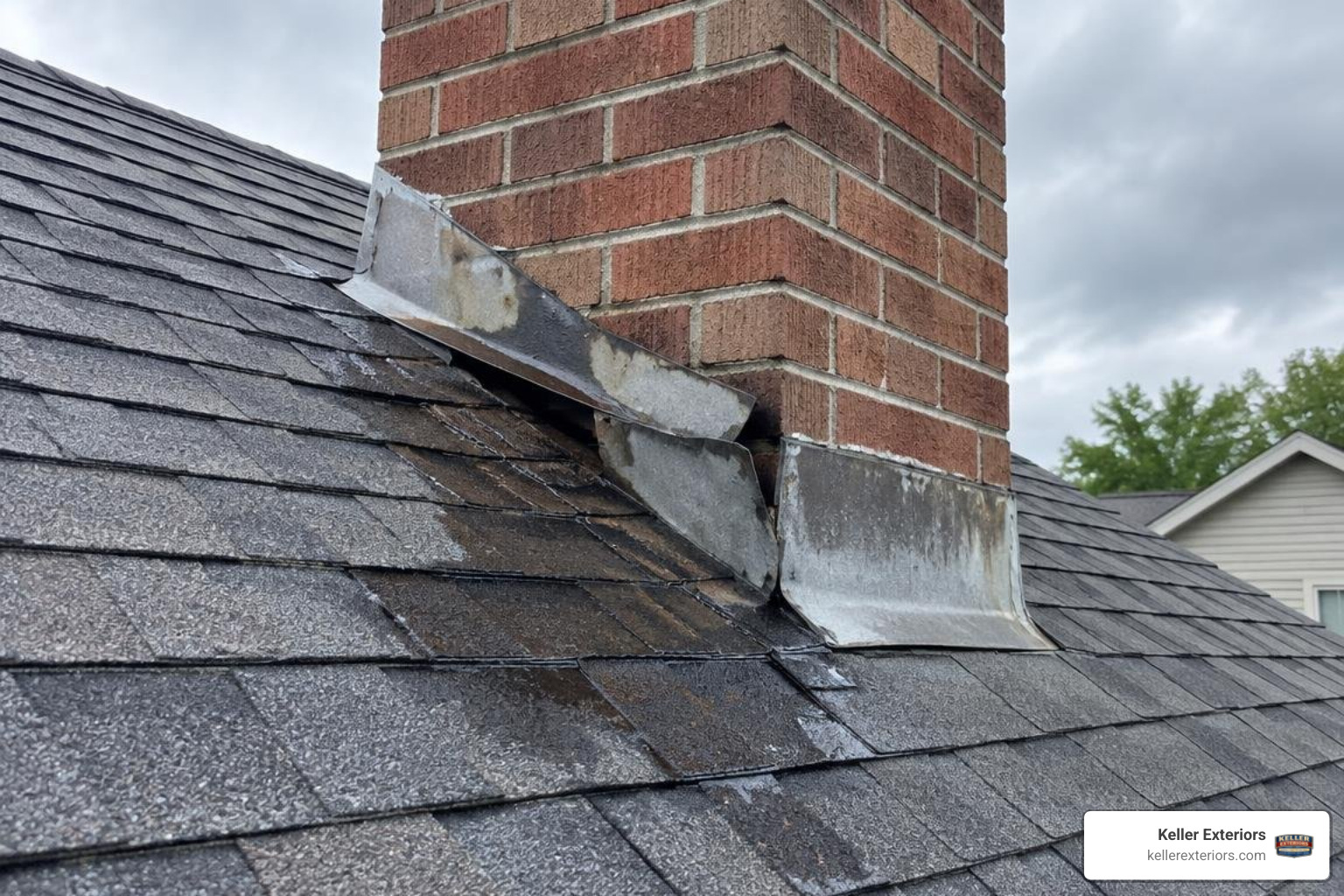
Common Signs of Chimney and Roof Damage
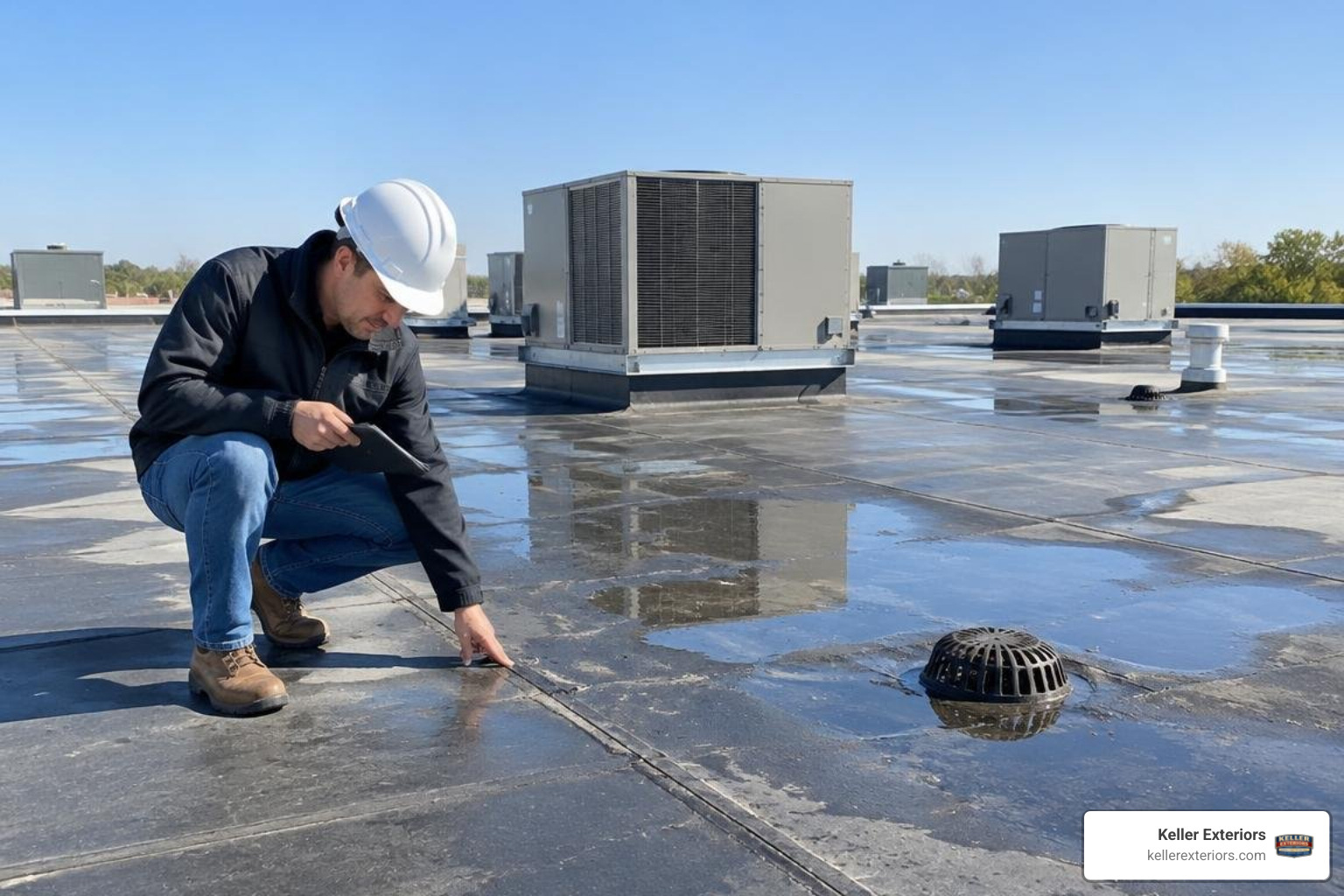
Water near your chimney often points to damaged flashing, the metal that seals the joint between the chimney and roof. Ask a local roofer to check the flashing, nearby shingles, and roof decking. If bricks are loose, the chimney leans, or you see cracks inside the flue, have a qualified chimney specialist inspect it, too. Don’t climb onto a wet or damaged roof.
I’m Robert Keller, owner of Keller Exteriors, with more than 25 years of experience in home improvement and exterior work. Finding dependable chimney and roof repair near you starts with knowing the warning signs and deciding which specialist to call.
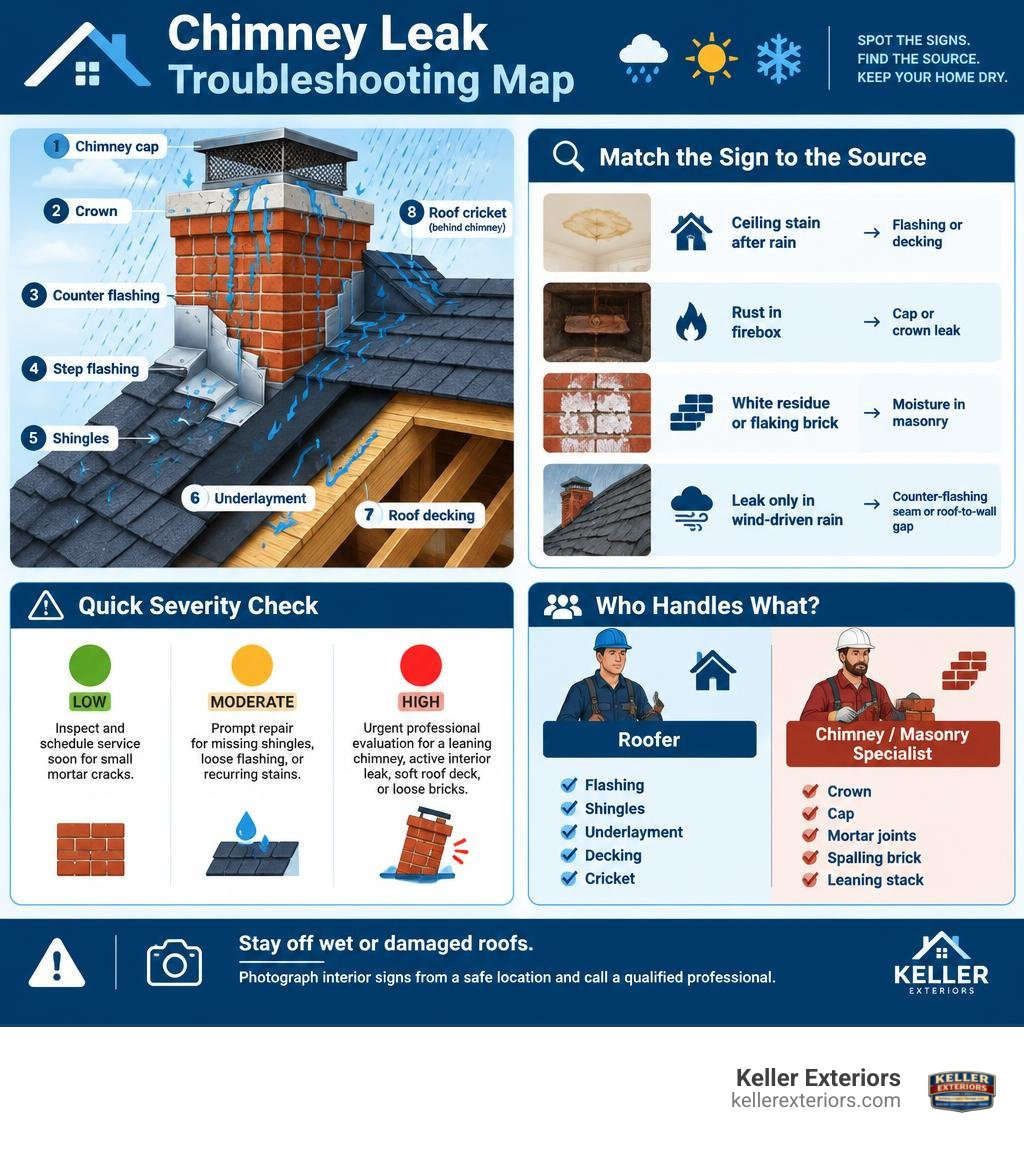
If a leak starts during a storm, these emergency steps can help limit interior damage while you arrange professional help. If you need to compare qualifications, choose a roofer based on licensing, insurance, and local reviews.
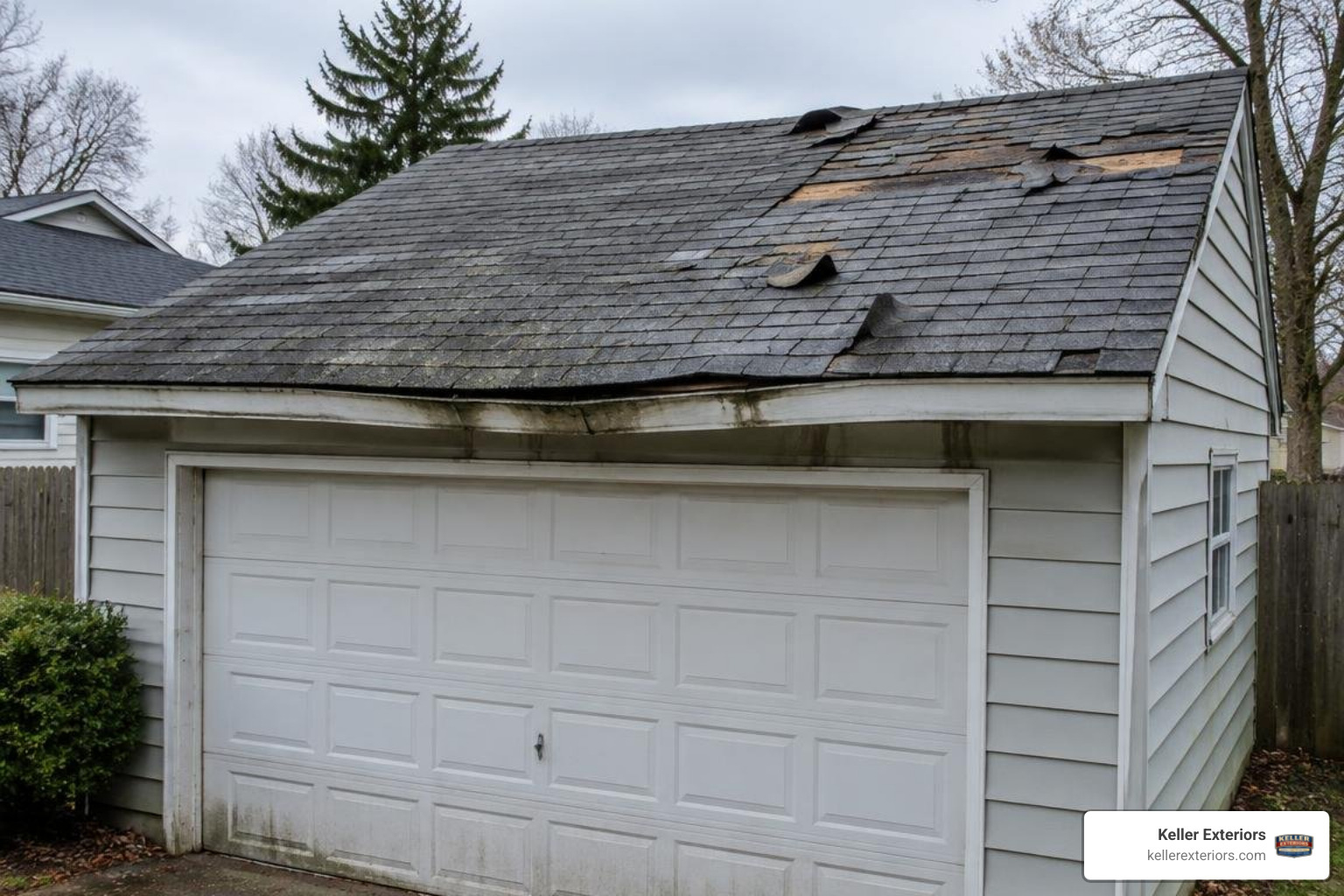
When roof and chimney problems start, they rarely announce themselves with loud noises. Instead, water quietly seeps into tiny gaps, slowly damaging wood, drywall, and brickwork behind your walls. Spotting these issues early helps you avoid major structural repairs later.
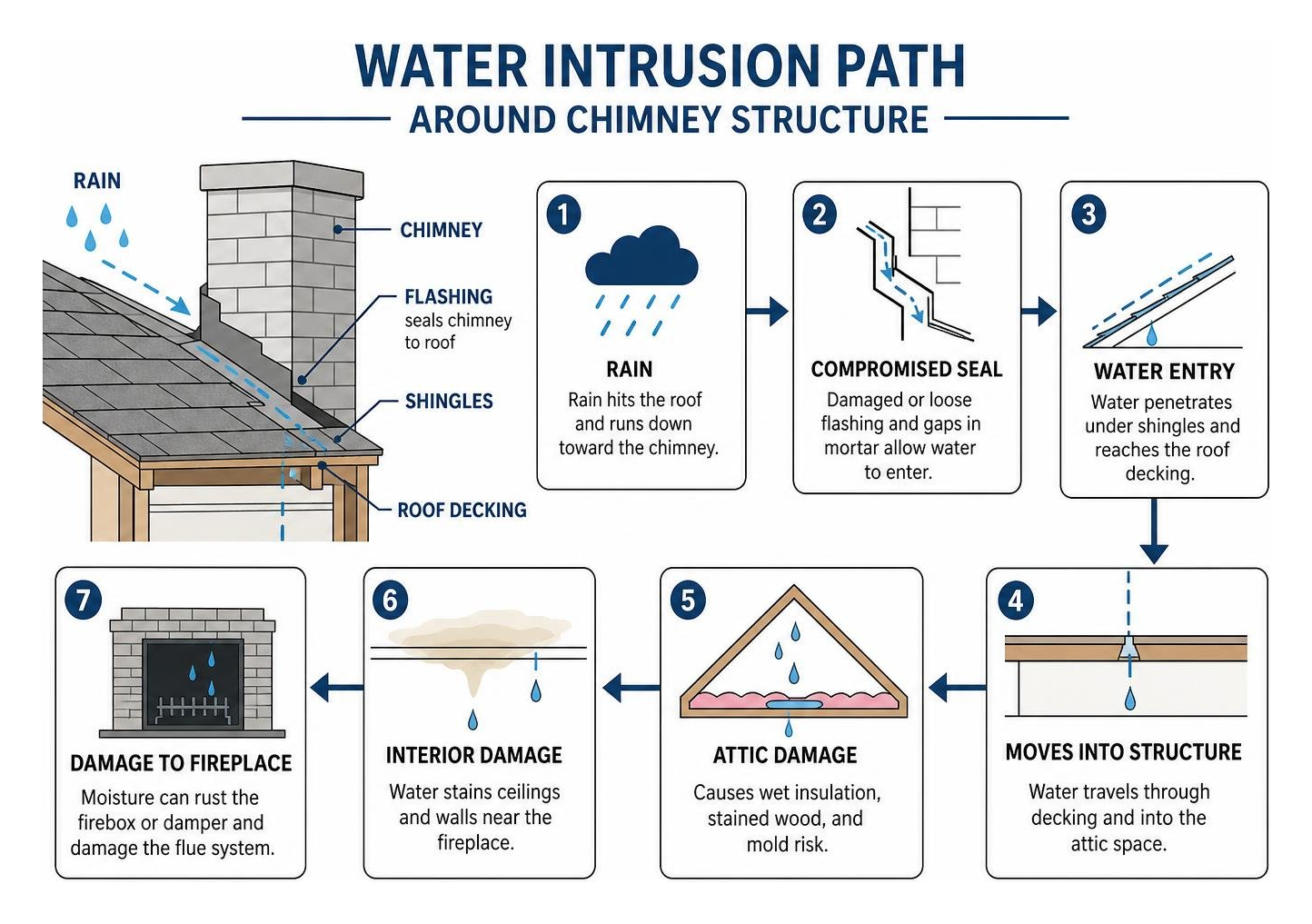
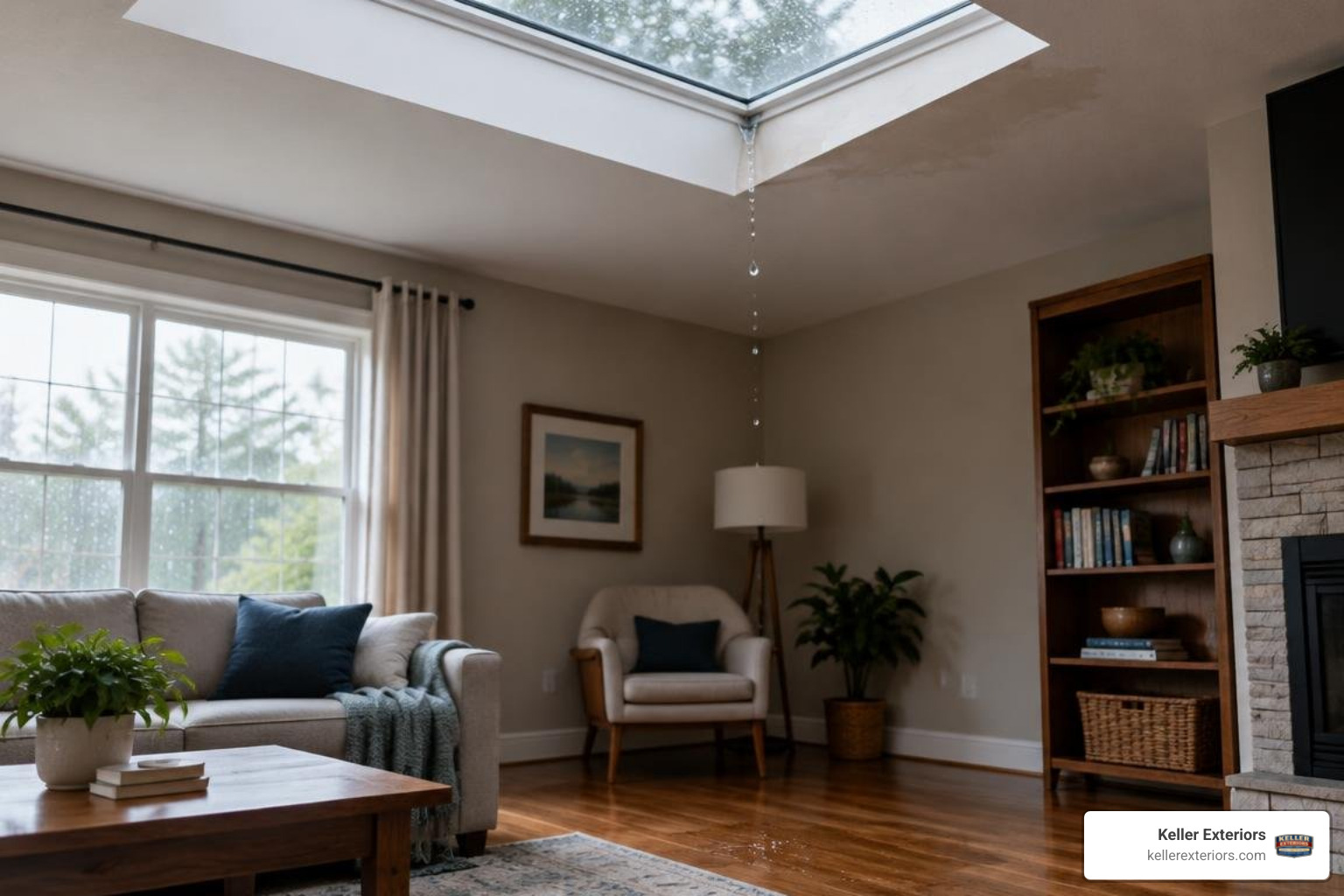
Water staining on your ceilings or running down your fireplace walls is one of the most obvious alerts. However, other signs appear directly on the chimney stack itself or inside your attic space. A rusted firebox or damper shows that moisture has entered the flue system from above. In colder weather, moisture trapped inside exterior brickwork freezes and expands. This process, known as freeze-thaw spalling, causes brick faces to pop off and crack. Damp insulation or dark spots on rafters in your attic confirm that water has bypassed your roofing system entirely.
Warning Signs Your Flashing and Masonry Are Failing
Chimneys undergo constant exposure to sunlight, heavy rain, and seasonal temperature swings. Over time, these weather shifts degrade mortar joints and metal flashing seals.
Keep an eye out for these specific warning signs:
- White powdery residue on exterior bricks (efflorescence), which indicates water moving through porous masonry.
- A rusted damper or standing water in your firebox after heavy rainfall.
- Brown or yellow ceiling discoloration near the chimney breast.
- A damp, musty odor in your attic or upper-story rooms that gets stronger after a storm.
- Crumbling mortar joints or loose bricks on the exterior chimney stack.
Learning practical techniques for identifying roof leaks early will protect your finished ceilings from major water damage and mold growth.
When to Search for Professional Chimney and Roof Repair Near You
Minor cosmetic issues can become structural emergencies if neglected. When you notice deep mortar decay, loose brick stacks, or structural shifting, schedule an inspection with Keller Exteriors. A leaning chimney stack indicates serious sub-structure failure or shifting roof trusses.
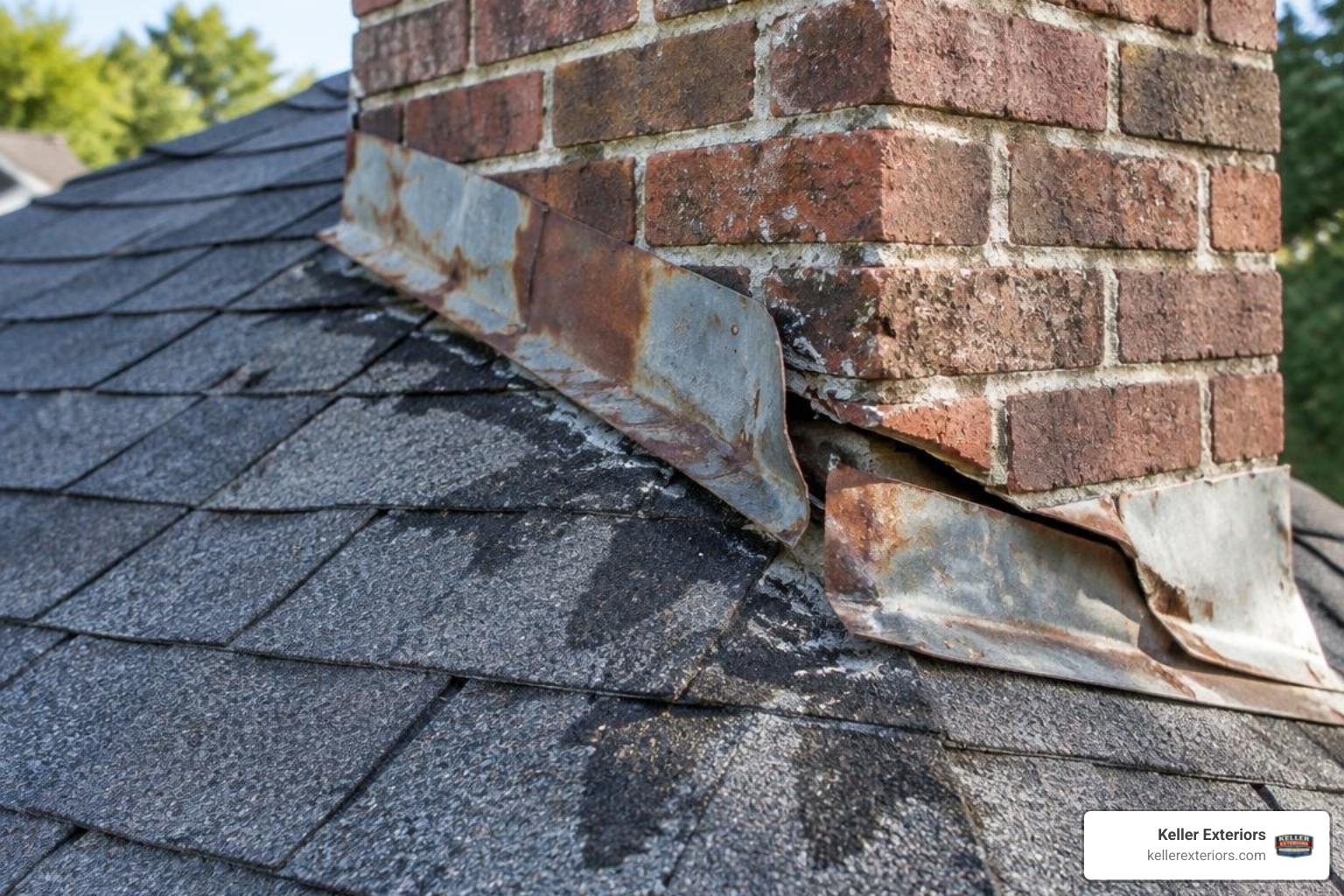
If you spot active water entry inside your living room, studying the ceiling damage signs will help you identify whether the leak originates from deteriorated step flashing, a cracked crown, or compromised roof decking.
Why Chimney Leaks Happen: Root Causes and Damage Vectors
Chimney leaks result from multiple vulnerabilities working together. Your roof expands and contracts as temperatures change throughout the day, while brick masonry remains relatively rigid. This continuous movement places significant stress on the joint where the chimney meets the roof deck.
Common causes of water intrusion include:
- Corroded metal flashing that allows wind-driven rain behind shingles.
- Storm damage, including high winds and hail strikes that pull metal away from brick joints.
- Dried, cracked sealants and polyurethane caulking around counter flashing seams.
- Animal intrusion through uncovered flue openings that dislodges chimney caps.
- Heavy roof runoff ponding behind wide chimneys without a proper diversion system.
Step Flashing, Counter Flashing, and Sealant Failure
The intersection between your roof and chimney relies on a two-part metal barrier system. Step flashing consists of L-shaped metal pieces woven between each layer of shingles along the chimney sides. Counter flashing is embedded directly into the mortar joints of the chimney and folds down over the step flashing.
When caulk deteriorates or thermal expansion pulls these metal sections apart, water easily slides into the open gap. Wind uplift during severe storms can bend flashing away from brickwork. For chimneys wider than 30 inches, a roof cricket (a small peaked saddle structure built behind the chimney) is necessary to divert water around the masonry. Without a cricket, roof runoff collects behind the chimney, accelerating metal corrosion and wood rot.
Crown Cracks, Spalling Bricks, and Missing Caps
The top of your chimney requires just as much protection as the base. The chimney crown is the concrete slab covering the top of the masonry stack. When it develops hairline cracks from weathering, rainwater enters the inner structure.
This water absorption saturates the flue liner and surrounding bricks. During winter freezes, the trapped moisture expands, causing spalling bricks that crack and break away. Missing or improperly fitted chimney caps leave the open flue exposed to direct downpours, leaves, and wildlife nesting.
Repair vs. Rebuild: Evaluating Your Chimney and Roof System
When assessing damage, homeowners often wonder whether a targeted repair will solve the issue or if a complete rebuild is necessary. Minor surface defects can usually be restored with localized repairs, but deep structural failure requires extensive rebuilding.
| Assessment Factor | Chimney Repair / Tuckpointing | Partial or Complete Rebuild |
|---|---|---|
| Typical Scope | Replacing flashing, resealing crowns, repairing mortar joints | Rebuilding stack from roofline up or foundation tear-down |
| Primary Causes | Flashing gaps, missing caps, minor surface mortar cracks | Severe leaning, deep foundation settlement, structural collapse risk |
| Decking Impact | Localized shingle and underlayment repairs around flashing | Complete replacement of rotted decking and surrounding framing |
| Expected Lifespan | 5 to 15 years with proper annual maintenance | 30 to 50+ years for newly constructed masonry and framing |
Determining If You Need Masonry Tuckpointing or a Complete Rebuild
Masonry tuckpointing involves scraping out decayed mortar joints to a depth of roughly half an inch and filling them with fresh mortar. This process restores structural strength and keeps moisture out of sound bricks.
However, tuckpointing cannot fix a chimney that is visibly leaning, pulling away from the exterior wall, or suffering from foundation settlement. If the brick stack has shifted off plumb or the interior clay flue tiles have collapsed, a partial rebuild from the roofline up or a full teardown down to the foundation is the only safe solution.
Addressing Underlying Roof Decking and Shingle Deterioration
Chimney leaks rarely stop at the masonry surface. Water that bypasses compromised flashing runs straight down onto the plywood roof decking and structural rafters. Over months or years, this moisture causes underlayment rot and soft, spongy decking.
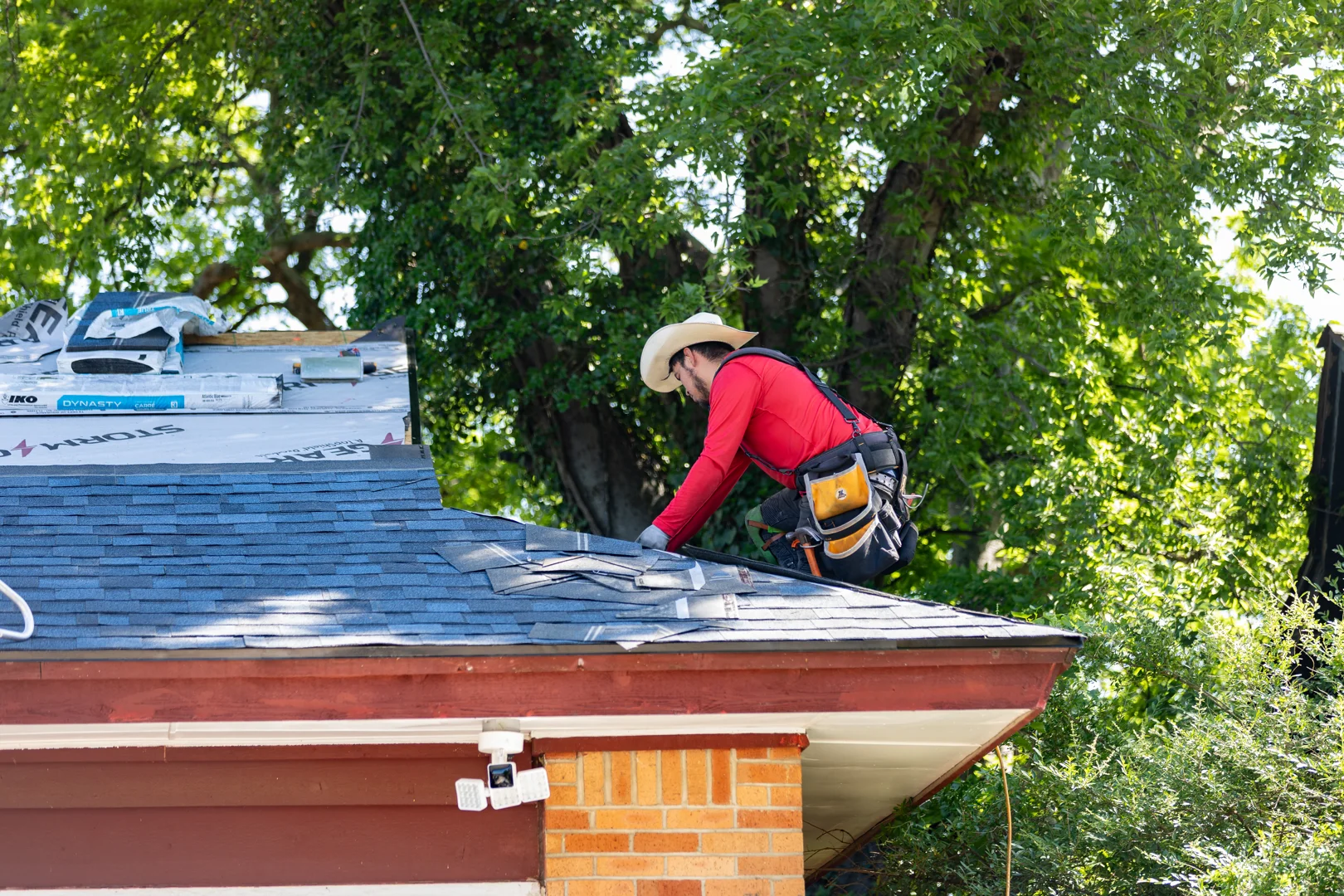
When replacing chimney flashing, a professional roofer inspects the surrounding wood. If moisture has damaged large sections of the roof plane, exploring roof replacement options ensures that new waterproof ice and water shields, underlayments, and shingles are correctly installed around the chimney base.
How to Choose the Best Chimney and Roof Repair Near You
Selecting the right contractor ensures that your roof and chimney are repaired safely according to local building codes. Because chimney repairs sit at the crossroads of roofing and masonry, you need a contractor with proven expertise in both exterior flashing systems and structural safety.
Vetting Local Credentials, Licenses, and Insurance
Always verify your contractor’s credentials before signing an agreement. Reliable roofing and exterior contractors carry active general liability insurance and workers’ compensation coverage to protect you from job-site liability.
For the chimney stack itself, organizations like the National Fire Protection Association provide clear safety standards, highlighting that chimneys should be inspected annually to prevent hazards. Reviewing a practical checklist for vetting top-rated roofers helps you verify licenses, warranties, and verified customer feedback across Oklahoma communities like Broken Arrow, OK, Jenks, OK, and Owasso, OK.
Emergency Response and Insurance Claim Handling for Chimney and Roof Repair Near You
Severe weather can strike without warning, sending tree limbs through your roof or dislodging chimney caps during heavy winds. Sudden storm damage often qualifies for coverage under your homeowners insurance policy, whereas long-term neglect and gradual wear are typically excluded.
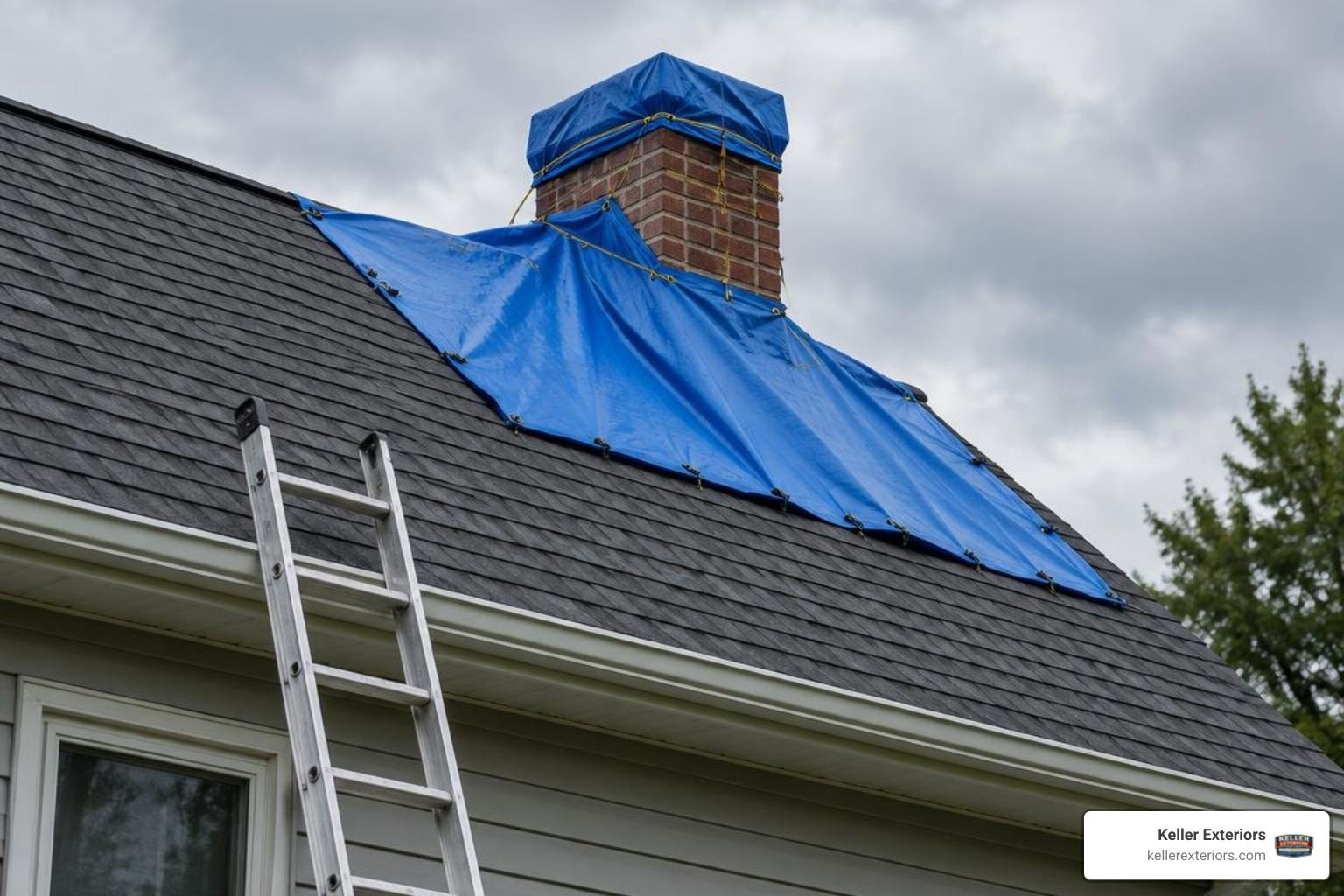
If sudden leaks happen during severe storms, knowing how to handle emergency roof leaks in heavy rain will protect your home until an emergency tarping crew arrives. Be sure to photograph all damage before emergency tarps are secured to assist with your insurance claim.
Frequently Asked Questions About Chimney and Roof Repair
How much do chimney and flashing repairs typically cost, and how long do they take?
Repair costs vary based on chimney height, roof pitch, accessibility, and the extent of masonry or decking rot. Simple flashing repairs or minor mortar joint fixes are often finished within a single day, while full chimney rebuilds and decking replacements require several days.
How often should chimneys and roofs be inspected by a professional?
Roofs and chimneys should undergo an inspection at least once per year. An annual evaluation catches cracked sealants, missing shingles, and loose bricks before seasonal freezes or heavy spring downpours cause leaks.
Do gas fireplace chimneys require the same level of maintenance as wood-burning fireplaces?
Yes, gas fireplace flues require annual inspections. While they do not accumulate heavy wood creosote, gas combustion produces acidic moisture that corrodes metal flue liners and breaks down interior mortar joints over time.
Can a chimney leak cause structural damage to my home?
Yes, ongoing water intrusion rots wooden roof rafters, damages attic ceiling joists, and weakens wall framing. Unchecked moisture can also encourage mold growth inside insulation and drywall.
What is the difference between step flashing and counter flashing?
Step flashing consists of individual L-shaped metal pieces woven into the roof shingles along the chimney sides. Counter flashing is mortared directly into the brickwork and covers the top edge of the step flashing to block rain.
Why is my chimney leaking only during heavy downpours?
Wind-driven rain can enter small horizontal cracks in the chimney crown, compromised mortar joints, or gaps where the counter flashing meets the brick. A lack of a chimney cricket can also allow heavy runoff to pool and overflow flashing edges.
What is chimney efflorescence?
Efflorescence is a white, chalky mineral deposit left on exterior bricks. It occurs when water dissolves internal salts within the masonry and carries them to the surface as it evaporates.
Does homeowners insurance cover roof and chimney repairs?
Insurance typically covers sudden, accidental damage caused by severe wind, hail, or fallen trees. It generally does not cover damage resulting from gradual wear, old age, or deferred maintenance.
When should a chimney crown be replaced instead of sealed?
Minor hairline cracks in a chimney crown can be sealed with a flexible waterproof coating. If the crown has deep structural cracks, broken pieces, or missing chunks, complete replacement with reinforced concrete is required.
Can I repair leaking chimney flashing myself?
Climbing onto a roof is dangerous, especially when searching for leaks on steep slopes or slick surfaces. Flashing installation requires specialized metal bending, masonry tuckpointing, and roofing integration that is best left to licensed professionals.
Protecting Your Home With Expert Roofing Solutions
Your chimney and roof work together as a complete protective barrier for your home. When metal flashing pulls loose or roof decking softens from water intrusion, addressing the roofing components promptly prevents costly interior repairs. At Keller Exteriors, our roofing services include flashing replacement, roof decking repairs, and complete roof-system installations across Tulsa, OK, Broken Arrow, OK, Owasso, OK, Bixby, OK, and neighboring communities. While masonry rebuilding and chimney sweeping require a masonry specialist, our licensed exterior crews ensure your roofline remains completely watertight.
If you suspect water damage around your chimney, Keller Exteriors can help you take a safe next step. Our team can examine the roofline, flashing, shingles, and decking to identify where moisture may be entering. We will explain whether the problem appears limited to the roofing system or whether loose masonry, a damaged crown, or flue concerns call for a chimney specialist. Prompt attention after wind-driven rain or a heavy storm can help limit further damage to insulation, ceilings, and framing. Avoid climbing onto a wet roof or attempting complex flashing repairs without the proper safety equipment and training. Schedule a roof repair with us today to discuss your concerns with a local exterior professional and arrange an evaluation.