Commercial Roof Repairs: What Tulsa, OK Owners Should Check First
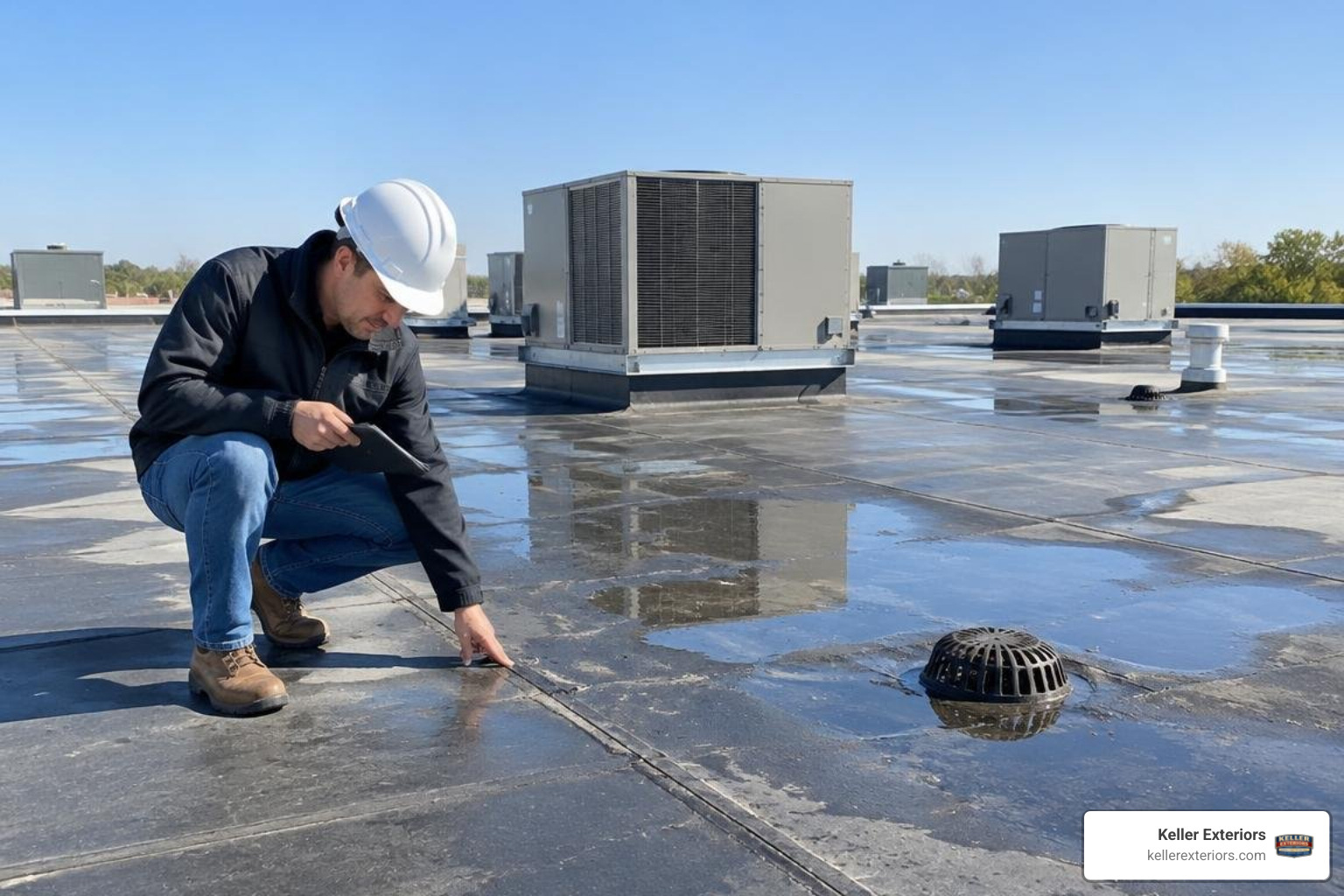
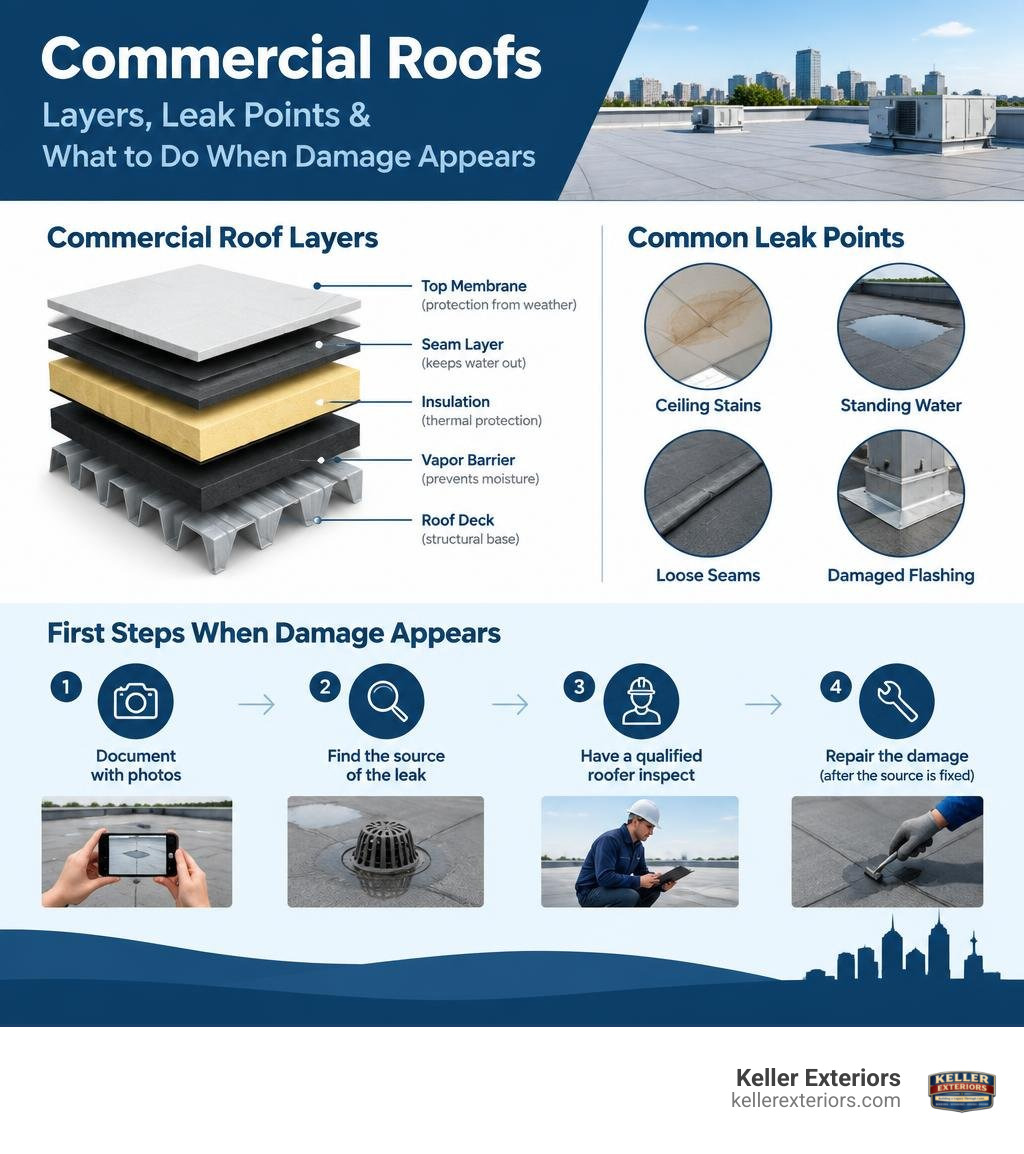
Check for ceiling stains, standing water, loose seams, and damaged flashing. If you find a problem, document it with photos and have a qualified roofer trace where water enters before patching the roof. A leak inside may start at a drain, HVAC curb, or seam some distance away.
Small commercial roof repairs are easier to manage before water reaches the insulation or disrupts the building. The guide below shows what to watch for and how to decide whether repair, restoration, or replacement makes sense.
I’m Robert Keller, owner of Keller Exteriors. I bring more than 25 years of experience in exterior work and a hands-on approach to helping owners make informed decisions about commercial roof repairs.
Warning Signs and Critical Risks for Commercial Properties
Commercial building envelopes carry a heavy burden throughout the year. Between scorching summer heat, intense spring hail, and winter freezes, roof materials expand, contract, and gradually wear down. Recognizing early signs of distress prevents operational downtime and protects valuable inventory. When business owners schedule professional commercial roofing services, they catch subtle membrane flaws before moisture migrates deep into the building core.
Recognizable Surface and Interior Red Flags
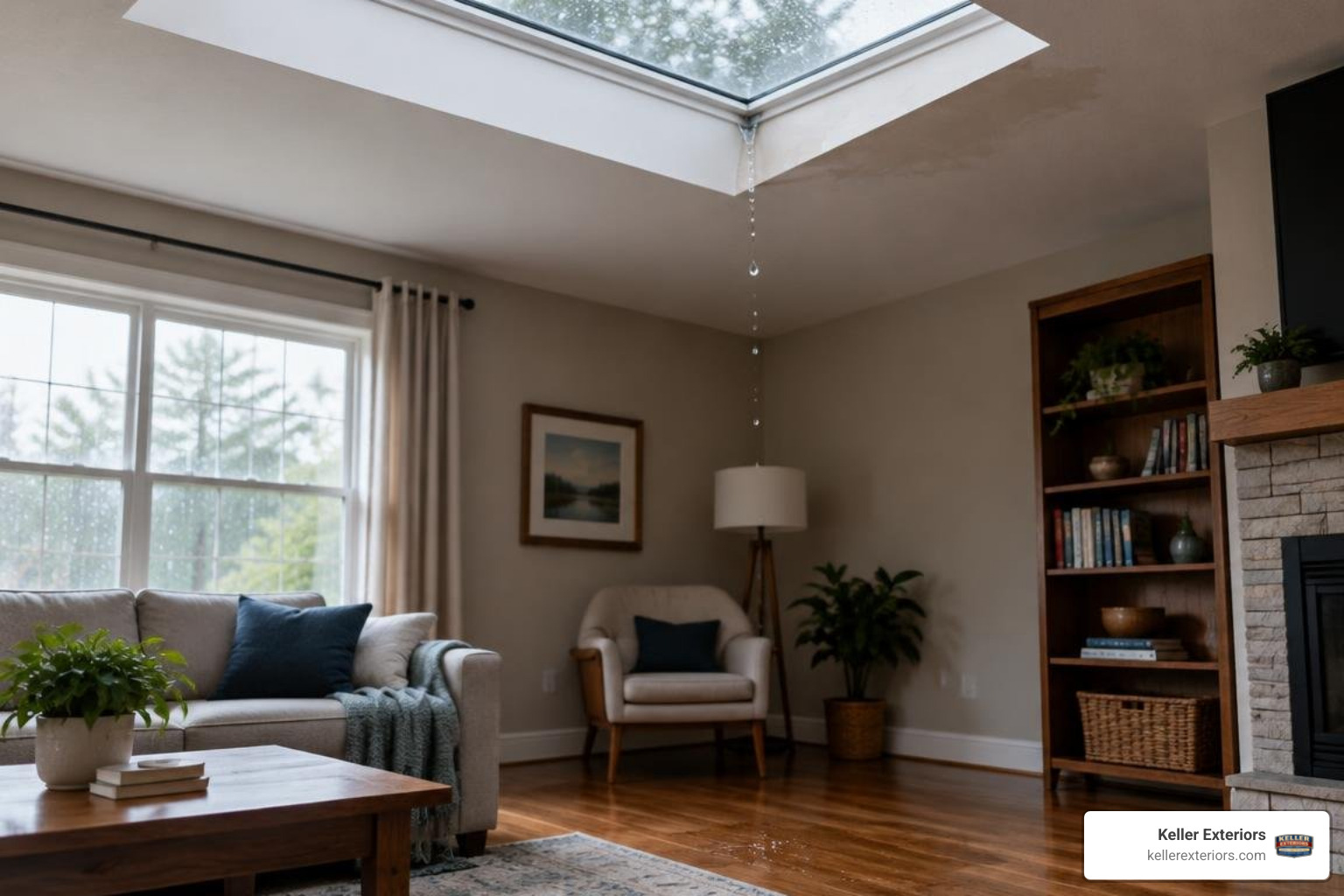
The warning signs of a failing roof membrane appear both inside the facility and on the rooftop surface. Inside the building, discoloration on ceiling tiles, peeling paint along upper walls, or damp odors indicate moisture intrusion. Many people assume a ceiling stain directly marks where water entered the outer layer. In reality, water travels along structural purlins, pipes, and electrical conduits before dripping down.
On the roof, several visual indicators demand immediate attention:
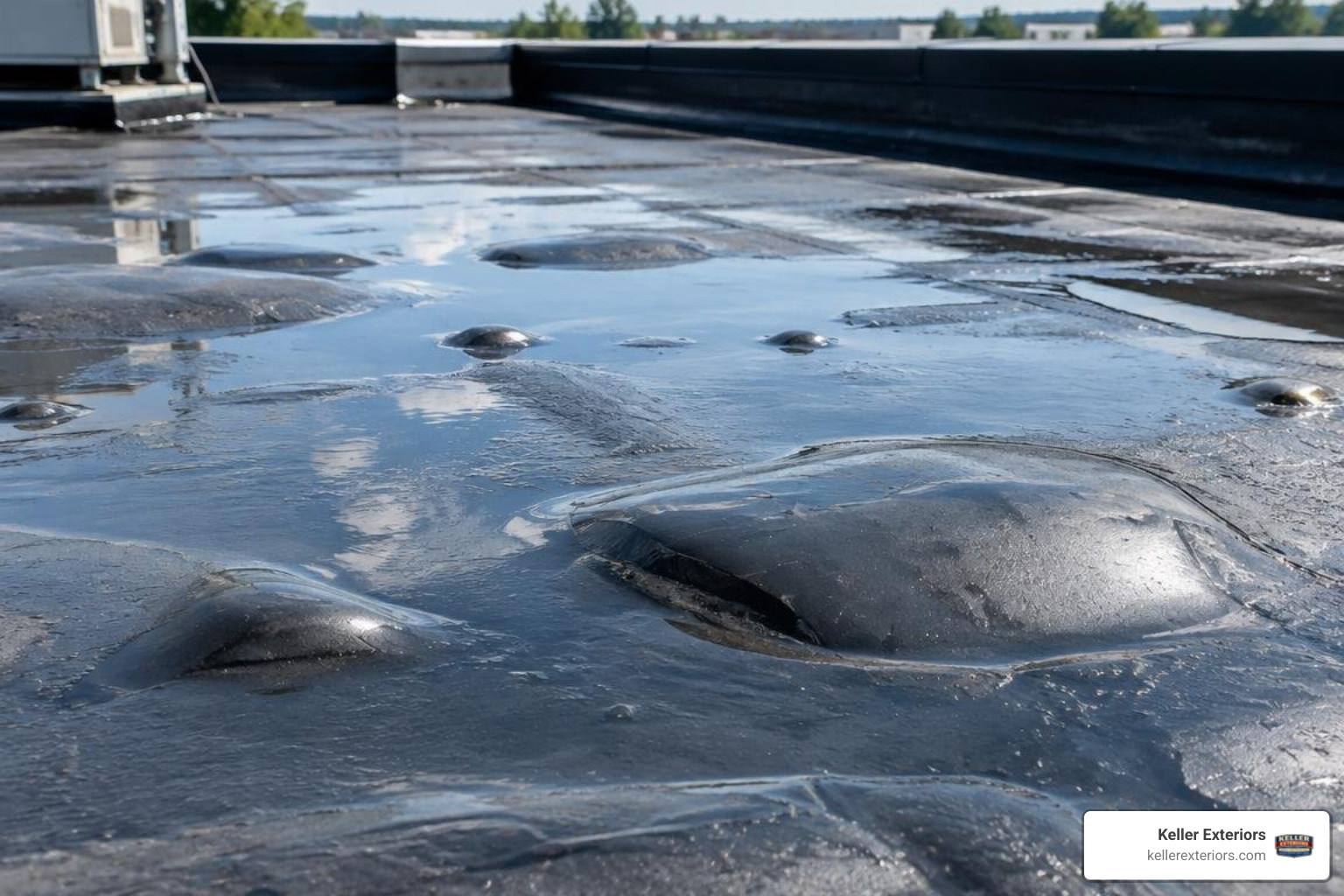
- Ponding Water: If standing water remains on the membrane for longer than 48 hours after rain, the drainage system is compromised. Flat roofs are built with slight slopes toward internal drains or scuppers. Low spots hold water, which accelerates membrane degradation and adds dead-load weight to the roof deck.
- Blistering and Ridging: Pockets of trapped air or moisture expand in warm weather, lifting the membrane away from the underlying insulation board. Walking across spongy or blistered areas can easily puncture the surface.
- Separated Seams and Gaps: Strong winds and temperature swings pull field seams apart. An open seam acts like an open funnel during heavy rainfall.
- Cracked Mastic and Sealant: The caulking around equipment rails, vents, and wall flashings dries out, shrinks, and cracks over time, leaving entry points for wind-driven moisture.
Why Minor Commercial Roof Repairs Protect Your Bottom Line
Delaying small maintenance items creates massive financial risks. A minor seam separation or loose fastener can usually be fixed quickly. However, when unaddressed, water seeps past the top layer into the rigid foam insulation beneath it.
Saturated insulation loses its thermal resistance, driving up heating and cooling bills for your facility. Worse, wet insulation holds moisture against metal decks, causing unseen rust, or against concrete and wood decks, leading to rot. Mold can develop within days inside the plenum space, posing health risks to tenants and employees. Following reliable emergency roof leak response steps when leaks occur protects structural integrity and saves property managers significant capital.
Vulnerable Roof Components and Root-Cause Leak Detection
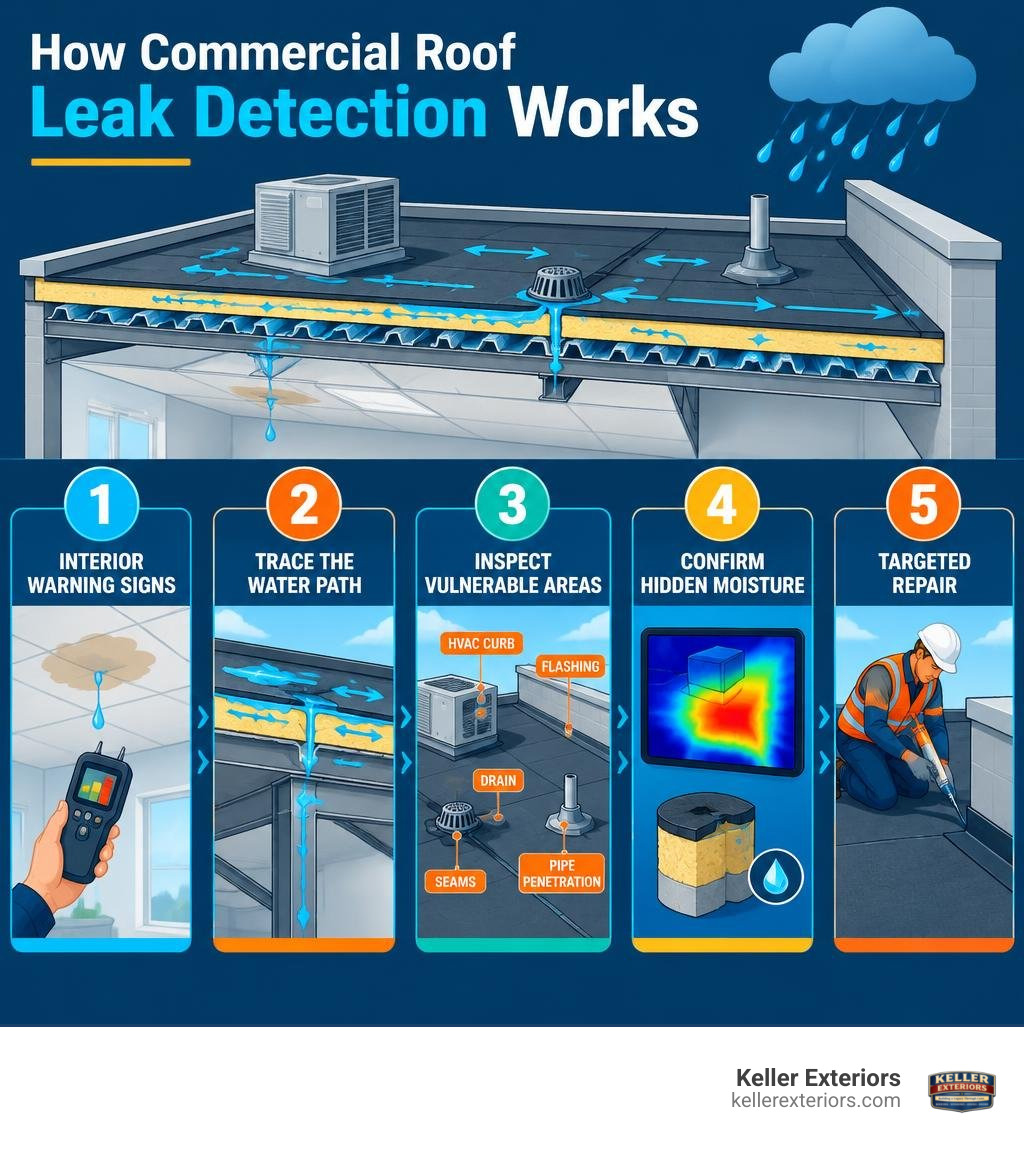
Finding the true source of a commercial leak requires methodical investigation. Unlike steep-slope residential roofs where gravity pulls water straight down shingles, low-slope commercial roofs allow moisture to move horizontally across layers of insulation and vapor retarders.
Common Failure Points: Flashings, Seams, and HVAC Curbs
Over 90 percent of commercial leaks occur at transitions, terminations, and rooftop penetrations rather than in the open field of the membrane. Roofers focus on these primary trouble areas:
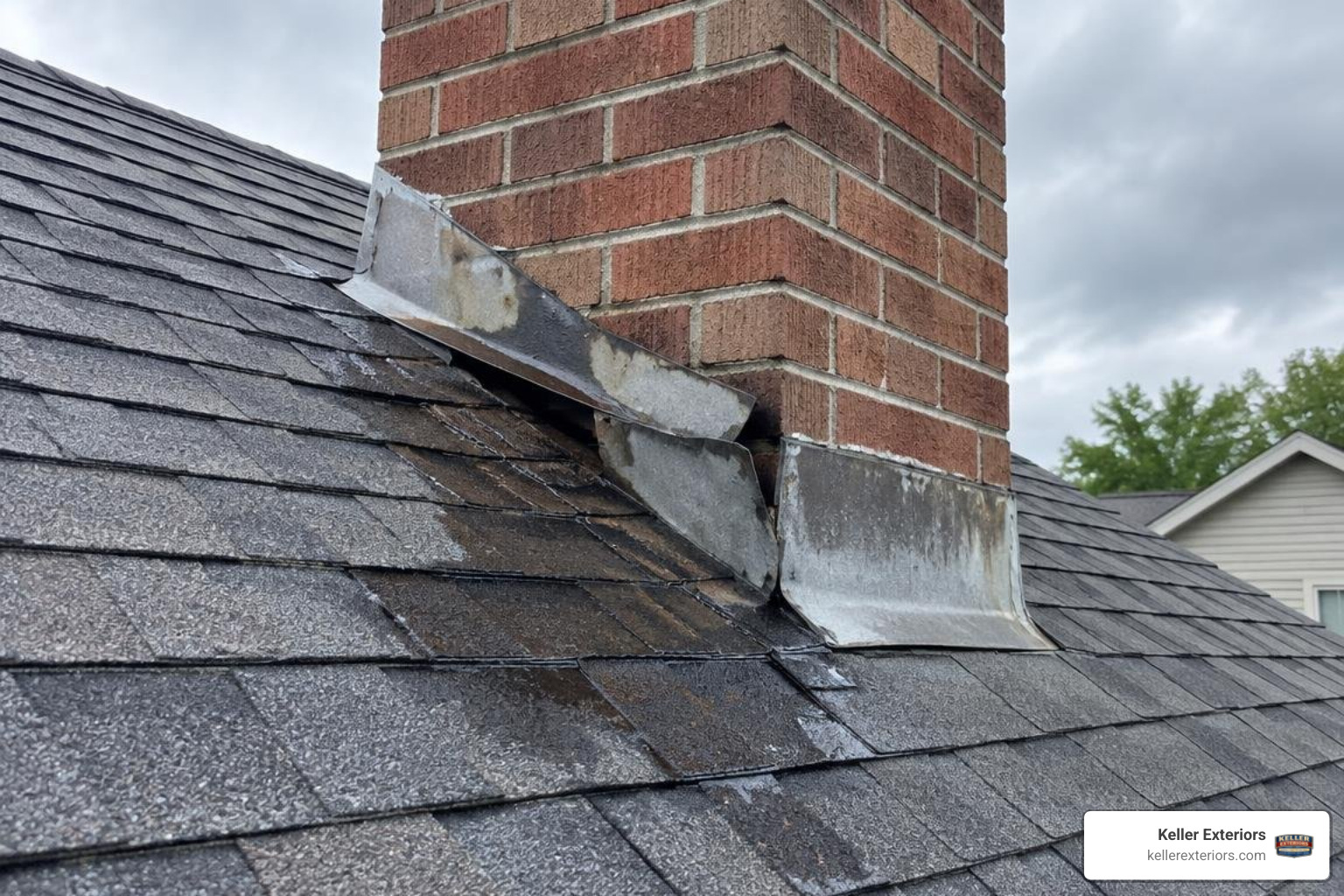
- HVAC Curbs and Equipment Rails: Rooftop air conditioning units vibrate continuously. Over time, mechanical vibration loosens fasteners, cracks counterflashing, and tears seam seals around the curb base.
- Parapet Walls and Coping Caps: Parapet walls take the full brunt of directional wind and driving rain. When metal coping caps pull loose or sealant joints fail, water drops straight behind the membrane.
- Scuppers, Drains, and Gutters: Debris like leaves, branches, and trash easily clogs commercial drains. Backed-up water rises above the flashing height, finding tiny imperfections in perimeter lap joints.
- Pitch Pockets and Pipe Boots: Small conduit lines, gas pipes, and cable penetrations pass through flashing boots. The pourable sealer inside pitch pans can shrink and dry out, allowing water to follow the pipe into the building.
Learning systematic methods to find a hidden roof leak prevents property owners from wasting time guessing where the breach started.
Diagnosing the True Source vs. Treating the Symptom
Slapping a coat of generic mastic over a roof leak near an interior drip is a temporary fix that rarely works. If water enters 20 feet away at a parapet wall, travel along a metal deck rib, and exit through a light fixture, coating the ceiling area does nothing to stop the decay.
Professional leak detection uses diagnostic practices to solve the root problem:
- Uphill Visual Tracing: Technicians examine the roof slope starting from the interior drip point and move upward, checking every seam, curb, and fastener along the path.
- Thermal Imaging (Infrared Surveys): Infrared cameras detect temperature differences on the roof surface after sunset. Because wet insulation retains heat longer than dry insulation, thermal scans highlight moisture pockets trapped under the membrane.
- Core Sampling: Extracting a small, cylindrical sample of the roofing assembly confirms whether the underlying insulation is dry, damp, or completely soaked.
- Substrate Restoration: Before sealing the top membrane, any compromised, wet insulation must be removed and replaced. Leaving wet substrate trapped under a new patch leads to premature blister formation and deck decay.
7 Key Strategies for Efficient Commercial Roof Repairs
Managing a commercial property requires strategic planning. Implementing proactive maintenance keeps repair tasks small and predictable while preventing premature roof failure.
Strategic Repair Execution for Minimal Disruption
- Establish Bi-Annual Inspections: Schedule professional reviews every spring and fall. Spring checks identify winter freeze-thaw damage, while fall checks prepare the roof for winter storms.
- Conduct Post-Storm Walkthroughs: After major hailstorms or severe straight-line winds in places like Tulsa, OK, check for rooftop debris, dislodged metal components, and impact punctures.
- Clear Drainage Paths Regularly: Keep drain bowls, strainers, scuppers, and downspouts free of leaves and trash so standing water drains away promptly.
- Use Climate-Matched Sealants: Select sealants designed for extreme temperature swings. Products that stay flexible during cold winter nights and hot summer afternoons prevent split joints.
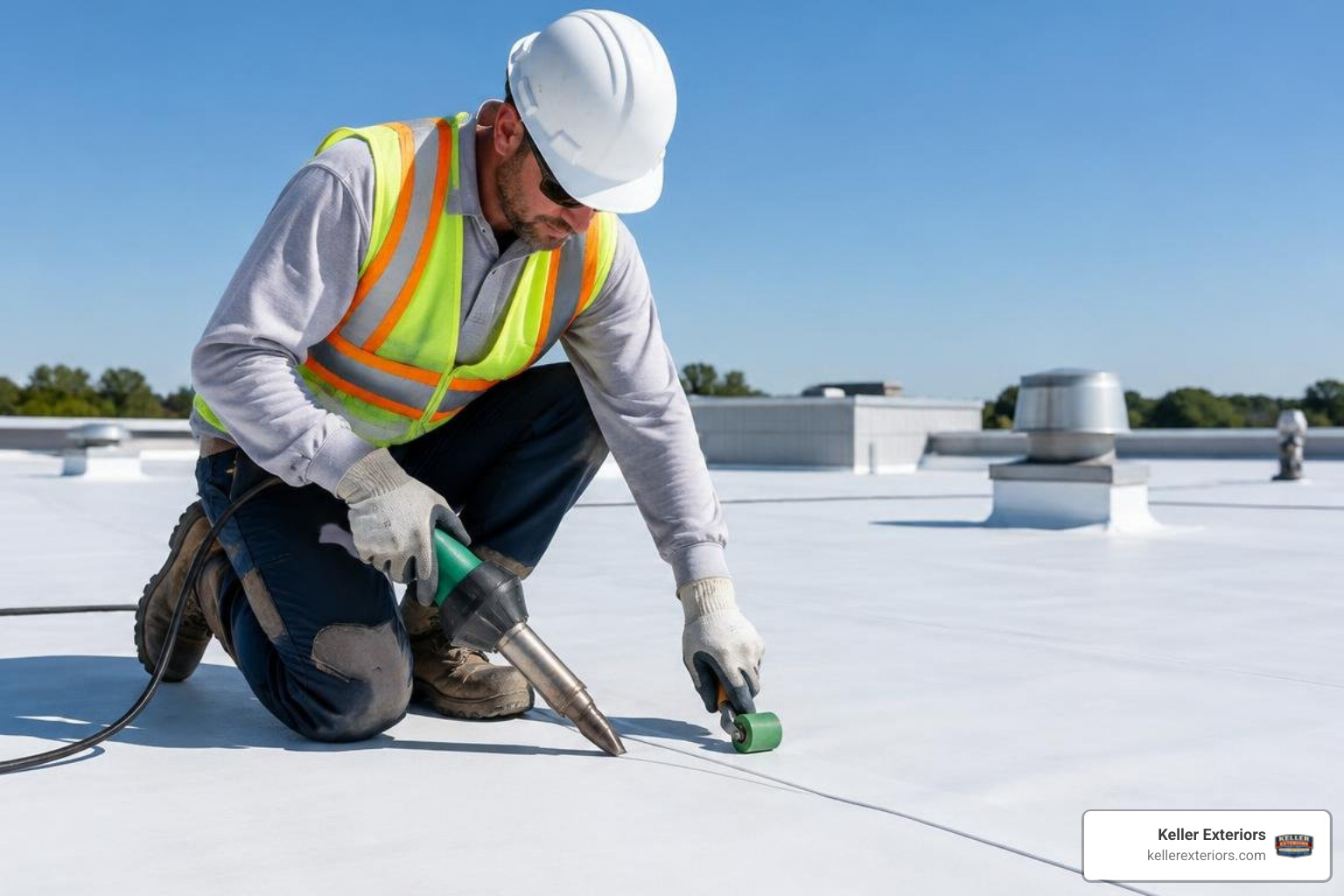
- Match Repair Materials Accurately: Always use system-compatible components. For instance, single-ply thermoplastic systems require hot-air welded patches of identical formulation, while rubber systems require specific primers and seam tapes. Understanding different commercial roofing system types helps owners make the right repair choices.
- Address Flashing Failures First: Prioritize sealing penetrations, curbs, and perimeter edges, where the vast majority of leaks begin.
- Rely on Certified Specialists: Work with roofing professionals who understand commercial building codes, commercial drainage dynamics, and safety standards.
Booking scheduled roof inspections provides a clear timeline of needed maintenance, preventing surprise expenses. Understanding commercial roofing system options also helps facility managers plan compatible repairs and future upgrades.
Proactive Maintenance Plans and Documentation
Commercial roofing warranties require regular maintenance to remain valid. Neglecting annual inspections or allowing unauthorized personnel to alter roof equipment can void manufacturer coverage.
Maintaining an organized roof logbook is best practice. Keep records of every inspection, rooftop HVAC service visit, repair invoice, and warranty document. When hail strikes or roof components age, detailed service records show insurance adjusters and prospective buyers that the building has been well cared for. Structured preventative maintenance agreements keep routine upkeep on schedule without adding to your daily workload.
Evaluating Next Steps: Repair vs. Restore vs. Replace
Facility managers frequently face the question: Should we continue repairing individual leaks, invest in a restoration coating, or tear off the entire roof?
| Project Scope | Best Suited For | Expected Added Life | Building Disruption Level |
|---|---|---|---|
| Spot Repair | Isolated punctures, minor flashing splits, under 10% moisture intrusion | 1 to 3 years per area | Very Low (quiet, focused work) |
| Roof Restoration | Structurally sound deck, dry insulation, aging but intact membrane | 10 to 20 years | Low (fluid-applied, no tear-off noise) |
| Full Replacement | Saturated insulation over 25% of deck, recurring leaks, deck decay | 20 to 30+ years | Moderate to High (tear-off and staging) |
When Commercial Roof Repairs Are No Longer Cost-Effective
While targeted repairs solve isolated problems, there comes a point where constant patching becomes a drain on operating budgets. The “50 Percent Rule” is a helpful guideline: if cumulative repair costs over a two-year window approach half the cost of a new roof, investing in a replacement is often the smarter financial move.
Other indicators that point toward replacement include:
- Core samples revealing that moisture has saturated more than 25 percent of the underlying insulation.
- Fasteners pulling completely out of rusted or deteriorated metal decking.
- Brittle, aged membranes that crack repeatedly under normal thermal expansion.
When these conditions are present, reviewing roof replacement planning guidance gives your building a reliable, long-term envelope.
The Benefits of Commercial Roof Restoration Coatings
For roofs that are aging but still structurally sound, elastomeric fluid-applied coatings offer an attractive alternative to a complete tear-off. Silicone and high-grade acrylic coatings create a continuous, seamless waterproof barrier over the existing membrane.
Restoration seals thousands of potential leak points, including hairline splits and aged seams, without filling landfills with old insulation. Furthermore, reflective bright white coatings deflect solar radiation in line with ENERGY STAR roof standards, lowering roof surface temperatures during hot Oklahoma summers and reducing HVAC energy strain. Because installation involves rolling or spraying liquids without loud tear-off equipment, business operations inside continue without interruption.
Frequently Asked Questions About Commercial Roofing Maintenance
How long does a typical commercial roof repair take?
Minor commercial repairs, such as patching a single puncture or resealing a pipe penetration, usually take two to four hours. Larger projects involving flashing replacements across multiple HVAC curbs or rebuilding damaged parapet transitions can take one to two business days.
Can commercial roof repairs be completed while the building is open?
Yes. Most commercial repair projects take place entirely on the exterior, allowing businesses, offices, and retail spaces below to operate normally. Professional crews coordinate staging areas, material handling, and equipment access to keep entrances clear and protect foot traffic.
Can roof repairs be performed in cold or wet weather?
Emergency temporary repairs can be completed during wet weather using specialized cold-weather mastics to halt active water entry. However, permanent structural repairs, heat-welded single-ply patches, and fluid-applied coatings require dry, clean surfaces and specific temperature windows for proper adhesion.
How often should a commercial flat roof be inspected?
Commercial roofs should undergo a comprehensive professional inspection at least twice a year, typically in the spring and autumn. Additional inspections should be scheduled following severe weather events, such as windstorms or heavy hail.
What is the most common reason commercial roofs leak?
Most commercial roof leaks originate at flashings around HVAC curbs, parapet walls, drains, and pipe penetrations rather than from holes in the middle of the membrane. Thermal movement and mechanical vibration cause sealants and seams at these transition points to pull apart over time.
How do I know if the insulation beneath my roof membrane is wet?
Wet sub-membrane insulation often causes spongy areas underfoot, persistent interior odors, or bubbling in the roof membrane. Roofing specialists confirm trapped moisture using non-destructive infrared moisture surveys or by pulling small core samples.
What causes ponding water on a flat commercial roof?
Ponding water occurs when roof slopes are inadequate, structural decks settle over time, or roof drains and scuppers become clogged with debris. Water remaining on a roof for more than 48 hours breaks down membrane materials and demands drainage correction.
What is the difference between a roof patch and a roof restoration?
A roof patch targets one specific damaged area, such as an open seam or puncture. A roof restoration involves cleaning the entire roof, repairing all minor flaws, and applying an engineered fluid coating over the complete surface to extend overall service life.
Will regular roof maintenance protect my manufacturer warranty?
Yes. Virtually all commercial roofing manufacturers require documented regular inspections and timely maintenance by certified technicians to keep warranty coverage active. Failing to maintain drainage or address known damage can void manufacturer warranties.
What qualifications should I look for in a commercial roofing contractor?
Look for a fully licensed and insured commercial roofing contractor with extensive local experience, dedicated commercial crews, manufacturer certifications, and strong safety records. A trustworthy contractor always provides a clear, written scope of work before repairs begin.
Securing Your Commercial Asset with Expert Roof Care
Protecting your commercial building requires dependable maintenance, clear diagnostics, and lasting repair work. Proactive attention to small seam splits, drainage clogs, and worn flashing prevents costly interior disruptions and extends the lifespan of your roofing asset. With over two decades of local exterior experience, our dedicated team understands the unique weather demands placed on commercial structures across Tulsa, OK, Broken Arrow, OK, Owasso, OK, Jenks, OK, and Bixby, OK. For dependable evaluations, routine maintenance, or specialized restoration, schedule a prompt inspection when signs of a leak appear.
When you need an experienced partner to evaluate your commercial property, contact Keller Exteriors to schedule commercial roof repairs with our local specialists.