Why an Impact-Resistant Roof Replacement is Worth Considering
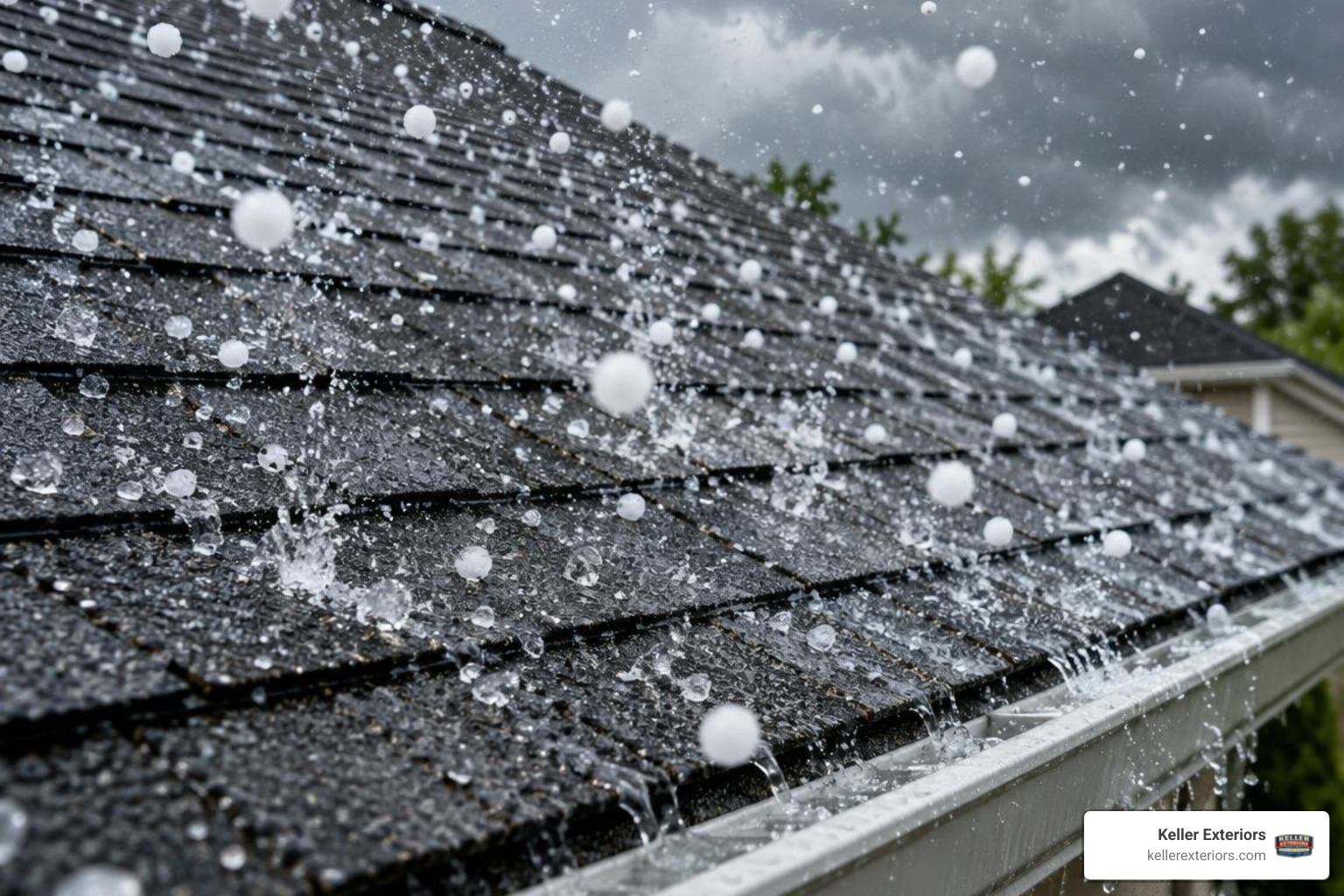
Choosing an impact-resistant roof system is one of the smartest decisions a homeowner in storm-prone regions like Tulsa, Oklahoma, or the Dallas-Fort Worth metroplex can make. Hail damage costs American homeowners between $8 and $15 billion every year, and the National Oceanic and Atmospheric Administration (NOAA) recorded 6,962 major hail events across the country in 2023 alone, including over 1,000 instances of hailstones larger than two inches in diameter. Standard roofs were simply not built for that kind of punishment.
Here is a quick summary of what an impact-resistant roof replacement involves and why it matters:
- What it is: A roofing system using shingles rated Class 1 through Class 4 under the UL 2218 standard for resistance to hail and wind-driven debris
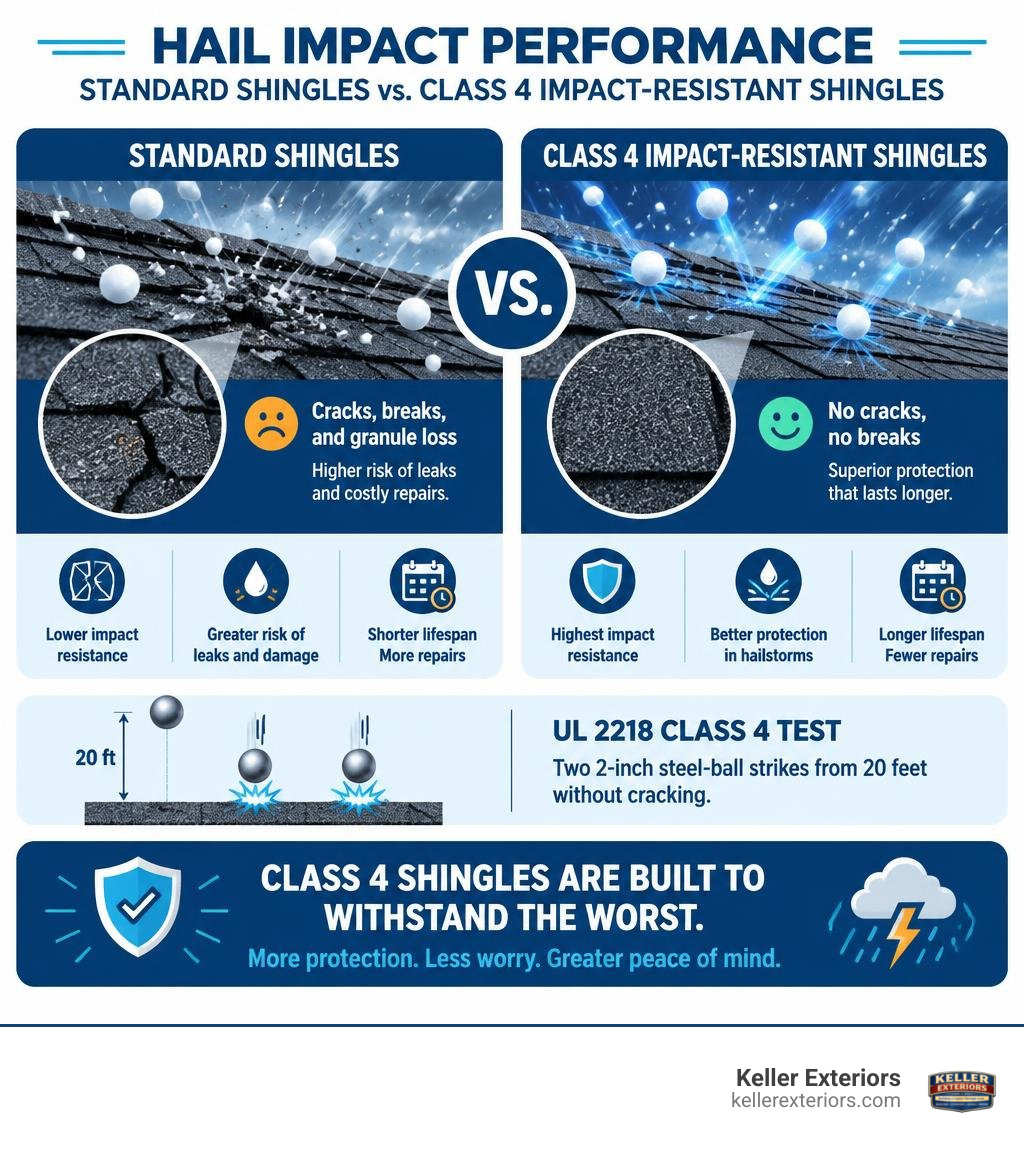
- Top rating: Class 4 is the highest rating, meaning shingles survive two strikes from a 2-inch steel ball dropped from 20 feet without cracking
- Key benefit: Fewer repairs, longer roof lifespan, and potential insurance premium discounts of 5% to 35%
- Who needs it most: Homeowners in hail-prone areas including Tulsa, Oklahoma, and North Texas where hail strikes multiple times per decade
- Documentation needed: In Texas, TDI Form PC068 is required to qualify for insurance premium discounts
- Grant programs available: Oklahoma homeowners may qualify for up to $10,000 through the Strengthen Oklahoma Homes program
Standard architectural shingles are not automatically impact resistant. The difference comes down to the materials used and how they are tested. Most roofs in hail-heavy regions may need full replacement every 7 to 10 years without the right protection, compared to the average 20-year lifespan for roofs in calmer climates. Early warning signs, such as interior stains or missing shingles, can also point to roof leak problems. That gap represents real money, time, and stress.
I am Robert Keller, owner of Keller Exteriors, and with more than 25 years of hands-on experience in the home improvement industry, I have guided hundreds of homeowners through the impact-resistant roof replacement process. This guide covers everything you need to make a confident, informed decision for your home.
What is an Impact-Resistant Roof and How Does It Work?
An impact-resistant roof uses specially engineered materials designed to withstand the physical shock of falling hailstones and flying storm debris. While a standard asphalt shingle can easily crack, rupture, or lose its protective granule surfacing under the force of a hailstone, an impact-resistant shingle acts like a shock absorber for your home.

The secret behind this durability lies in modern material science, specifically Styrene-Butadiene-Styrene (SBS) technology. This process blends high-grade asphalt with rubberized polymers. The resulting polymer-modified asphalt gives the shingle remarkable flexibility and elasticity. When a hailstone strikes an SBS-modified shingle, the material stretches and flexes to absorb the energy before bouncing back to its original shape.
This advanced engineering provides several critical protections for your home:
- Granule Adhesion: Standard shingles lose their protective mineral granules when struck by hail. This loss exposes the underlying asphalt to ultraviolet (UV) radiation, which quickly degrades the shingle and leads to leaks. Polymer-modified shingles hold onto their granules much tighter under impact.
- Crack Prevention: When hail fractures the fiberglass mat inside a standard shingle, water can seep directly into your home. Impact-resistant shingles prevent these micro-fractures.
- Wind Resistance: The same polymer modifications that protect against hail also improve wind resistance. Many Class 4 shingles feature advanced sealant strips that withstand wind speeds up to 130 mph or even 160 mph.
- Leak Prevention: By keeping the outer protective layer intact, these roofs prevent the slow, hidden leaks that cause structural wood rot and mold inside your attic.
If you are planning a project, working with our residential roofing team ensures that every component of your new roof, from the underlayment to the starter shingles, works together to maximize this protective technology.
Understanding UL 2218 Class 1 to 4 Testing Standards
To help homeowners compare products, independent laboratories test and rate roofing materials. The primary benchmark for impact resistance is the Underwriters Laboratories (UL) 2218 standard, which was established in 1996.
During a UL 2218 test, technicians drop steel balls of varying sizes from a height of 20 feet directly onto the roofing material. To earn a rating, the shingle must withstand two consecutive strikes in the exact same spot without showing any signs of cracking, splitting, or tearing on its front or back surface.
The testing scale runs from Class 1 to Class 4:
| UL 2218 Rating | Steel Ball Diameter | Drop Height | Performance Level |
|---|---|---|---|
| Class 1 | 1.25 Inches | 12 Feet | Basic protection against small hail |
| Class 2 | 1.50 Inches | 14 Feet | Moderate protection |
| Class 3 | 1.75 Inches | 17 Feet | High protection against mid-sized hail |
| Class 4 | 2.00 Inches | 20 Feet | Maximum protection against severe hail |
Another respected standard is the FM 4473 test from FM Approvals. Instead of steel balls, this test uses pressurized air cannons to launch real ice balls at the roofing materials. This test closely mimics the high-velocity impact of actual hailstones during severe convective storms.
When you choose a Class 4 rated system, you are getting a product designed to survive two-inch hailstones traveling at terminal velocity. These materials can offer stronger long-term protection against hail damage and help reduce the need for storm-related repairs.
The Financial Benefits of an Impact-Resistant Roof Replacement
Upgrading to a Class 4 impact-resistant roof requires a higher initial investment than installing standard architectural shingles. However, the long-term financial benefits make it one of the most cost-effective home improvements you can make.
The primary financial return comes from your homeowners insurance policy. Because insurance carriers pay out billions of dollars in wind and hail claims every year, they want to reward homeowners who take steps to protect their properties. In states with high storm risks, many insurance providers offer substantial premium discounts for homes with certified Class 4 roofs.
Depending on your carrier and your specific location, you could save between 5% and 35% annually on the dwelling coverage portion of your premium. Over the lifespan of a 30-year or 50-year roof, these savings can easily offset the initial upgrade cost.
To qualify for these premium credits in Texas, the Texas Department of Insurance requires the submission of TDI Form PC068, which must be signed by your roofing contractor to certify that a qualifying Class 4 material was installed. In Oklahoma, homeowners should contact their insurance agents directly with the manufacturer’s certification and installation invoice to apply for their discounts.
Beyond insurance savings, you also benefit from:
- Fewer Deductible Payments: If a standard roof suffers damage during three separate storms over a decade, you may have to pay your deductible three times. A Class 4 roof can withstand many hail events without damage, potentially saving you thousands of dollars in out-of-pocket costs.
- Increased Property Value: A certified storm-resilient roof can be a major selling point. Prospective buyers may appreciate knowing the roof has added protection and may not need replacement soon.
- Long-Term Warranties: Many premium Class 4 roofing products include extended manufacturer warranties, which can provide added peace of mind over the life of the roof.
Choosing the Right Materials for Your Impact-Resistant Roof Replacement
When planning your impact-resistant roof replacement, you are not limited to a single style or material. Manufacturers have developed high-durability options across several different categories to match any home aesthetic.
Polymer-Modified Asphalt Shingles
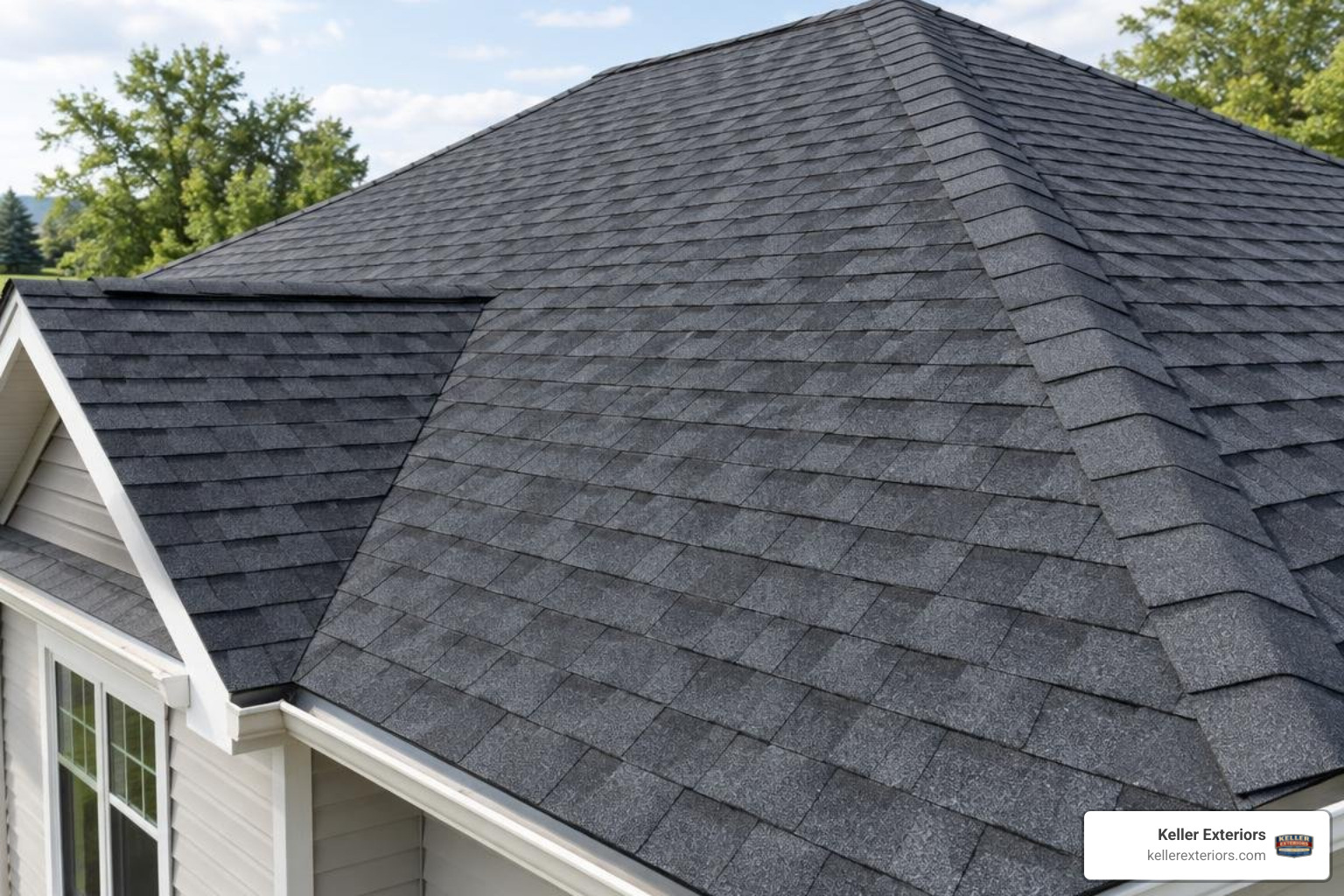
This is the most popular choice for residential homes. These shingles combine the familiar look of traditional architectural shingles with the rubberized flexibility of SBS polymers. They are easy to install, fit within most remodeling budgets, and come in a wide variety of colors.
Metal Roofing
Metal is naturally highly impact resistant. Standing seam metal roofs and metal tiles easily achieve Class 4 ratings. They offer exceptional longevity, often lasting 50 to 70 years, and reflect solar heat to improve your home’s energy efficiency. However, some metal roofs can show cosmetic denting after a severe hailstorm, even if their structural integrity remains completely intact.
Synthetic and Composite Tiles
Engineered from advanced polymers, recycled resins, or rubber, synthetic slate and shake tiles offer the gorgeous look of natural materials without the extreme weight or fragility. These products are incredibly tough, virtually impervious to hail, and carry Class 4 ratings alongside excellent fire resistance.
Natural Slate and Clay
While beautiful, natural slate and clay tiles are heavy and can be brittle under direct impact from large hailstones. If you love this look but live in a high-risk area, synthetic alternatives are usually the safer and more durable choice.
Before selecting a material, always check your Homeowners Association (HOA) guidelines. Some neighborhoods have strict rules regarding roofing materials and colors. Homeowners weighing material choices can compare durability and appearance across asphalt shingles. Additionally, heavy materials like slate or thick tile may require a professional structural assessment of your home’s framing to ensure it can support the extra weight.
Our team of local exterior contractors can help you evaluate your home’s structure and navigate local HOA requirements to find the perfect match.
Regional Considerations for an Impact-Resistant Roof System in Texas and Oklahoma
Living in Oklahoma or North Texas means dealing with some of the most volatile weather in the country. This region sits directly in the heart of “Hail Alley,” where cold Rocky Mountain air collides with warm Gulf moisture to spark severe convective storms every spring and summer.
For homeowners in cities like Tulsa, OK, Broken Arrow, OK, and Owasso, OK, a standard roof is constantly under siege. This high-frequency storm pattern is why local roofs often need replacement every 7 to 10 years instead of lasting their full 20-year lifespans. Upgrading to a Class 4 system breaks this expensive cycle. Homeowners weighing repeated repairs against a new roof can compare signs that a roof needs replacement versus repair.
If you want the ultimate level of protection, you should consider upgrading to a FORTIFIED Roof standard. Developed by the Insurance Institute for Business and Home Safety (IBHS), the FORTIFIED program uses a system-based approach to reinforce your entire roof structure.
A FORTIFIED Roof installation includes:
- Enhanced Roof Deck Fastening: Installers use 8D ring-shank nails spaced closely together to prevent the roof deck from blowing off in high winds.
- Sealed Roof Deck: Contractors apply a specialized flashing tape or self-adhering membrane over all deck seams. This serves as a secondary water barrier, keeping water out of your home even if the shingles blow away.
- Reinforced Edges: Stronger starter strips and drip edges prevent wind from getting underneath the shingles at the edges of your roof.
- Class 4 Shingles: The system requires verified impact-resistant shingles to protect against hail.
To make these upgrades more accessible, the Oklahoma Insurance Department manages the Strengthen Oklahoma Homes grant program. This initiative provides grants of up to $10,000 to help eligible homeowners upgrade their roofs to the FORTIFIED standard. This program is highly popular in communities like Jenks, OK, Bixby, OK, and Sand Springs, OK, where residents want to secure their homes against tornadoes and severe thunderstorms. Before selecting a contractor, review our hail contractor tips to help evaluate local experience and storm-repair credentials.
If you are dealing with storm damage and need to explore your options, we can help you navigate the process and choose the right storm damage repairs for your property.
Frequently Asked Questions About Impact-Resistant Roofing
What is a Class 4 impact-resistant roof?
A Class 4 roof uses materials that have passed the highest level of testing under the UL 2218 standard. To achieve this rating, the roofing material must withstand two direct impacts from a 2-inch steel ball dropped from a height of 20 feet without cracking, splitting, or fracturing.
How much does an impact-resistant roof upgrade cost compared to standard shingles?
While Class 4 shingles carry a higher upfront material cost than standard architectural shingles, they offer excellent long-term value. The price difference varies depending on your home’s size and roof complexity, but most homeowners recover this initial investment within 5 to 10 years through insurance premium discounts and avoided storm repair costs.
Do Texas insurance companies require TDI Form PC068 for discounts?
Yes. The Texas Department of Insurance requires homeowners to submit TDI Form PC068 to their insurance carriers to officially qualify for impact-resistant roofing premium credits. This form must be completed and signed by the installing contractor to verify that the certified materials were applied correctly.
Can I get a grant for a FORTIFIED roof in Tulsa, OK?
Yes. Oklahoma homeowners can apply for up to $10,000 in funding through the state’s Strengthen Oklahoma Homes program. This grant helps cover the cost of upgrading a home’s roof to meet the storm-resilient FORTIFIED standard.
How long do Class 4 impact-resistant shingles last?
Under normal conditions, high-quality Class 4 shingles are designed to perform for 30 to 50 years. In storm-prone regions, they significantly outlast standard shingles, which often require replacement after just 7 to 10 years due to repeated hail damage.
What is the difference between UL 2218 and FM 4473 testing?
The UL 2218 standard uses steel balls dropped from a height of 20 feet to test impact resistance. The FM 4473 standard uses a compressed-air cannon to launch actual ice balls at the shingles, which more closely simulates the physical impact of real hailstones during a storm.
Are metal roofs automatically considered Class 4 impact resistant?
Not always, but most high-quality metal roofing systems easily achieve a Class 4 rating. The rating depends on the thickness of the metal and the specific manufacturing process, so you should always verify the manufacturer’s certification before purchasing.
How do polymer-modified shingles handle cold weather installations?
Thanks to their rubberized SBS polymers, these shingles remain highly flexible even in cold weather. While standard shingles can become brittle and crack during winter installations, polymer-modified shingles can often be safely installed at temperatures down to 25 degrees Fahrenheit.
Will a Class 4 impact-resistant roof system prevent all hail damage?
No roof is completely hail-proof. Extremely large hail, such as stones exceeding two inches in diameter, or severe tornadoes can still damage a Class 4 roof. However, these systems significantly reduce the likelihood of leaks and structural damage during standard storms. You should always schedule a professional inspection after any major weather event.
How often do I need to renew my FORTIFIED roof certification?
To maintain your FORTIFIED designation and the associated insurance discounts, your roof must be re-evaluated and certified every five years to ensure the materials and structure remain in good protective condition.
Protect Your Home with a Reliable Storm-Resilient Roof
Investing in a impact-resistant roof replacement is one of the most effective ways to secure your home, protect your family, and reduce your long-term insurance costs. By choosing Class 4 materials and advanced installation techniques, you build a reliable barrier that can withstand the worst storms Oklahoma has to offer.
At Keller Exteriors, we bring more than 20 years of trusted local experience to every project. Our team serves homeowners across northeastern Oklahoma, including Tulsa, OK, Broken Arrow, OK, Owasso, OK, Jenks, OK, Bixby, OK, Sand Springs, OK, Claremore, OK, Bartlesville, OK, Collinsville, OK, Coweta, OK, Glenpool, OK, Catoosa, OK, and Pryor, OK. We understand the unique challenges of our local climate, and we are committed to providing the highest quality craftsmanship and customer care.
If you want to protect your home with a beautiful, storm-resilient roof built to last, the team at Keller Exteriors is ready to help. Schedule an estimate with our local experts today.