Why Security Doors Are One of the Smartest Upgrades You Can Make for Your Home
Security doors are reinforced entry doors built to resist forced entry, extreme weather, and everyday wear far better than standard exterior doors. Here is a quick breakdown of what they are and why they matter:
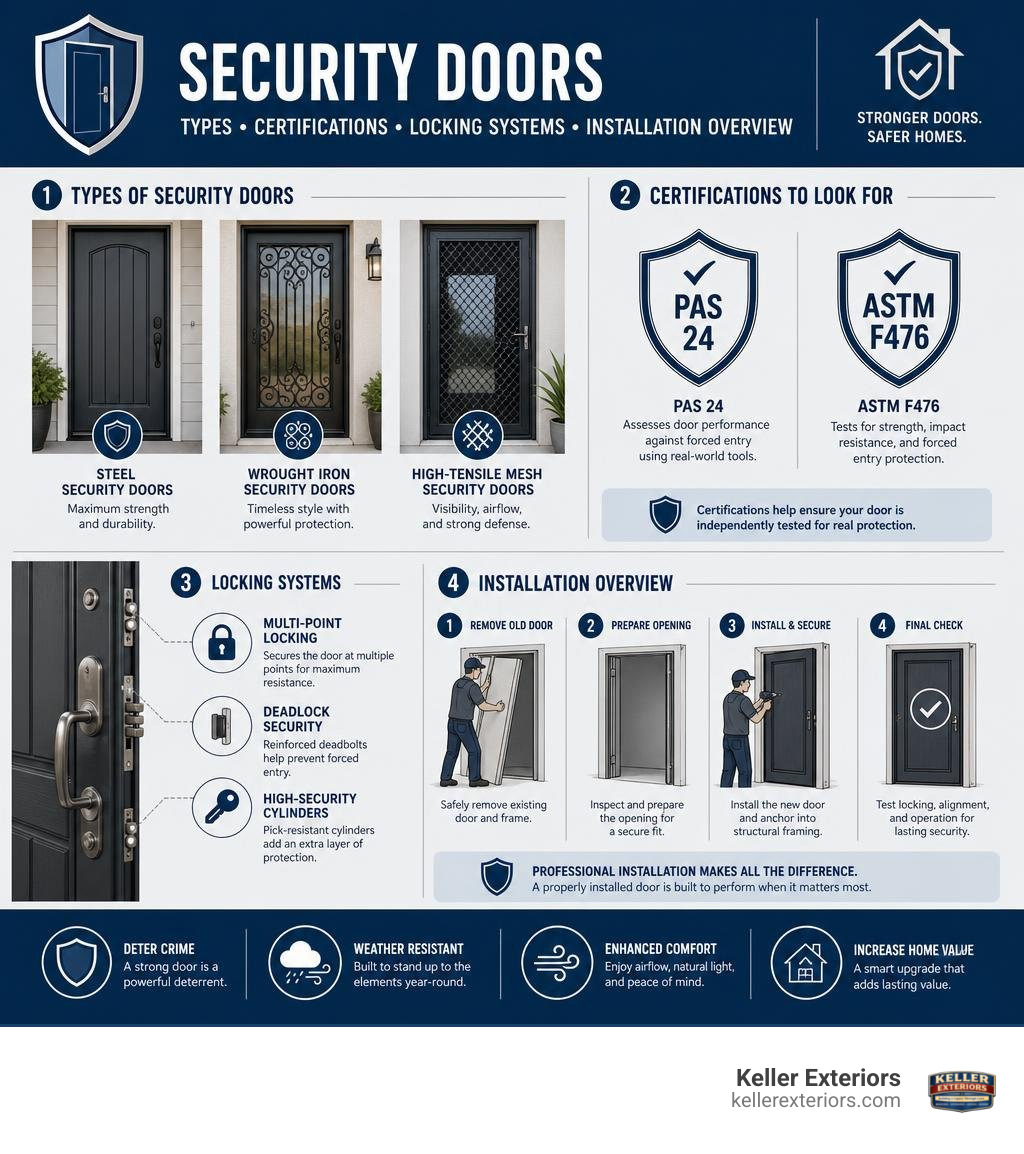
- What they are: Doors built with heavy-duty materials like steel, wrought iron, or high-tensile mesh, combined with multi-point locking systems and reinforced frames.
- Who needs them: Homeowners who want stronger protection at front, back, or side entry points without sacrificing airflow, light, or curb appeal.
- Why they work: According to the FBI’s Uniform Crime Reporting Program, over one-third of all burglaries involve forced entry through a door. A properly installed security door is one of the most direct ways to reduce that risk.
- Key types available: Heavy-duty steel doors, decorative wrought iron doors, and high-tensile mesh screen doors.
- What to look for: Certifications like PAS 24 or ASTM F476, multi-point locking systems, and professional installation anchored into structural framing.
Not every door marketed as a “security door” offers real protection. The difference between a cheap big-box option and a properly rated, professionally installed unit can be the difference between a door that holds and one that gives way under pressure.
With more than 25 years of hands-on exterior home improvement experience, our team has helped homeowners throughout the Tulsa, OK area select and install security doors that perform when it matters most. This guide explains what to look for so you can make a confident, well-informed decision.
Understanding the Main Types of Security Doors
Choosing the right security door starts with understanding the materials and designs available. Each type offers a different balance of strength, visual appeal, airflow, and maintenance. Homeowners in the Tulsa, OK metro area have distinct needs, ranging from storm protection during spring weather to ventilation during hot summer nights.
To help you visualize how these materials stack up, we have put together a comparison diagram below.
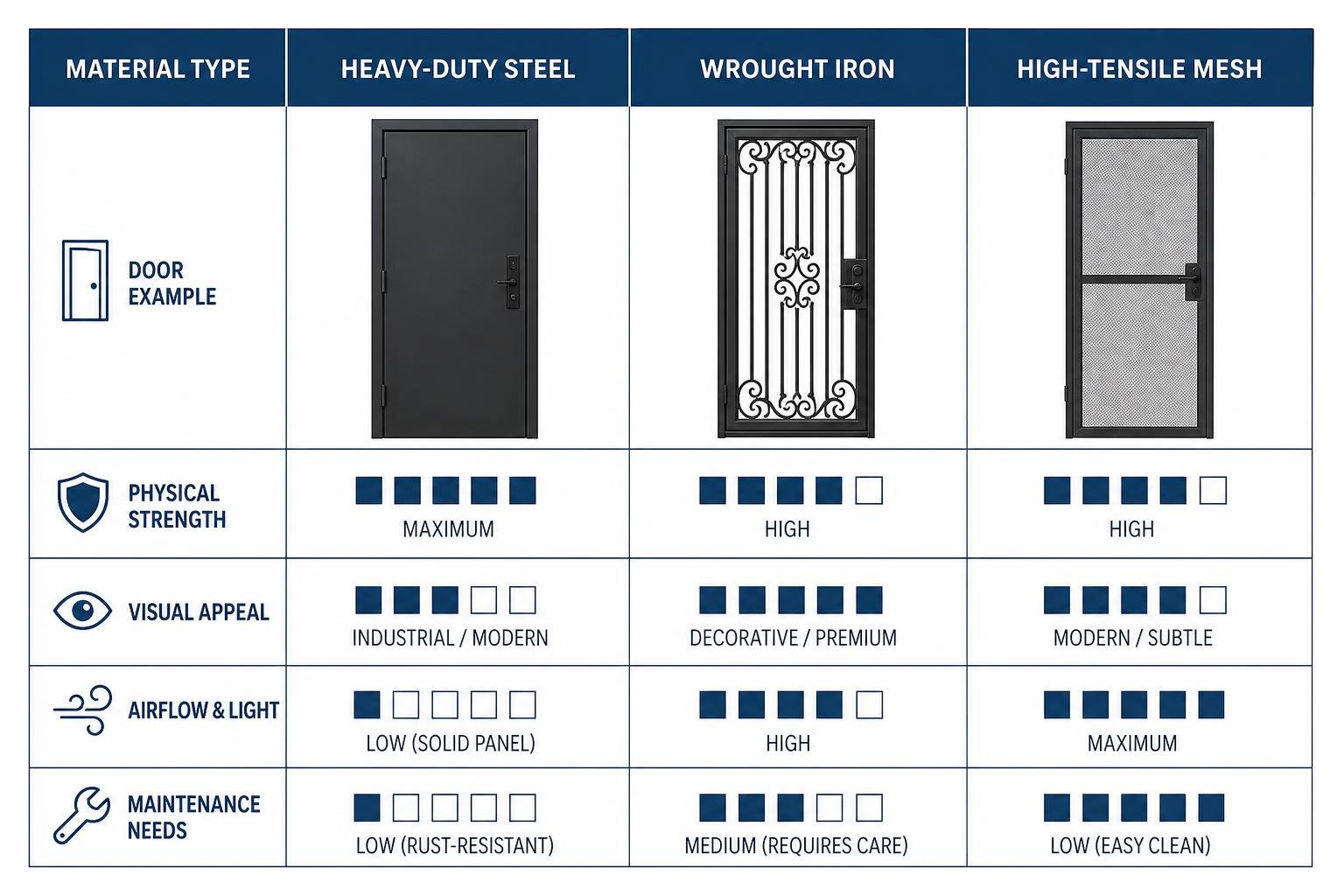
Here is a detailed breakdown of how the different materials compare in real-world scenarios:
| Material Type | Physical Strength | Visual Appeal | Airflow & Light | Maintenance Needs |
|---|---|---|---|---|
| Heavy-Duty Steel | Maximum | Industrial / Modern | Low (Solid Panel) | Low (Rust-Resistant) |
| Wrought Iron | High | Classic / Ornate | High (With Screen) | Medium (Needs Painting) |
| High-Tensile Mesh | High | Minimalist / Clean | Maximum | Low (Easy to Clean) |
| Aluminum Frame | Medium-High | Modern / Sleek | High | Low (Rust-Proof) |
Heavy-Duty Steel Security Doors
For homeowners who prioritize absolute physical strength, heavy-duty steel doors are the gold standard. These doors utilize thick-gauge galvanized steel for both the door leaf and the frame. The heavy-duty construction resists aggressive physical attacks, such as crowbar prying, kicking, and drilling.
Heavy-duty steel doors often use galvanized steel, reinforced inner ribs, and insulated cores to improve strength and thermal performance. Homeowners comparing patio access points can also explore our guidance on sliding security doors before choosing a configuration.
Decorative Wrought Iron Options
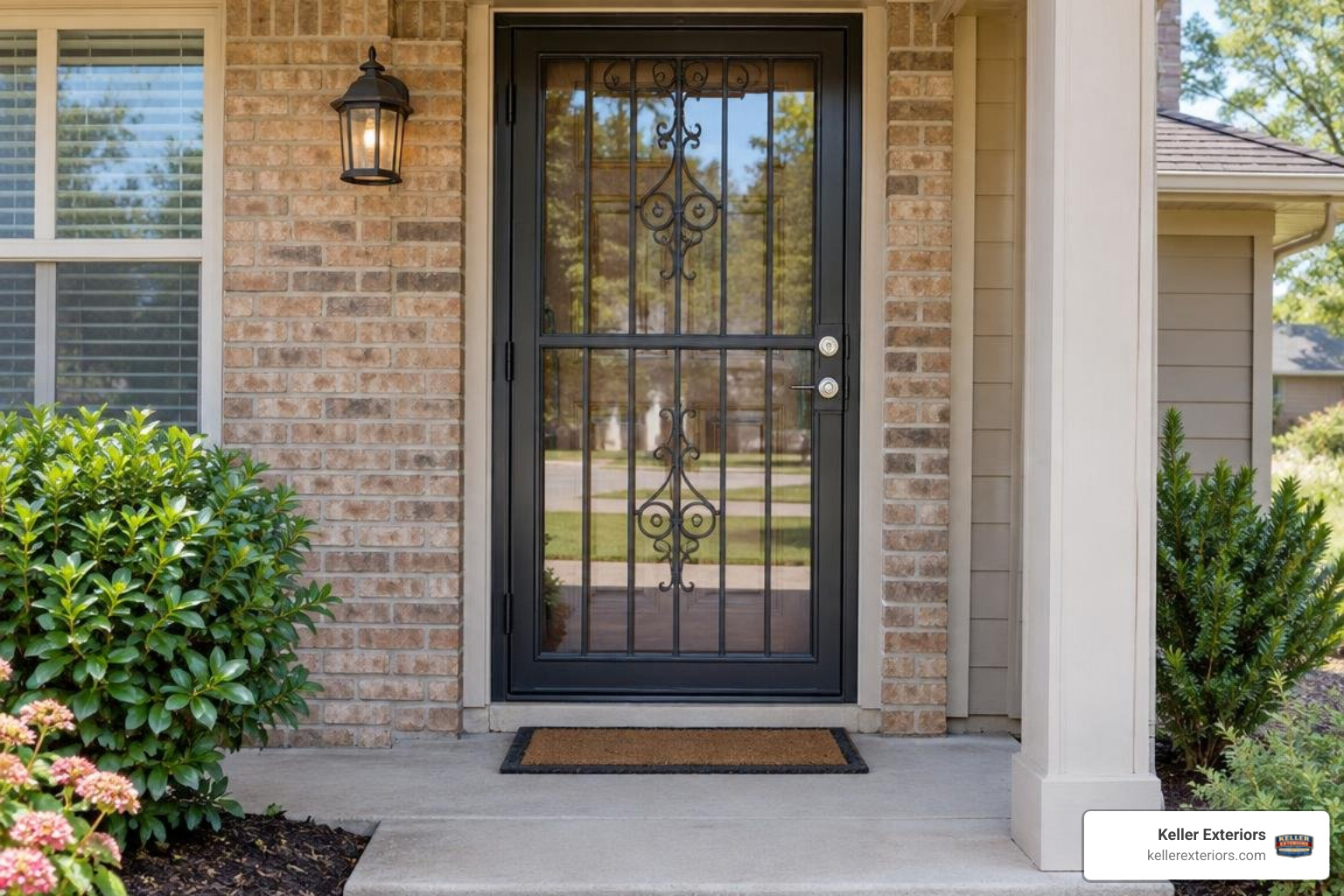
If you want to protect your home while enhancing its curb appeal, decorative wrought iron doors offer a classic, elegant solution. These doors feature heavy iron bars arranged in custom scrollwork, geometric patterns, or ornate designs. They allow you to maintain a clear view of your entryway while keeping intruders at bay.
Wrought iron is exceptionally heavy and rigid, making it highly resistant to blunt force. Because these doors feature open designs, manufacturers typically pair them with a glass backing or a fine insect screen. For additional design ideas, our French door guide explains how decorative door styles can balance light, appearance, and function. Homeowners in historic areas of Midtown, OK, or Brookside, OK, often choose wrought iron to complement local architectural styles while adding a robust layer of protection.
High-Tensile Mesh and Screen Security Doors
For those who want security without sacrificing fresh air and natural light, high-tensile mesh security doors are the perfect fit. These systems look like standard screen doors from a distance, but they use woven marine-grade stainless steel mesh locked into a heavy-duty aluminum or steel frame.
The mesh resists knife slashes, kicks, and impact from flying storm debris. This style allows you to leave your main entry door open on beautiful Oklahoma spring days, letting fresh air circulate while maintaining a protected entry. It also provides insect protection and an unobstructed view of your yard. If you are comparing door layouts, our patio door types article covers common options for improving access, light, and ventilation.
Key Security Certifications and Testing Standards
You should never buy a security door based on marketing claims alone. True protection is verified through independent laboratory testing and industry-standard certifications. When you browse premium entry door replacement options, look for doors that have undergone rigorous physical testing.
Understanding PAS 24 and STS Ratings
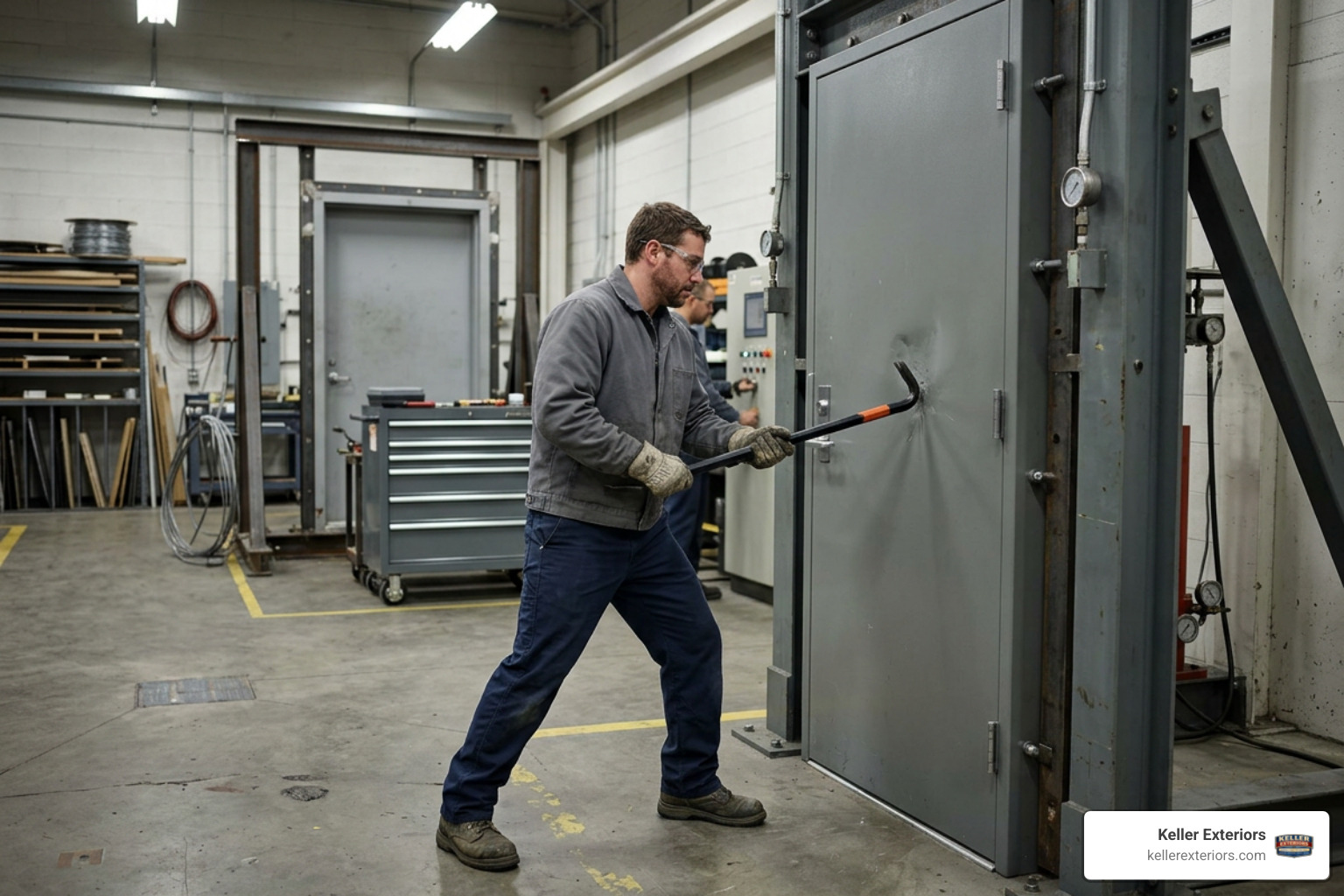
PAS 24 is a British testing standard recognized globally for evaluating the security performance of doorsets. To pass PAS 24, a door must withstand a series of physical attacks from a technician using manual tools, levers, and crowbars. It also undergoes mechanical loading and impact testing to ensure the locks and hinges do not fail under extreme pressure.
Similarly, STS (Security Technical Specification) ratings measure a door’s resistance to organized intrusion attempts. Doors that carry these certifications offer verified peace of mind because they have proven their ability to delay and defeat real-world break-in methods.
ASTM and UL Bullet Resistance Standards
For ultra-high-security applications, manufacturers test doors against ASTM (American Society for Testing and Materials) and UL (Underwriters Laboratories) standards. The ASTM F476 standard evaluates the security of swinging door assemblies by subjecting them to heavy impact blows and prying forces.
Some specialized commercial doors combine ASTM physical security testing with certified bullet resistance. While residential homes rarely require that level of protection, these standards show how testing can verify a door system’s engineering and performance.
Essential Locking Systems and Hardware Features
A security door is only as strong as its locking system. Even the thickest steel door will fail if a burglar can easily bypass the lock or pop the hinges. High-quality hardware is the foundation of physical security.
Multi-Point Locking Mechanisms
Standard doors secure the door leaf to the frame at a single point near the handle. A motivated intruder with a crowbar can focus all their prying force on that single point to break the strike plate or split the wood frame.
In contrast, security doors utilize multi-point locking systems. When you turn the key or throw the deadbolt, the mechanism engages multiple steel bolts or hooks into the frame at different heights.
These locking points are distributed along the top, middle, and bottom of the door, spreading any forced-entry loads across the entire structural frame. This system makes it virtually impossible for an intruder to pry the door open.
Tamper-Resistant Hinges and Hinge Bolts
Burglars often look for weak spots on the hinge side of the door, especially if the door opens outward and the hinges are exposed on the exterior. Premium security doors solve this vulnerability by using heavy-duty, tamper-resistant hinges and specialized hinge bolts, also known as dog bolts.
Hinge bolts are solid steel pins welded to the hinge side of the door leaf. When the door closes, these pins slot directly into reinforced holes in the steel frame. Even if an intruder manages to cut through the exterior hinge pins with an angle grinder, the dog bolts keep the door locked firmly in place within the frame, defeating the attack.
Real-World Performance: Weather, Fire, and Forced Entry
A high-quality security door does more than stop intruders. It must also perform reliably against daily weather exposure, extreme temperatures, and fire hazards. This is particularly important for homeowners in places like Claremore, OK or Bartlesville, OK, where seasonal weather shifts can range from freezing winter winds to scorching summer heat.
Fire Resistance and Thermal Efficiency
Many steel security doors feature built-in fire ratings. These doors are constructed with non-combustible internal insulation, such as mineral wool or fiberglass, and are sealed with intumescent strips that expand in the presence of heat. This design prevents smoke and flames from spreading through the home during an emergency, providing precious extra minutes for evacuation.
In addition to fire safety, this insulated core provides excellent thermal performance. A well-insulated steel door prevents heat transfer, helping to lower your utility bills during hot Oklahoma summers and cold winters. Look for doors with low U-values, which indicate superior insulating capabilities.
Weatherproofing and Corrosion Protection
Because security doors are exposed to rain, humidity, and temperature swings, they require robust corrosion protection. Premium steel doors undergo zinc plating or are built using specialized alloys like Magnelis steel, which offers self-healing corrosion resistance.
To protect the metal further, manufacturers apply a durable powder-coated finish. This electrostatically applied powder coating is baked at high temperatures to create a tough, scratch-resistant skin that shields the metal from moisture and UV rays. Combined with heavy-duty weather seals and moisture barriers around the perimeter of the frame, these doors keep drafty air and heavy rain outside where they belong.
Professional Installation vs. DIY: Risks and Hidden Costs
Many homeowners look at big-box store security doors and wonder if they can save money by installing the door themselves. However, DIY installation of a security door carries significant risks that can completely compromise the door’s protective features.
The Importance of Structural Anchoring
A security door is only as strong as the wall framing holding it in place. Standard doors are often attached to thin decorative trim using short screws. If you install a heavy security door this way, an intruder can kick the entire frame out of the wall with minimal effort.
Professional door installation requires anchoring the heavy-duty steel frame directly into the home’s structural studs. Installers use long, heavy-duty lag bolts that penetrate deep into the wooden framing of the house. This process requires precision measurements, specialized shimming, and an understanding of load-bearing walls.
If the frame is even slightly out of alignment, the multi-point locks will not line up correctly, causing the locking mechanism to bind or fail to engage. Our team at Keller Exteriors has the tools and training to ensure a structurally sound fit. For projects that need a durable metal entry system, explore our steel doors service.
HOA Compliance and Customization Options
If you live in a planned development in Stone Canyon, OK or Forest Ridge, OK, you must comply with strict Homeowners Association (HOA) guidelines. Many HOAs ban traditional, industrial-looking security bars because they feel it harms the neighborhood’s aesthetic.
Fortunately, modern security screen doors offer a sleek, low-profile appearance that looks just like a premium screen door. They can be customized with various powder-coated colors, architectural styles, and decorative grilles to match your home’s existing entry door perfectly. Working with a professional installer allows you to customize your door to meet both your security needs and your neighborhood’s HOA requirements.
Frequently Asked Questions About Security Doors
What is the difference between a security door and a standard screen door?
Standard screen doors are designed to keep insects out and allow fresh air in, using thin aluminum frames and flexible fiberglass mesh. They offer no resistance to physical force. Security doors are built with heavy-duty steel or aluminum frames, high-tensile steel mesh, and multi-point locking systems, creating a robust physical barrier that prevents forced entry while still allowing ventilation and light.
Can security doors be customized to match my home’s style?
Yes. Modern security doors are highly customizable. You can choose from a wide variety of durable powder-coated colors, decorative grilles, and architectural styles. Whether you live in a classic home in Midtown, OK or a modern property in Owasso, OK, you can find a design that blends seamlessly with your home’s aesthetic.
How much do quality security doors typically cost?
The cost of a security door varies based on materials, size, lock configurations, and installation complexity. While basic big-box options are cheaper upfront, they often require expensive modifications and separate hardware kits. Investing in a custom-fit, professionally installed door provides superior long-term value, durability, and verified protection.
Do security doors rust over time?
Low-quality steel doors can rust if their paint chips and exposes the raw metal to moisture. However, premium security doors utilize galvanized steel, zinc plating, or rust-proof aluminum frames. They are finished with a high-grade powder coating that resists scratching, chipping, and weathering, ensuring long-term corrosion resistance.
What is a multi-point locking system?
A multi-point locking system secures the door to the frame at multiple locations along the door’s edge, rather than at a single latch point. When you turn the key, heavy-duty steel bolts or hooks engage at the top, middle, and bottom of the frame, distributing forced-entry loads and making the door extremely difficult to pry open.
Are security doors fire-rated?
Many heavy-duty steel security doors feature certified fire ratings, often ranging from 20 minutes up to several hours. These doors use non-combustible mineral wool insulation and specialized seals to block smoke and heat, helping to protect your home and family during an emergency.
Can I install a security door myself?
While DIY installation is possible, it is not recommended. Security doors are exceptionally heavy and require precise structural anchoring into the home’s framing studs. Improper installation can lead to lock misalignment, frame sagging, and weak points that intruders can easily exploit. Professional installation ensures the door functions exactly as engineered.
Do security doors block airflow and natural light?
No. High-tensile stainless steel mesh security doors allow excellent airflow and natural light while maintaining clear visibility. From a distance, the mesh looks like a standard window screen, allowing you to enjoy fresh air without compromising your home’s safety.
What certifications should I look for in a security door?
Look for doors tested to recognized industry standards, such as PAS 24 for forced-entry resistance, ASTM F476 for structural integrity, or UL ratings for impact and fire performance. These certifications prove the door has passed rigorous independent testing.
How do security doors improve home energy efficiency?
Insulated steel security doors prevent thermal transfer between the outdoors and your home. Combined with high-quality weather stripping and tight frame seals, they reduce drafts and help maintain stable indoor temperatures, lowering your heating and cooling costs.
Upgrade Your Home Protection with Keller Exteriors
Protecting your home and family starts with securing your entry points. When you are ready to upgrade your home’s security, durability, and energy efficiency, our team at Keller Exteriors is here to guide you through the process. We have over 20 years of local experience serving homeowners throughout Tulsa, OK, Broken Arrow, OK, Jenks, OK, Bixby, OK, and the surrounding communities.
We provide custom measurements, expert product selection, and precise structural installation to help new doors perform reliably for decades. When you are ready to move forward, contact Keller Exteriors to schedule an estimate for your project.