How to Choose Energy-Efficient Replacement Windows
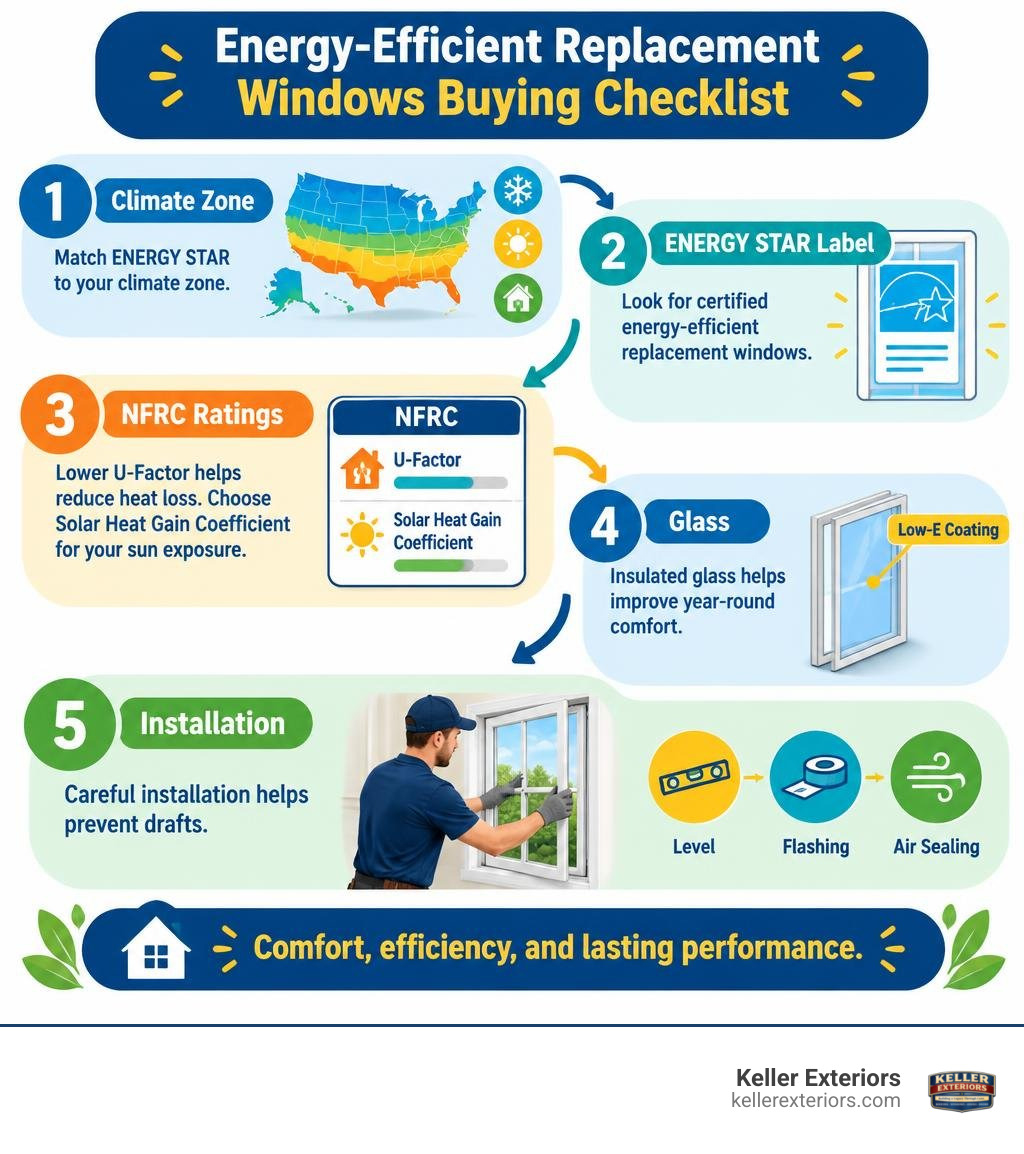
Choose energy-efficient replacement windows by checking for ENERGY STAR certification in your climate zone. Then compare the NFRC label: a lower U-factor means less heat escapes, while the right solar heat gain rating depends on how much sun the window gets. Look for insulated glass with a Low-E coating, and plan for careful installation to prevent drafts.
If your current windows are in good shape, caulking and weatherstripping may be worth trying first. Replacement can improve comfort and lower energy use, but the value depends on your existing windows, your home, and the quality of the installation.
Our team at Keller Exteriors brings more than 25 years of exterior home improvement experience to window projects. We can help you compare energy-efficient replacement windows with simpler fixes, so you can make a sound choice for your home.
Understanding Energy-Efficient Replacement Windows and How They Work
Modern window technology has come a long way over the last few decades. In the past, residential windows consisted of single panes of glass resting inside simple wood or metal sashes. Today, advanced manufacturing delivers insulated glass units engineered to manage thermal transfer through conduction, convection, and radiation.
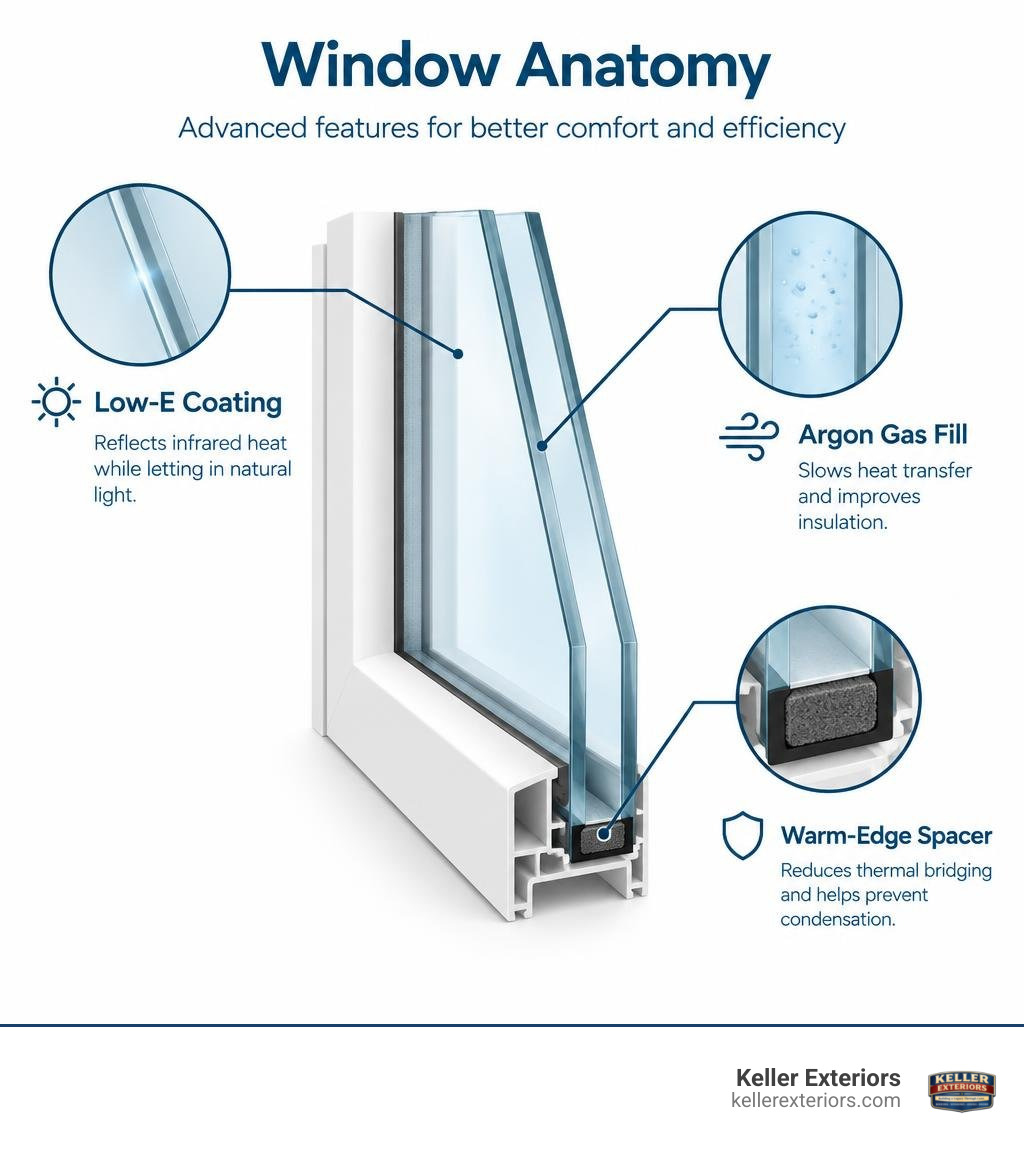
At the heart of high-performance glass units are microscopic surface treatments called Low-E (low-emissivity) coatings. These ultra-thin layers of metal oxide reflect infrared heat back to its source while letting natural visible light enter your living spaces. In hot summers, Low-E coatings bounce exterior heat away from your home, while in cold winters, they reflect interior heated air back into your rooms.
Between the glass panes, manufacturers replace regular air with non-toxic, slow-moving inert gases like argon or krypton. Because argon is denser than standard atmospheric air, it drastically slows convective currents inside the insulated glass unit, preventing warm air from transferring heat toward the colder outer pane. Krypton offers even higher thermal resistance and is often used in triple-pane configurations with narrower air spaces.
Separating the glass lites are warm-edge spacers. Traditional windows used conductive aluminum spacers that transferred outdoor chill straight to the indoor glass edge, causing cold spots and condensation. Modern warm-edge spacers use composite polymers, structural foam, or stainless steel to create an airtight seal that limits thermal bridging and maintains internal gas pressure. When exploring energy efficient windows, checking that the unit uses Low-E glass, argon fill, and warm-edge spacers ensures you get true whole-window efficiency.
Key Performance Metrics: U-Factor, SHGC, and Air Leakage
When evaluating windows, relying on marketing terms alone can be misleading. The most dependable way to compare performance is through the independent testing label provided by the National Fenestration Rating Council (NFRC). This label provides standardized scores across four key performance indicators:
- U-Factor: Measures the rate of non-solar heat transfer through the entire window assembly, including the frame and spacer. U-factor ratings generally range from 0.20 to 1.20. The lower the U-factor, the better the window insulates against heat loss during chilly weather.
- Solar Heat Gain Coefficient (SHGC): Measures how much solar radiation enters through the glass as radiant heat. SHGC is expressed as a number between 0 and 1. A lower number, such as 0.25, blocks unwanted heat gain during hot sunny afternoons, whereas a higher number allows passive solar warming.
- Visible Transmittance (VT): Ranges from 0 to 1 and indicates the amount of natural daylight that passes through the glazing. Higher VT values mean brighter, naturally lit rooms without needing artificial lights during the day.
- Air Leakage (AL): Quantifies the volume of air infiltration through cracks in the window assembly, measured in cubic feet per minute per square foot of window area (cfm/sq ft). An AL rating of 0.30 or lower is standard, with high-performance units reaching 0.10 or below to ensure draft-free living.
Finding the best balance among these metrics depends heavily on local climate needs and window orientation. For homeowners across Tulsa, OK, Broken Arrow, OK, and Owasso, OK, selecting a low U-factor paired with a balanced SHGC ensures whole-home comfort during humid summers and freezing winter storms. You can review comprehensive window solutions to see how specific glass coatings align with regional climate demands.
Choosing the Right Glazing: Double-Pane vs. Triple-Pane Glass
Selecting between double-pane and triple-pane glass is one of the most important decisions you will make during a window project. Standard clear double-pane windows allow approximately 75 percent of the sun’s heat into your home. Upgrading to advanced Low-E coatings reduces this heat gain significantly, keeping cooling equipment from working overtime.
| Feature | Standard Clear Double-Pane | High-Performance Low-E Double-Pane | Advanced Triple-Pane Glass |
|---|---|---|---|
| Glazing Layers | 2 Panes of Clear Glass | 2 Panes (1 Low-E Coating) | 3 Panes (2 Low-E Coatings) |
| Typical U-Factor Range | 0.45 to 0.55 | 0.26 to 0.30 | 0.18 to 0.22 |
| Solar Heat Block | Approx. 25% | Up to 70% | Up to 80% |
| Acoustic Dampening | Basic | Moderate | High (STC 32 to 36+) |
| Condensation Resistance | Moderate | High | Maximum |
| Relative Investment | Low | Balanced Value | Higher |
While high-performance double-pane glass provides excellent efficiency for most residential properties, upgrading to triple-pane windows adds a third layer of glass and a second insulating gas chamber. This extra layer lowers the overall U-factor, eliminates drafty convection currents next to large window walls, and provides superior acoustic insulation against neighborhood noise and road traffic. If your home features wide south- or west-facing exposures exposed to intense afternoon sun, pairing these configurations with solar reflective windows will keep interior living spaces consistently cool.
Top Benefits and Trade-Offs of Upgrading Your Windows
Replacing failing windows delivers widespread improvements to daily life indoors. According to national energy studies, replacing old, leaky single-pane units with certified models lowers household energy bills by an average of up to 13 percent nationwide. Beyond monthly energy savings, high-performance glass units filter destructive ultraviolet rays. Standard clear glass lets ultraviolet radiation degrade flooring, upholstery, and artwork, whereas modern Low-E windows reduce fading of interior valuables by up to 75 percent.
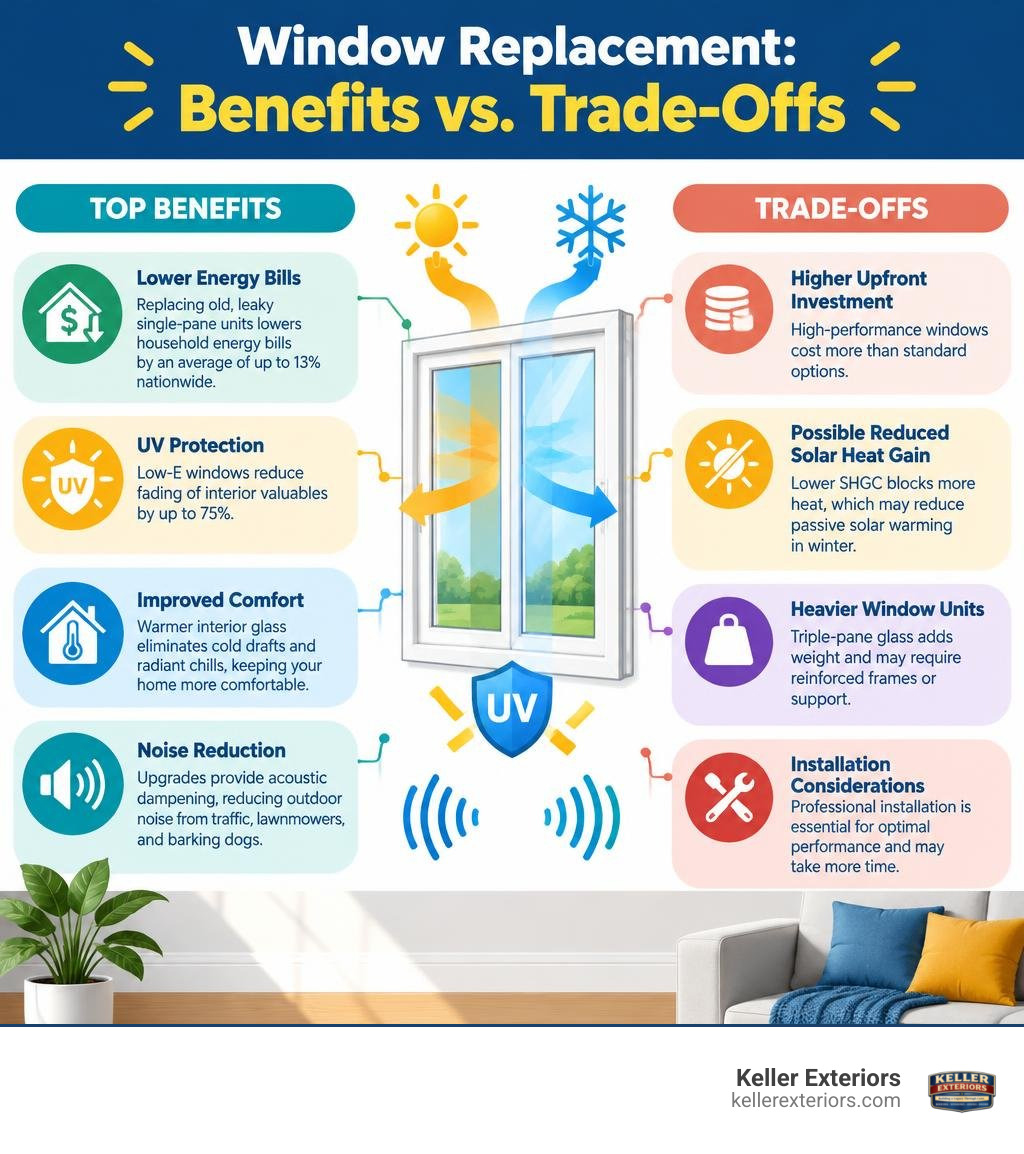
Upgrades also deliver significant acoustic dampening, reducing outdoor distractions like lawnmowers, barking dogs, and street traffic. Window maintenance and upgrade choices often work together to protect your property, as covered in these window tips.
How Energy-Efficient Replacement Windows Boost Comfort and Savings
Indoor comfort is about more than just what the thermostat reads. In a room with single-pane glass during winter, radiant heat from your body naturally escapes toward the freezing glass pane, making you feel chilly even if the ambient room air is set to 70 degrees. High-efficiency glass stays significantly warmer on the interior side, eliminating cold drafts and radiant chills.
During summer, advanced glazing stops radiant heat before it penetrates your living spaces, allowing central cooling systems to run shorter, more efficient cycles. By eliminating hot and cold spots in upstairs bedrooms, sunrooms, and home offices, your HVAC system operates under less strain, which helps extend its working lifespan.
Weighing Upfront Costs, ROI, and Payback Timelines
Investing in new windows involves substantial upfront capital, making it important to weigh long-term financial returns. A complete window replacement is not a short-term quick fix; it is a permanent structural upgrade that pays back value through monthly energy reductions, lower HVAC maintenance costs, and increased real estate curb appeal.
When preparing to sell a home, updated windows provide strong resale appeal for prospective buyers looking for move-in ready properties with low utility costs. The choices covered in custom window options can help you compare styles and performance features. Broken latches, failed glass seals, or localized rot may call for targeted repairs rather than full-frame renewal, as explained in broken windows.
Planning a Cost-Effective Window Replacement
If replacing every window in your home at once does not fit your current budget, a phased replacement plan offers a practical alternative. You can maximize your immediate return on investment by prioritizing the rooms that experience the greatest drafts, extreme temperature swings, or frequent sun exposure.
- Audit Problem Areas: Identify drafty north-facing rooms that lose heat during winter, or west-facing living areas that overheat in July and August.
- Evaluate Physical Condition: Replace windows with rotting frames, fogged glass panes, or stuck sashes first to protect structural framing from water leaks.
- Group Elevations: Replace windows in stages by home elevation (such as the entire front facade or the entire western side) to maintain aesthetic consistency while spreading project costs over time.
- Compare Product Specs: Always request written estimates that detail specific NFRC ratings, warranty terms, and brand performance profiles.
Selecting Frame Materials and Styles for Maximum Efficiency
Window glass performs only as well as the frame holding it in place. Different frame materials offer unique structural properties, thermal insulation values, and maintenance requirements. Selecting the best frame material ensures your windows complement your home’s architectural style while providing long-lasting insulation.
For unique architectural styles or specialized room requirements, exploring custom window options allows you to balance frame dimensions, glass types, and decorative trims. A kitchen garden window can add shelf space for growing herbs while helping keep the kitchen insulated.
Popular Frame Materials: Vinyl, Wood-Clad, and Fiberglass
Frame construction impacts everything from thermal conductivity to exterior maintenance schedules.
| Material | Insulating Ability | Maintenance Needs | Durability & Longevity | Best Fit For |
|---|---|---|---|---|
| Multi-Chamber Vinyl | High | Minimal (Never needs paint) | 20 to 30+ Years | Balanced budget and high efficiency |
| Clad-Wood | High | Moderate (Exterior clad, interior wood care) | 30+ Years (With upkeep) | Historic and traditional home aesthetics |
| Fiberglass | Maximum | Minimal (Highly weather-resistant) | 35+ Years | Extreme temperature stability and strength |
| Standard Aluminum | Low (Conducts heat) | Low | 20 to 25 Years | Commercial spaces (Requires thermal break) |
Modern durable vinyl windows remain the most popular choice for residential upgrades. High-grade extruded vinyl features interior honeycomb air chambers that trap air to reduce conductive heat transfer. Vinyl will never rot, peel, rust, or require repainting, making it exceptionally low-maintenance.
Clad-wood frames feature a solid wood interior for natural warmth, protected by an exterior shell of heavy-duty aluminum or vinyl that shields against moisture and insect damage. Fiberglass frames expand and contract at nearly the exact same rate as the glass panes they hold, providing structural stability that resists seal failures in extreme climates.
High-Efficiency Styles: Casement, Double-Hung, Sliding, and Picture
The operating mechanism of a window plays a direct role in how well it seals against drafts and wind-driven rain:
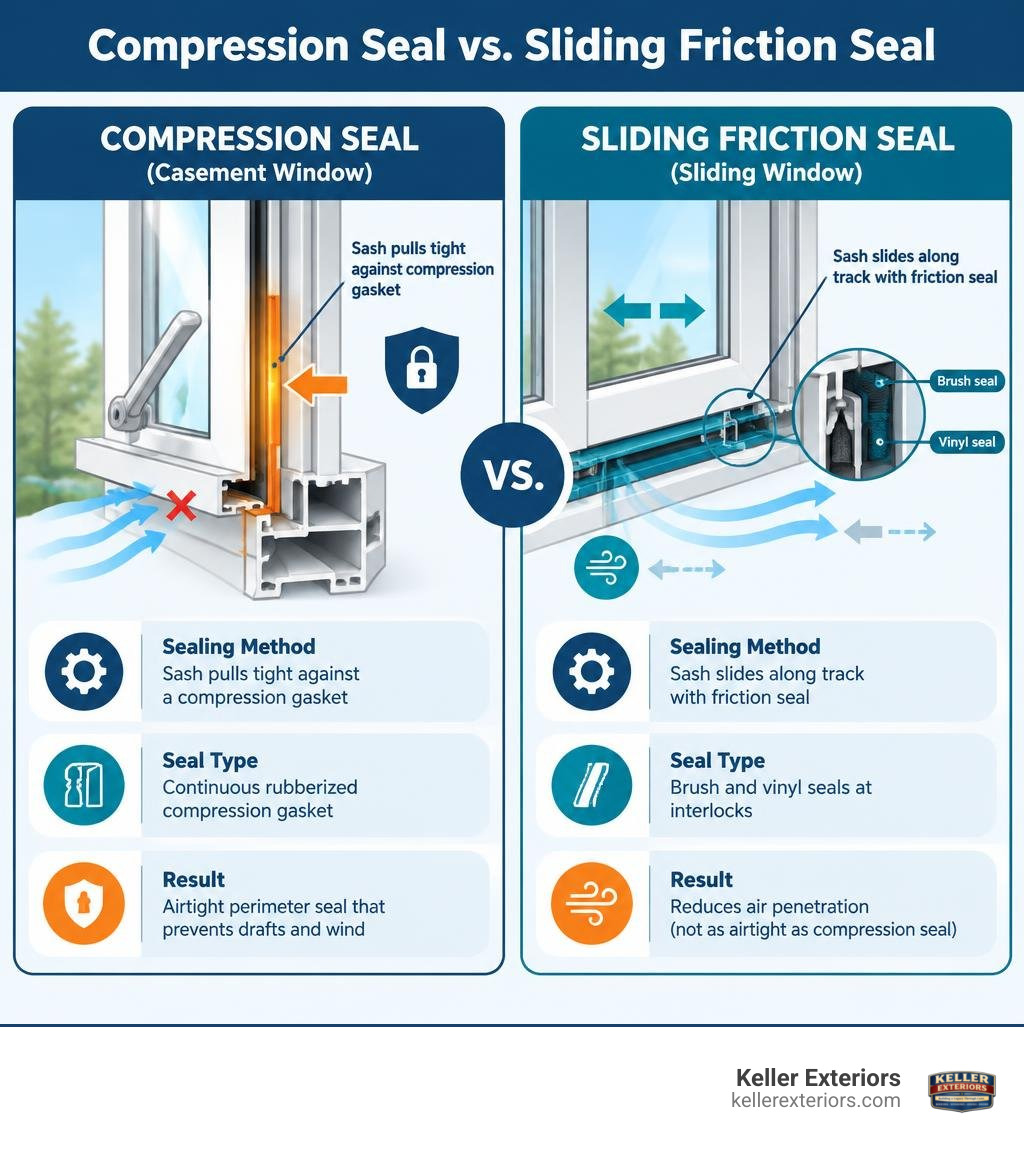
- Casement Windows: Hinged at the side, energy-saving casement windows swing outward using a hand crank. When closed, the sash pulls tight against a continuous rubberized compression gasket, creating an airtight perimeter seal that prevents drafts even during high winds.
- Double-Hung Windows: Featuring two vertically sliding sashes, classic double-hung windows provide excellent ventilation control by opening from either the top or bottom sash. Modern units incorporate high-density weatherstripping along the sash tracks to stop air infiltration.
- Sliding Windows: Operating horizontally along a durable track, sliding windows offer wide, unobstructed views and smooth operation. High-quality brush and vinyl seals line the interlocks to reduce air penetration.
- Picture Windows: Because they do not open or have moving parts, fixed picture windows deliver the highest possible energy efficiency. They are completely sealed against air leakage, making them ideal for large openings where maximum daylight is desired.
Professional Installation and Maximizing Efficiency
Even the highest-rated window unit will fail to save energy if it is installed improperly. Gaps around the rough opening, misaligned sashes, or missing exterior flashing will cause air leaks, moisture damage, and premature glass seal failure. Professional window installers follow strict manufacturer specifications to maintain airtight and watertight building envelopes.
During installation, contractors prepare the rough opening by inspecting the structural framing for past rot or water damage. In homes constructed prior to 1978, lead-safe work practices are strictly followed to contain and clean old lead-based paint dust safely. Once the new window is set level, plumb, and square using non-rotting composite shims, installers apply specialized low-expansion polyurethane foam between the window frame and wall framing. Unlike high-expansion foams that can bow window jambs and jam sashes, low-expansion foam fills voids gently to form a draft-free thermal barrier.
Managing indoor humidity is another important aspect of post-installation care. High-efficiency windows seal your home tighter than old, drafty units, which means indoor humidity from cooking, showers, and breathing stays inside. Operating bathroom exhaust fans, using kitchen range hoods, and adjusting whole-home humidifiers will maintain comfortable moisture levels and prevent surface condensation.
Critical Steps for Installing Energy-Efficient Replacement Windows
A dependable installation process follows a systematic sequence to ensure airtight durability:
- Precision Measurement: The rough opening is measured across top, middle, and bottom dimensions to ensure the replacement frame fits cleanly without forced distortion.
- Sill Pan Flashing: Installers apply self-adhering flashing tape along the sub-sill, creating a sloped drainage plane that directs any accidental moisture harmlessly toward the exterior.
- Square and Shim Alignment: The window unit is set into place and checked with precision levels. Shims are placed behind hinge and latch points to prevent frame sagging over time.
- Perimeter Air Sealing: Low-expansion insulating foam is injected around the entire interior gap, creating an airtight seal without distorting the frame.
- Exterior Weatherproofing: High-grade commercial sealant is applied along the exterior casing where it meets the home siding, preventing wind-driven rain penetration.
Leveraging Rebates and Financial Incentives
Upgrading your windows can qualify you for substantial financial incentives that reduce your net project investment. Many local electric and gas utilities provide direct customer rebates for installing certified energy-efficient window models that lower grid demand during peak seasonal periods.
Additionally, federal energy-efficiency tax credits allow eligible homeowners to claim a credit percentage on qualifying window upgrades installed in primary residences. When planning your project, check current utility incentive programs and verify that your selected product lines meet regional performance requirements through independent guides like the Residential Windows, Doors, & Skylights directory. Manufacturers also offer seasonal rebate promotions throughout the year that can be combined with local utility programs to increase your overall savings.
Frequently Asked Questions About Efficient Window Upgrades
How much can I actually save by installing ENERGY STAR certified windows?
Replacing old, single-pane windows with certified energy-efficient models can lower your annual household heating and cooling bills by an average of up to 13 percent nationwide. Exact savings depend on your local climate, home orientation, existing insulation levels, and regional utility rates.
What is the most energy-efficient window frame material?
Fiberglass and foam-filled multi-chamber vinyl frames deliver the highest insulating values. Both materials resist heat conduction, eliminate thermal bridging, and maintain airtight seals across extreme winter cold and summer heat.
Can I make drafty windows efficient without replacing them?
If your window frames are structurally sound, you can reduce drafts by replacing worn weatherstripping, applying fresh exterior caulking around the trim, locking sashes securely, and installing interior insulating window film during extreme weather.
What is the difference between U-factor and SHGC?
U-factor measures how well a window prevents heat from escaping your home, making lower numbers ideal for cold weather. Solar Heat Gain Coefficient (SHGC) measures how much solar heat passes through the glass, where lower numbers help block intense summer sun.
Why do my new energy-efficient windows have condensation on the outside?
Exterior condensation on new windows is a sign of superior insulation. The outer glass pane stays cooler because indoor heat is not escaping through the glass, causing morning dew to form on the cold outer surface just like it does on your lawn.
What causes double-pane windows to look cloudy or foggy between the glass?
Fogging or cloudiness between glass panes indicates that the perimeter seal has failed, allowing the insulating argon gas to escape and ambient moisture to enter. Once a seal fails, the insulated glass unit must be repaired or replaced.
How long do modern energy-efficient replacement windows typically last?
Quality vinyl, clad-wood, and fiberglass replacement windows generally last between 20 and 35 years when properly installed and maintained. High-grade hardware and durable frame materials help prevent premature warping and seal degradation.
Are triple-pane windows necessary for mild climate zones?
While triple-pane windows offer maximum thermal resistance and noise reduction, high-performance double-pane windows with advanced Low-E coatings are typically sufficient for moderate climates, offering excellent efficiency at a balanced price point.
What is low-emissivity (Low-E) glass?
Low-E glass features an invisible, microscopic metallic coating that reflects radiant heat while allowing natural light to pass through. It reflects heat back outside during summer and keeps indoor furnace heat inside during winter.
Can I install replacement windows myself to save money?
Window replacement requires specialized tools, structural carpentry skills, and precise flashing knowledge. If structural framing issues exist, safety concerns arise, or moisture management is uncertain, hiring an experienced professional ensures airtight performance and protects your warranty.
Making the Right Investment for Your Home’s Future
Investing in high-performance windows is one of the most effective steps you can take to lower your monthly utility costs, eliminate drafty cold spots, and protect your home interior from damaging solar heat. By selecting the right combination of Low-E glass, insulating argon gas fills, durable frame materials, and certified installation methods, you will enjoy a quieter, more comfortable home for decades to come.
Whether you live in Tulsa, OK, Jenks, OK, Bixby, OK, Broken Arrow, OK, or Owasso, OK, our local installation specialists understand the unique climate demands of northeastern Oklahoma homes. With over 20 years of exterior craftsmanship, Keller Exteriors delivers dedicated service across roofing, siding, windows, doors, and gutters. If you are ready to improve your home comfort and energy performance, schedule your personalized project estimate with us today.