
Why Insulated Siding for House Upgrades Matters
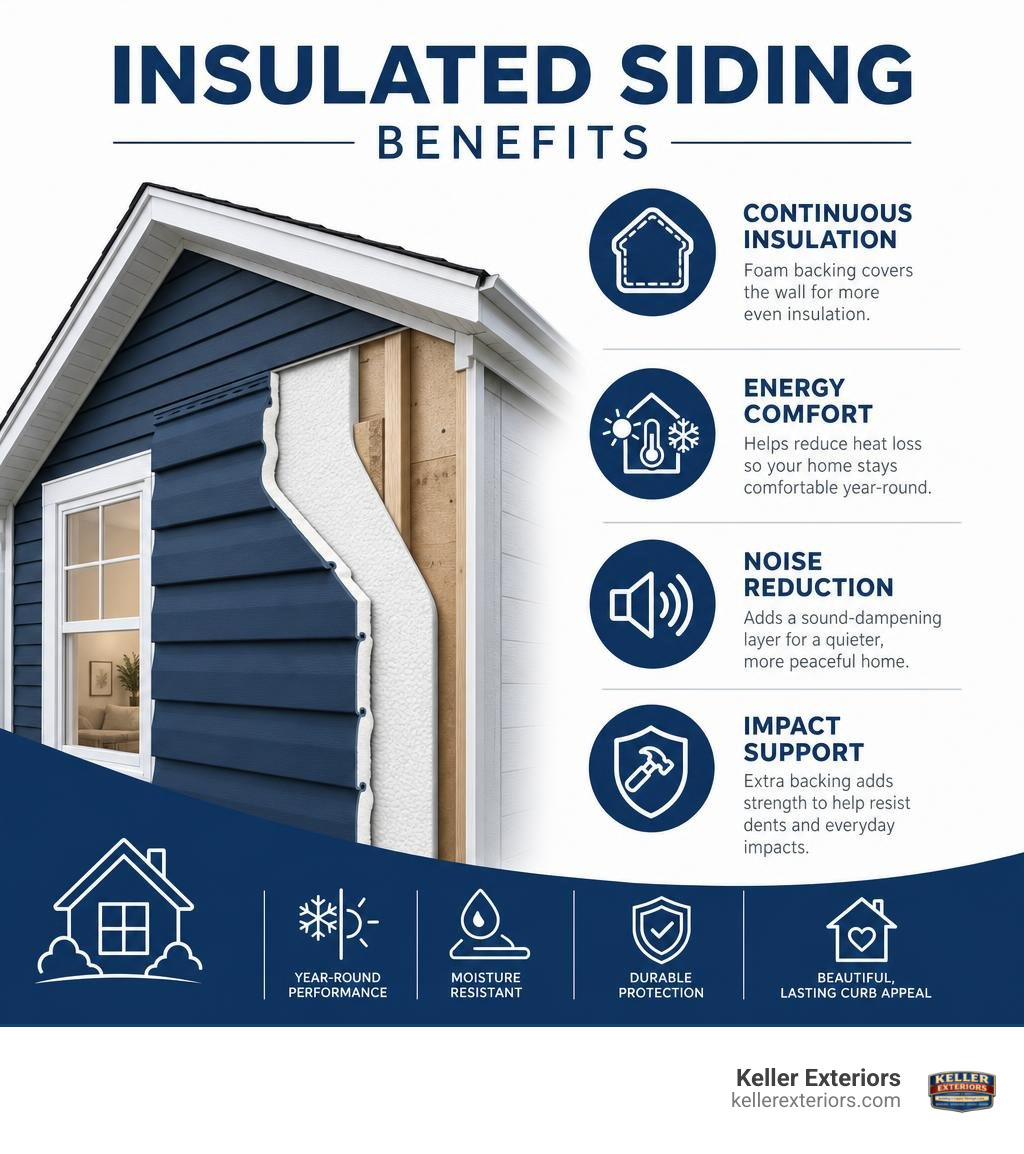
Insulated siding for house projects combines durable exterior cladding with a contoured foam backing that adds a layer of continuous insulation over your exterior walls. It can help reduce heat loss through wall studs, make rooms feel more even in temperature, soften outdoor noise, and give vinyl siding more support against hail and everyday impacts.
| Quick answer | What it means for your home |
|---|---|
| What it is | Vinyl siding with rigid EPS foam bonded to its back. |
| Why it helps | The foam covers framing members that can otherwise leak heat. |
| Typical added R-value | Many products add about R-2 to R-3.5, depending on the panel and foam thickness. |
| Other benefits | Better impact resistance, less hollow panel noise, and a flatter-looking wall surface. |
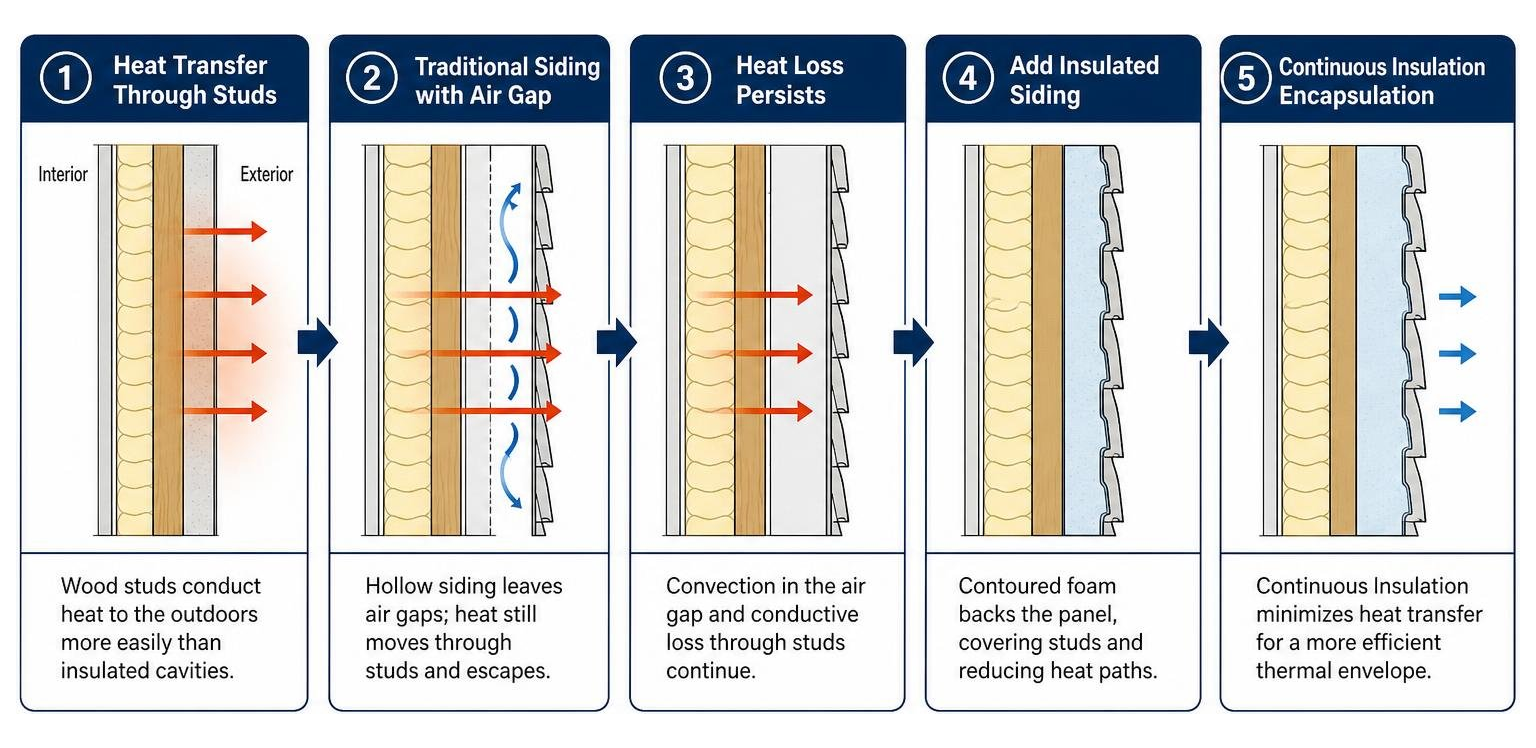
Traditional vinyl siding leaves an open space behind each panel. Insulated siding fills that space with shaped foam, creating a more solid exterior wall layer. This matters because wood studs can cover up to 25% of a typical wall surface, and they conduct heat more readily than the insulated cavities between them.
For Tulsa, OK homeowners dealing with drafts, rising utility use, storm exposure, or aging siding, the right system involves more than choosing a color. The siding, weather barrier, flashing, trim, soffit, and mounting blocks all need to work together to manage water and protect the wall.
At Keller Exteriors, our team brings more than 25 years of hands-on exterior remodeling experience to helping homeowners assess insulated siding for house projects. We have worked across the exterior trades and know that lasting results depend on careful inspection, clear communication, and workmanship that fits the home.
What Is Insulated Siding and How Does It Work?
Insulated siding is an engineered exterior wall cladding system that permanently fuses a rigid vinyl or composite shell to contoured insulation. Unlike hollow cladding, manufacturers shape the foam core to mirror the exact rear profile of the lap panel. This construction removes hollow voids and structural weak points behind the panel face.
High-grade moisture-resistant structural adhesives bond the exterior vinyl shell directly to dense expanded polystyrene (EPS) foam backing. The tightly packed cellular structure of EPS traps microscopic air pockets, which slows thermal conductivity and creates high energy efficiency.
Some high-performance siding lines incorporate graphite-enhanced EPS foam. Small graphite particles within the core act like micro-mirrors, reflecting radiant heat energy back toward its source and boosting thermal resistance by up to 20 percent compared to standard white EPS.
When installed over your home sheathing, these interlocking foam-backed panels build a continuous thermal blanket around your house. The rigid foam core meets strict manufacturing specifications for compressive strength, dimensional stability, and flame resistance. This underlying backing prevents panel sagging, supports the exterior surface under pressure, and restricts radiant solar heat flow during hot summer afternoons in Broken Arrow, OK.
Homeowners exploring options can review full product lines across our complete selection of durable residential siding choices to see how different materials perform. For those focused on thermal protection, examining specifically designed contoured foam insulated panels offers a clear path toward long-term efficiency.
Key Differences Between Traditional Vinyl and Insulated Siding for House
The structural difference between hollow-back vinyl and factory-laminated insulated siding changes how walls look, feel, and protect your home. Standard vinyl panels rely solely on their thin PVC shell for rigidity, leaving open cavities behind every panel course. Insulated siding replaces those hollow pockets with continuous, supportive foam.
- Wall Alignment and Surface Flatness: Rigid foam backing spans across minor stud variations, bowed sheathing, and structural wall imperfections, creating clean horizontal lines across multi-story exterior walls.
- Impact Absorption: The foam backing acts as a shock absorber, distributing kinetic force across the panel face when struck by hail, flying storm debris, or stray sports balls.
- Thermal Distortion Resistance: Fused foam backing reduces thermal expansion and panel distortion during extreme summer heat spikes and freezing winter weather.
- Seam Alignment and Security: Factory-backed panels maintain tighter seam lock connections over decades, preventing unsightly panel gapping or course separation.
- Acoustic Density: Insulated panels sound solid when tapped, replicating the solid heft and heavy feel of natural timber rather than hollow plastic.
Homeowners can compare these upgraded features against standard hollow vinyl paneling to evaluate long-term wall performance against upfront home improvement budgets.
How Continuous Insulation Eliminates Thermal Bridging
Wood stud framing makes up approximately 25 percent of a standard exterior wall surface. While builders pack fiberglass batt insulation into the cavity spaces between wall studs, the uninsulated wood studs extend directly from the interior drywall to the exterior sheathing.
Because solid wood conducts heat faster than cavity insulation, heat flows freely through these studs. Building scientists call this energy leakage thermal bridging. An uninsulated wall frame allows constant heat transfer into your home during hot summer months and lets indoor heat escape quickly during cold winter weather in Jenks, OK.
Thermal studies conducted by energy research organizations show that thermal bridging severely weakens overall wall insulation performance. Adding a continuous layer of exterior foam insulation over your studs covers these framing heat leaks, creating an unbroken thermal barrier around your framing. This envelope eliminates interior wall cold spots, helps balance temperatures between upstairs and downstairs rooms, and lowers winter draftiness across every floor.
Homeowners can review independent performance data on engineered continuous thermal barriers through the continuous thermal barrier product guide to see tested energy metrics.
Core Benefits of Insulated Siding for House Systems
Insulated siding upgrades home wall protection by improving energy resistance, acoustic comfort, and exterior durability. By lifting nominal wall ratings from R-2.0 up to R-3.5 or higher, continuous foam insulation reduces the heat load on residential HVAC equipment throughout the year.
Thermal Efficiency and R-Value Performance Metrics
R-value measures how effectively a material resists conductive heat flow. Higher R-values indicate stronger insulating power. Independent laboratory testing according to ASTM C163 standards verifies the steady-state thermal transmission properties of insulated vinyl panel systems under real-world weather swings.
In mixed-humid climate regions like Owasso, OK, summer heat and winter frost test exterior building envelopes continuously. Continuous exterior foam backing cuts energy loss by maintaining an unbroken thermal shield over wood studs. Lowering continuous mechanical demand on air conditioners and furnaces reduces seasonal utility expenses, shortens equipment compressor runtime, and extends the operating life of home heating and cooling units.
Sound Dampening and Noise Reduction Capabilities
The thick expanded polystyrene core fused to rigid cladding acts as a acoustic dampening buffer against exterior sound waves. Laboratory sound testing shows that contoured foam-backed siding reduces outside noise intrusion by up to 39 percent compared to traditional hollow vinyl panels.
This dense foam barrier softens intrusive low-frequency and high-frequency sound waves, including:
- Heavy highway traffic rumble and neighborhood street noise.
- Loud commercial lawnmowers and gas-powered leaf blowers.
- Barking neighborhood dogs and overhead aircraft traffic.
- Wind-driven rain, heavy hail impacts, and storm gusts rattling against wall faces.
Elevating your wall assembly’s Sound Transmission Class (STC) rating creates a tranquil indoor living space, protecting bedrooms and home offices in busy Bixby, OK neighborhoods from daily street distractions.
Structural Durability, Impact Protection, and Pest Resistance
Contoured foam backing supports the vinyl surface like a cushion, delivering up to 500 percent greater impact resistance than uninsulated vinyl cladding. This rigid reinforcement prevents denting, cracking, and surface puncturing from hail storms, lawnmower throw rocks, and falling tree branches.
Advanced locking systems paired with rigid backing help insulated panels withstand extreme wind loads, holding firm against wind speeds ranging from 160 mph to 179 mph. Furthermore, manufacturers incorporate safe borate-based pest deterrents directly into the foam structure during production. This non-toxic additive discourages subterranean termites, carpenter ants, and cavity-nesting insects from burrowing behind the cladding.
Homeowners can review practical maintenance guidelines in our siding inspection checklist tips to keep their exterior walls performing in peak condition.
Available Styles, Profiles, and Customization Options
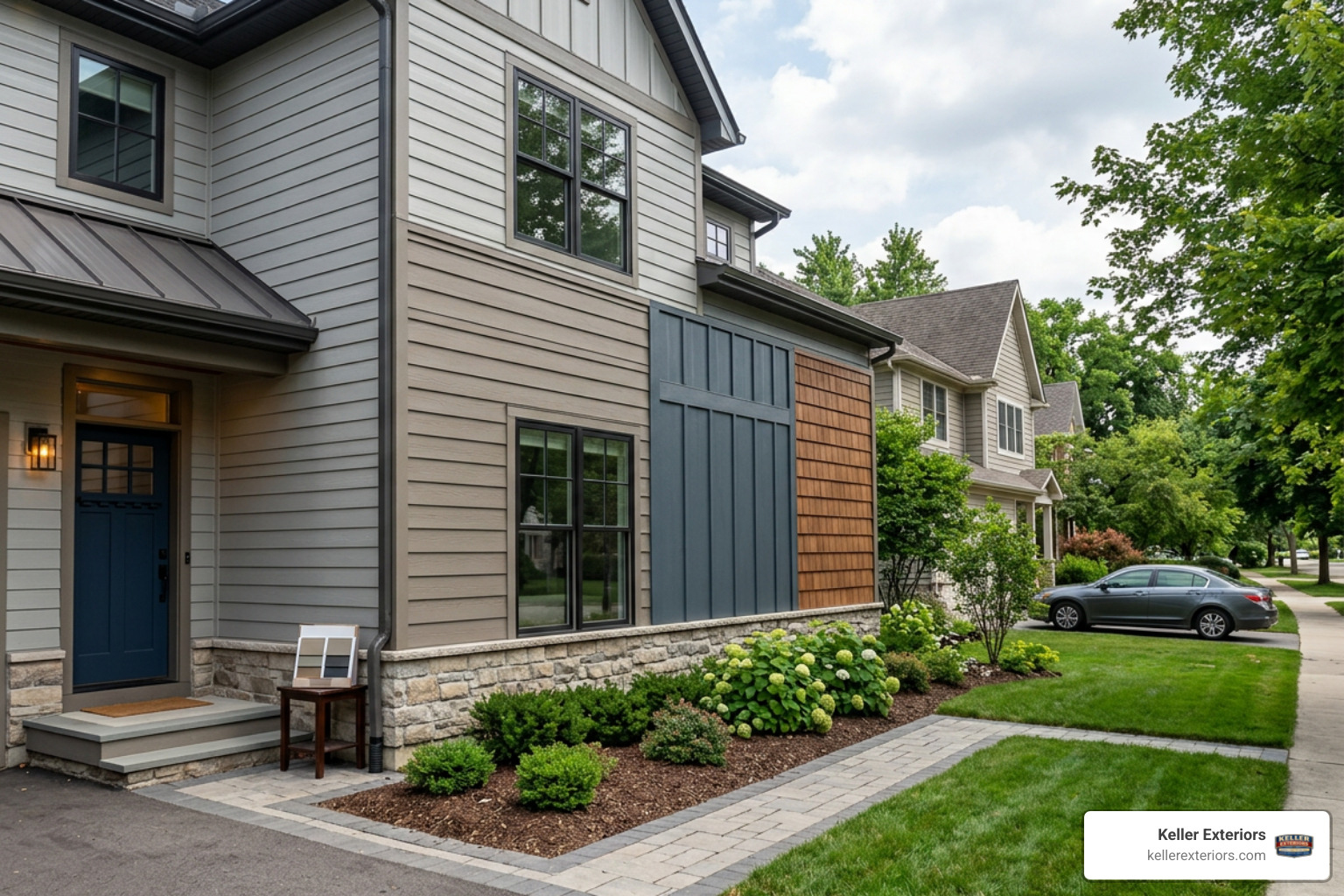
Modern insulated siding offers diverse architectural profiles, deep shadow lines, and rich natural colors, allowing homeowners to match any home style across Glenpool, OK and nearby communities.
| Siding Profile | Visual Appearance | Best Architectural Application |
|---|---|---|
| Double 6″ Clapboard | Classic horizontal lap lines with deep shadow depth | Traditional American styles, Craftsman homes, Colonial elevations |
| Double 7″ Lap Siding | Expansive horizontal panel face with historical scale | Large multi-story homes, modern farmhouses, broad exterior walls |
| Dutch Lap | Beveled top edge casting prominent shadow lines | Mid-century homes, transitional architecture, accent elevations |
| Board & Batten | Striking vertical planking with raised batten strips | Modern farmhouses, gable accents, full vertical wall elevations |
Popular Architectural Profiles for Insulated Siding for House Upgrades
Homeowners can select from classic horizontal clapboard, clean dutch lap, and bold vertical board and batten layouts. Extended-length panels measuring 16 feet 8 inches or longer reduce visible lap seams by up to 39 percent compared to standard 12-foot boards. Fewer seams produce smooth, uninterrupted wall expanses that elevate curb appeal across Sand Springs, OK residences.
Color Retention, UV Stabilization, and System Accessories
Advanced UV stabilizers and inorganic ceramic color pigments protect panels from chalking, heat distortion, and sun fading. Complete trim packages incorporate insulated corner posts, decorative window surrounds, and deep J-channels designed to handle thicker foam panels.
Engineered mounting blocks with built-in sloped drainage channels provide watertight seals around outdoor light fixtures, hose bibbs, and electrical outlets.
Material Comparison: Insulated Vinyl vs. Fiber Cement and Wood Siding
Evaluating exterior cladding options requires looking at material costs, installation needs, maintenance cycles, and thermal performance across a 30-year lifespan.
| Performance Vector | Insulated Vinyl Siding | Fiber Cement Board | Natural Wood Siding |
|---|---|---|---|
| Added Thermal R-Value | R-2.0 to R-3.5 continuous | Minimal (approx. R-0.15) | Minimal (approx. R-0.8) |
| Routine Painting Needs | Never requires painting | Repaint every 8 to 12 years | Staining/painting every 3 to 7 years |
| Moisture Resistance | Impervious to rot & decay | Absorbs water if unsealed | Vulnerable to rot, fungi, & warping |
| Impact Protection | High (foam shock absorber) | Moderate (can crack on impact) | Moderate (dents/splinters under force) |
| Maintenance Effort | Low (simple annual rinse) | Moderate (caulk & paint care) | High (frequent sealing & scraping) |
Homeowners considering authentic wood aesthetics can explore natural wood siding options or review our detailed guide on comparing wood siding options to weigh natural wood care against low-maintenance composite options.
Cost, Lifetime Value, and Maintenance Requirements
Insulated vinyl siding eliminates future repainting, scraping, caulking, and wood staining expenses. Its durable finish only requires an occasional wash with a garden hose and mild detergent.
Combining monthly utility energy savings with zero maintenance costs delivers high long-term return on investment. Homeowners in Claremore, OK can explore flexible payment terms through our flexible project financing options or review current promotional savings on our latest siding special offers to streamline remodeling plans.
Moisture Management and Breathability Standards
An average household of four generates 4 to 6 gallons of water vapor daily through cooking, showering, and laundry. If exterior wall insulation traps this vapor inside the wall cavity, hidden mold, mildew, and wood rot can destroy structural framing.
Insulated siding foam features perm ratings up to 5.0, offering high breathability that allows interior water vapor to escape safely outward. Integrated drainage channels behind panel laps allow any wind-driven rainwater to drain freely down the wall face.
Professional Installation Process and System Integration
Installing heavy foam-backed siding requires certified skills, specialized tools, and precise weatherization layering.
Correct Accessories and Weatherization Sealing
Our installation teams integrate breathable housewrap barriers, self-adhering flashing tapes, and deep-pocket trim components to build a watertight exterior shell:
- Weather-Resistive Barrier Application: We install high-performance housewrap with taped seams over clean sheathing to block exterior air and liquid water.
- Insulated Window & Corner Flashing: Custom flashing pans and insulated corner trim seal critical wall openings against thermal leaks and water penetration.
- Starter Strip and Panel Locking: Precision-leveled starter strips anchor the initial course, allowing panels to interlock securely under high winds.
- Thermal Expansion Fastening: Installers drive fasteners centered into nail slots, leaving a slight gap under the nail head so panels float freely during seasonal temperature changes in Bartlesville, OK.
Homeowners seeking heavy-duty plank profiles can explore solid core paneling options or examine modern composite selections like engineered composite cladding for advanced elevation designs.
Certifications, Warranties, and Industry Quality Standards
Quality insulated siding carries third-party performance certifications under ASTM D7793 standards for vinyl product quality and ASTM C163 standards for verified thermal R-values. Certified installers complete every step according to strict manufacturer protocols. Leading systems carry transferable limited lifetime warranties protecting against manufacturing defects, chalking, excessive fading, and hail damage.
Frequently Asked Questions About Insulated Siding
How much R-value does insulated siding add to a house?
Insulated siding adds between R-2.0 and R-3.5 of continuous insulation over exterior wall sheathing. By covering wood studs, it eliminates thermal bridging and boosts total wall thermal performance by 20 to 30 percent compared to standard uninsulated vinyl panels.
Does insulated siding reduce exterior neighborhood noise?
Yes, high-density expanded polystyrene backing acts as an acoustic sound barrier that reduces outside noise transfer into your home by up to 39 percent. It muffles highway traffic, lawnmowers, barking dogs, and heavy rainfall.
How does insulated siding manage moisture and prevent interior mold?
Insulated siding features high vapor permeability with perm ratings up to 5.0. This breathability allows indoor water vapor to pass safely through the foam core and escape outward, preventing moisture entrapment, mold, and wood decay inside wall cavities.
Is insulated siding significantly more impact-resistant than traditional vinyl?
Contoured foam backing supports the vinyl surface, delivering up to 500 percent higher impact resistance than hollow vinyl panels. The foam absorbs kinetic energy, preventing cracks and dents from hail strikes, falling branches, and lawnmowers.
How long does insulated siding last on a residential home?
Quality insulated siding systems last 30 to 50 years or more with minimal maintenance. High-strength structural adhesives hold the foam layer securely, while advanced UV stabilizers protect against sun fading, chalking, and panel warping.
Can insulated siding be installed over existing home cladding?
Installers can place insulated siding over existing flat wood or fiber cement cladding if the underlying wall structure is completely sound, dry, and flat. However, removing old siding allows full inspection and replacement of aging housewrap and window flashing.
What is thermal bridging and how does insulated siding eliminate it?
Thermal bridging happens when heat escapes directly through solid wood framing studs, which make up roughly 25 percent of a wall surface. Insulated siding places a continuous foam layer over studs, blocking conductive heat pathways across the building frame.
How do extended-length panels improve exterior home appearance?
Extended-length panels measuring 16 feet 8 inches or longer reduce panel lap seams by up to 39 percent compared to standard 12-foot boards. Fewer joint overlaps produce smooth, unbroken horizontal sightlines across wide exterior walls.
Does insulated siding require specific installation trim and accessories?
Because insulated siding panels are thicker than hollow vinyl, installers use deep-pocket J-channels, insulated corner posts, starter strips, and wide window casings designed to accommodate the extra foam thickness and maintain watertight seals.
How does the total cost of insulated siding compare to fiber cement over time?
While initial installation costs are competitive, insulated vinyl siding requires zero repainting or re-caulking over its lifespan. Fiber cement requires repainting every 8 to 12 years. Continuous energy utility savings make insulated siding lower in total 30-year ownership costs.
Transform Your Exterior Wall Performance with Local Experts
Upgrading your home exterior with continuous thermal insulation, enhanced impact durability, and quiet indoor comfort requires an experienced contractor team who understands local climate demands across Midtown, OK and surrounding communities.
At Keller Exteriors, our dedicated crew combines over 20 years of hands-on building experience with premium materials to deliver lasting home upgrades. We inspect your existing wall envelope, repair hidden sheathing issues, and install complete siding systems designed for long-term energy savings.
Homeowners across our regional communities can check our local coverage throughout the Keller Exteriors local service area to verify options for their neighborhood. Ready to elevate your home comfort and lower monthly energy utility bills? Reach out to Keller Exteriors today to schedule a consultation for your home or explore customized insulated siding installation options.