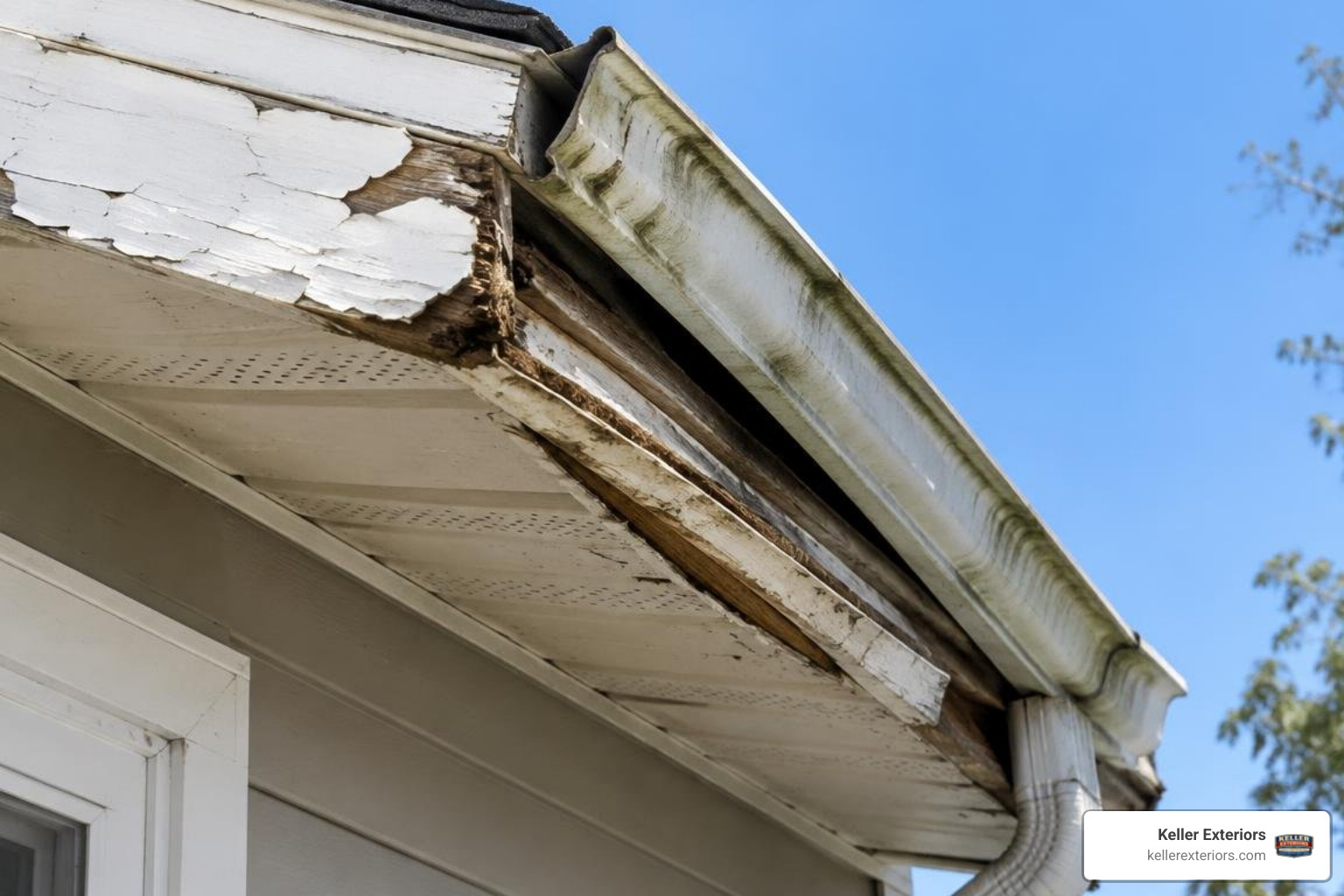
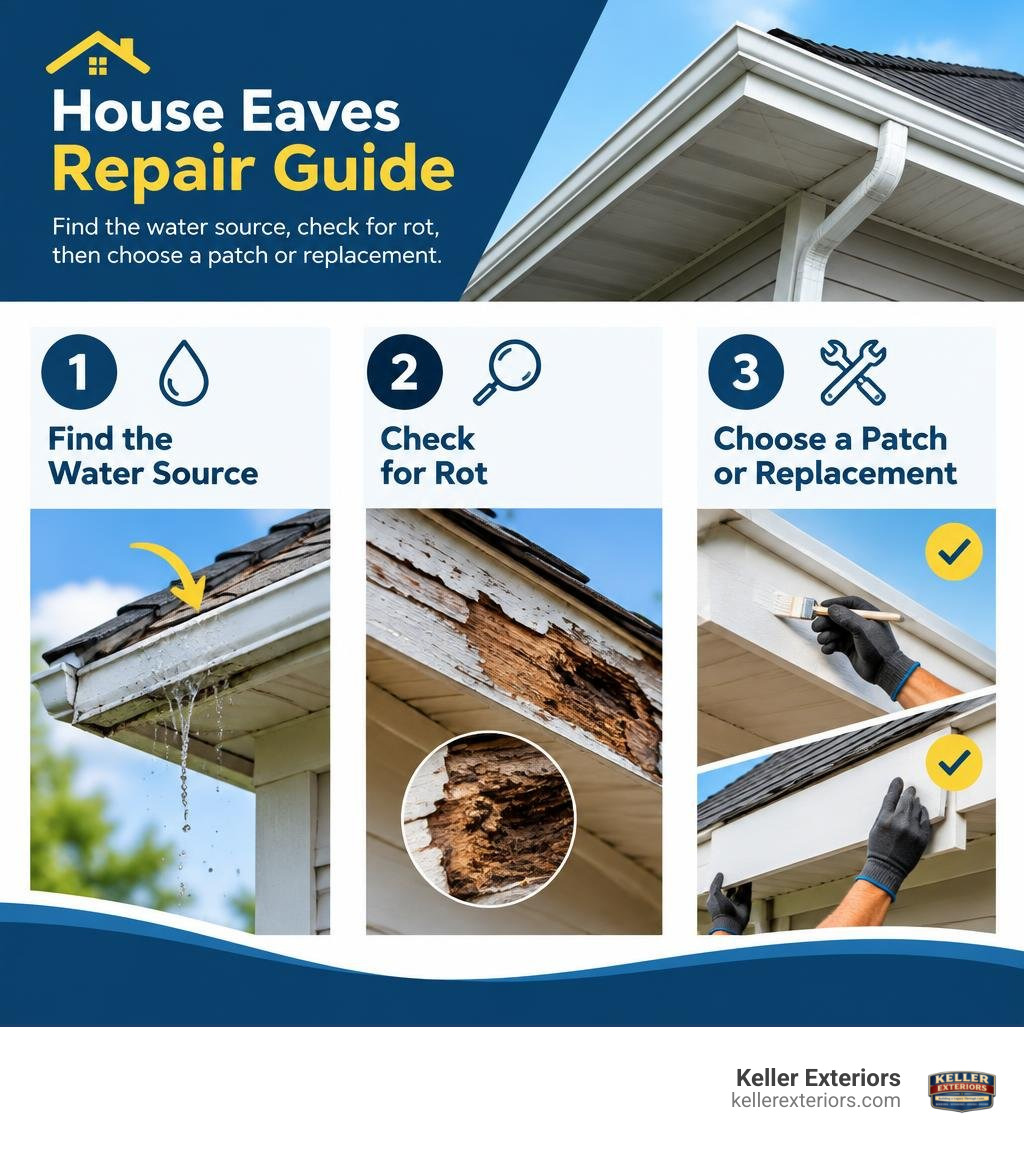
House Eaves Repair Starts With Finding the Water Source
If your eaves show peeling paint, soft wood, or a sagging gutter, check where water is getting in before fixing the visible damage. A small, firm section may need only a patch and fresh paint. Soft fascia, loose gutter supports, or damage that reaches the framing calls for a professional inspection and may require board replacement.
In Tulsa, Oklahoma, storms and overflowing gutters can expose weak spots along the roof edge. This guide will help you spot damage, understand your repair options, and know when to bring in a pro.
The Keller Exteriors team brings more than 20 years of exterior construction experience to house eaves repair. Our team starts by finding the cause, checking what lies beneath, and fixing the damage that matters.
Understanding Roof Eaves: Anatomy, Function, and Vulnerability
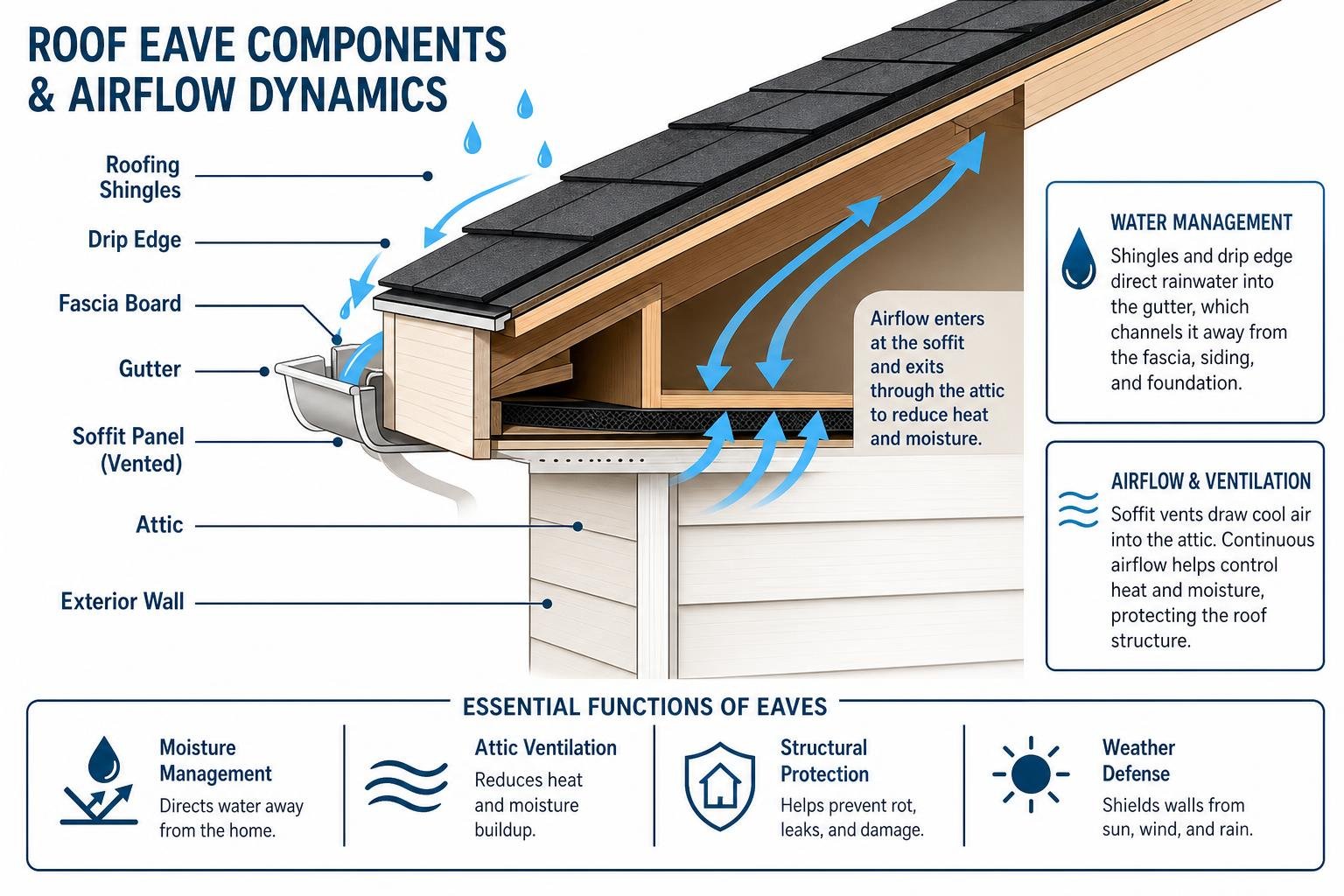
Roof eaves serve as the protective perimeter of your home. They are the lower edges of the roof system that project outward past the exterior walls. Far from being purely decorative trim, eaves function as an engineered barrier designed to handle water runoff, shed intense sunlight, and maintain constant airflow through the attic.
In areas like Tulsa, Oklahoma, eaves face severe weather swings ranging from heavy spring rainstorms and summer heat to freezing winter ice. When the eave structure weakens, the roofline loses its primary defense mechanism against structural rot and roof leaks.
The Essential Functions of Residential Eaves
The primary role of the eave is moisture management. By directing stormwater well clear of the exterior siding and foundation, eaves prevent water from pooling at the base of the house. Eaves also:
- Preserve exterior siding by reducing direct wind-driven rain exposure.
- House intake ventilation that pulls fresh outside air into the attic, lowering attic temperatures and preventing moisture accumulation.
- Provide solar shading along upper window lines, improving energy efficiency during peak summer heat.
- Protect exterior wall framing and interior drywall from capillary moisture intrusion.
Critical Components Along the Roof Edge
Several interconnected components work together along the roof edge:
- Fascia Boards: The vertical finishing edge nailed directly to the ends of the roof rafters. The fascia supports the gutters and takes the brunt of weather exposure.
- Soffit Panels: The horizontal underside spanning the gap between the exterior wall and the back of the fascia board. Soffits are often perforated or vented to support attic intake airflow.
- Sub-Fascia: The structural backing board fastened across rafter tails to provide rigid support for the outer finish fascia.
- Rafter Tails: The structural lumber beams that extend past the exterior walls to create the roof overhang.
- Frieze Boards: Horizontal trim boards installed flat against the top of the siding where the wall meets the soffit.
- Drip Edge: The corrosion-resistant metal flashing installed along the roof deck edge that channels water directly into gutters.
Issues along this transition edge can also impact the roof covering above, requiring fixes for items like cracked roof tiles before water migrates down into the eave assembly.
Warning Signs and Root Causes of Eave Deterioration
Eave damage rarely begins as obvious, massive rot. It usually starts with subtle symptoms that worsen over several seasons.
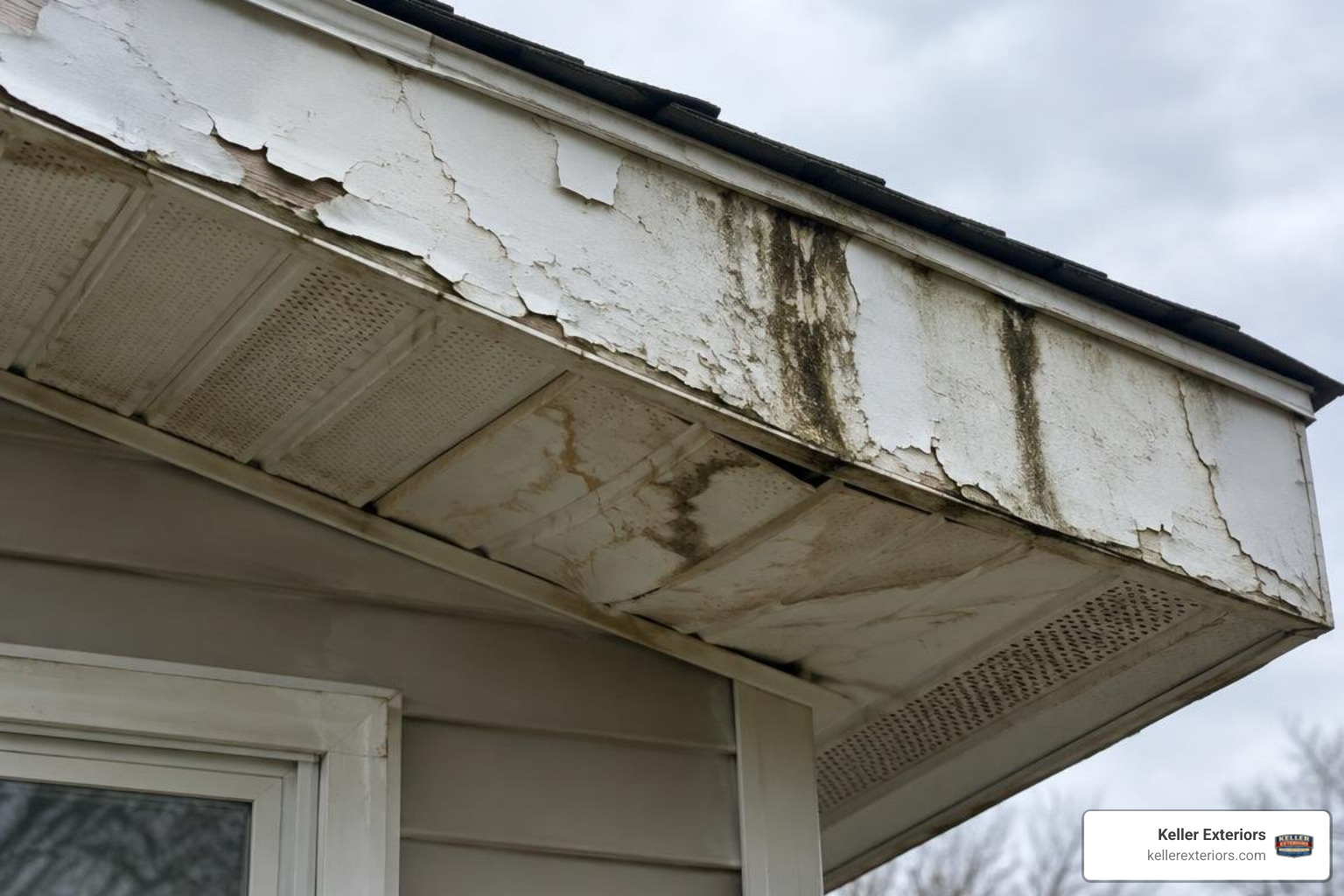
Common warning signs include:
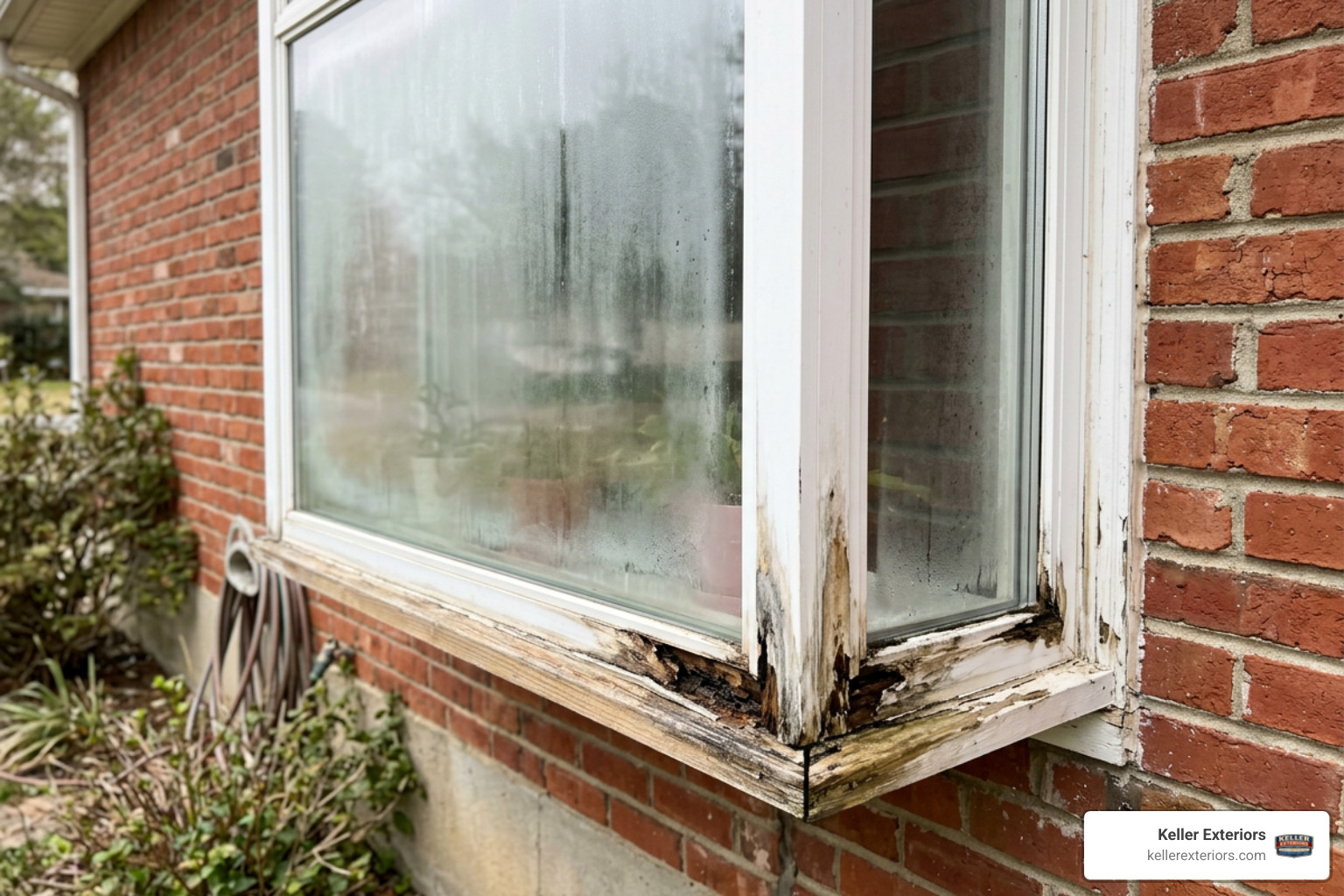
- Flaking, peeling, or bubbling exterior paint along trim boards.
- Dark water stains, mold growth, or algae streaks running down the fascia.
- Sagging or loose soffit panels pulling away from the wall.
- Musty odors in the attic near the roof perimeter.
- Pests such as carpenter ants, termites, or wasps entering through warped gaps.
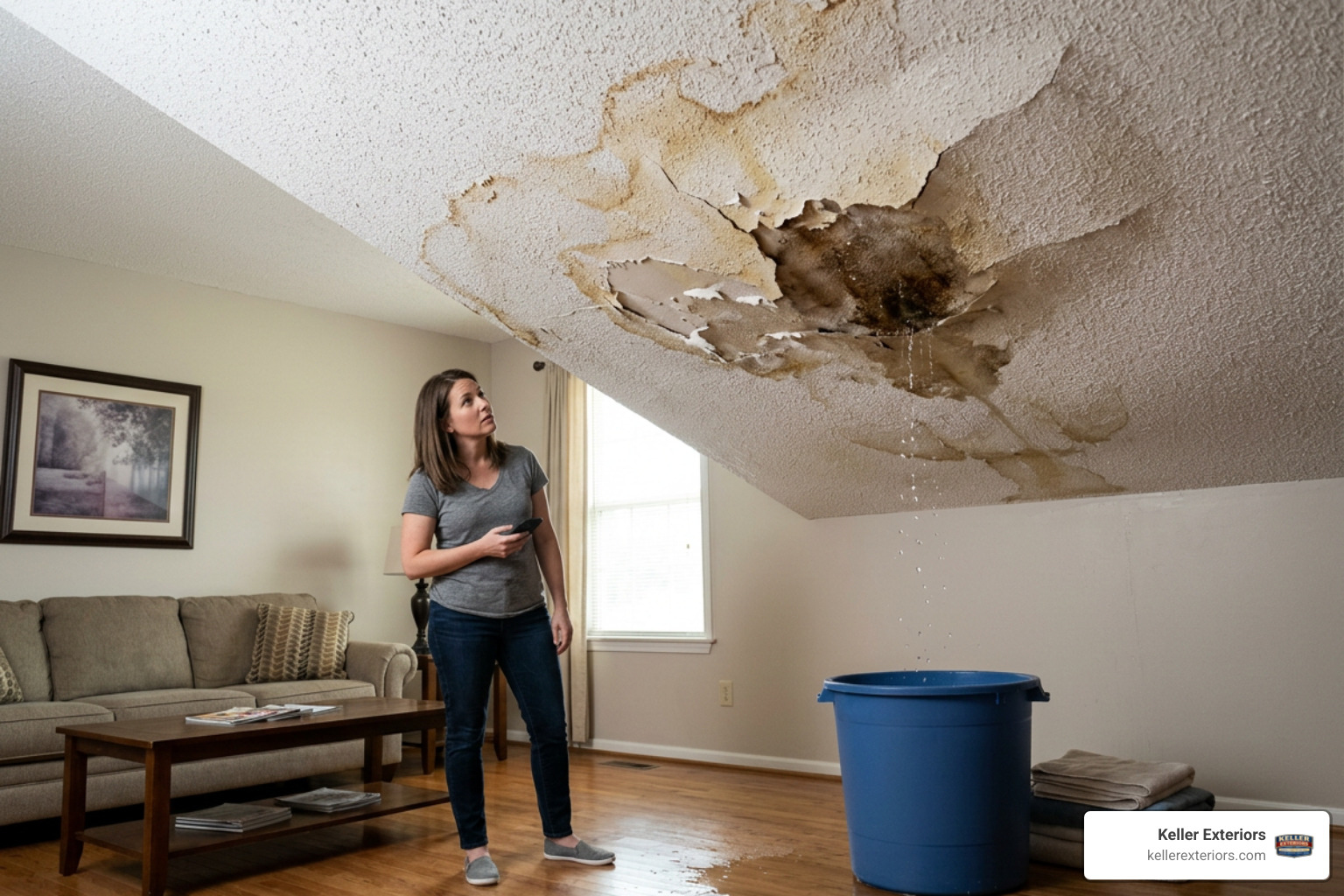
Catching these signs early is critical because hidden water damage may indicate that you need to be identifying an underlying roof leak higher up the roof deck before addressing the trim.
Diagnosing Water Intrusion Sources
Eave rot is a symptom of water getting where it does not belong. Typical culprits include:
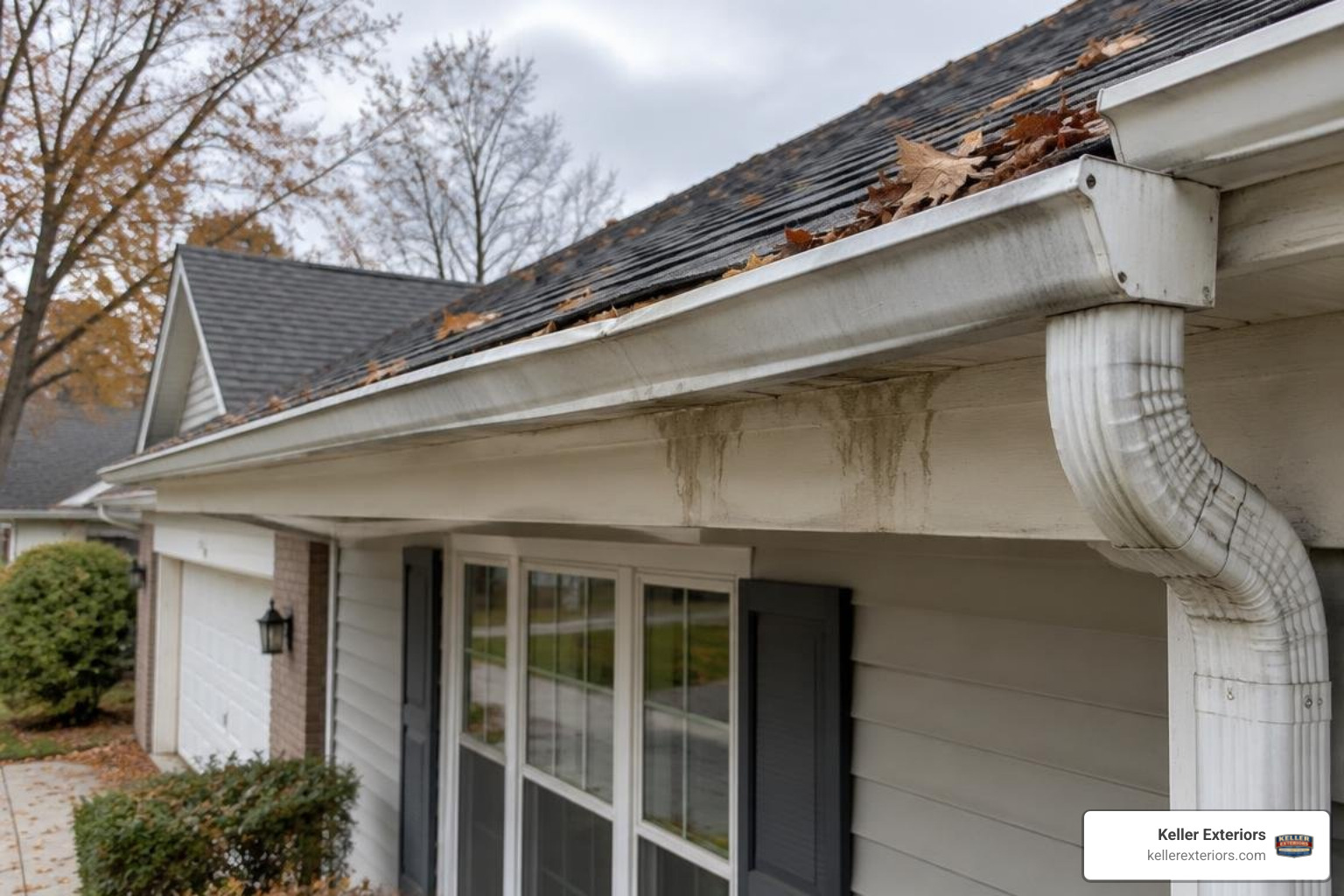
- Clogged or Overflowing Gutters: Debris buildup causes water to pool and spill backward over the rear edge of the gutter, saturating the fascia.
- Improper Gutter Slope: Standing water slowly breaks down wood fibers and causes fastener corrosion, highlighting the need for preventative gutter repair.
- Missing or Misaligned Drip Edge: Water surface tension draws runoff backward underneath shingles directly onto wood substrates.
- Ice Dams: Winter freeze-thaw cycles back up melting snow beneath shingles, pooling moisture along the roof edge.
Structural vs. Cosmetic Eave Damage: The Screwdriver Test
To evaluate whether your eaves have surface-level wear or deeper decay, perform the screwdriver test:
- Gently press a standard flathead screwdriver into various spots along the fascia board, sub-fascia, and rafter tails.
- If the wood resists the push and feels solid, the damage is cosmetic surface paint failure.
- If the tool sinks easily into the wood without much pressure, the underlying fibers have rotted.
House Eaves Repair vs. Full Board Replacement: Assessing the Damage
Homeowners must decide whether to restore the existing wood using chemical consolidants or replace the entire damaged section. The right choice depends on the structural role of the affected component and how deep the decay goes.
Wood Consolidation and Epoxy for House Eaves Repair
When wood decay is confined to a localized area representing less than 25% of the board’s total thickness, chemical stabilization offers an effective, non-invasive fix.
The process involves removing loose, spongy wood fibers, saturating the remaining sound wood with a liquid wood hardener to stabilize dry rot caused by Serpula lacrymans or wet rot fungi, and rebuilding the missing section with structural two-part exterior epoxy putty.
Once mixed to a smooth consistency, the epoxy can be shaped to match the original trim profile. For homeowners looking to restore localized trim lines, learning fast fascia repair techniques can save time and keep small soft spots from expanding.
When Full Section Replacement Is Necessary
Full replacement becomes mandatory when:
- Rot extends through more than 25% of the board thickness.
- The decay reaches the sub-fascia or structural rafter tails.
- Fasteners can no longer hold gutter brackets securely.
- Soffit vents are structurally warped or collapsing.
When rot compromises the rafter tails, workers must sister new structural framing alongside the decayed wood to support roof loads and provide solid backing for new fascia. In severe storm scenarios with sudden leaks, urgent emergency roof repair may be required to protect the structural decking before finishing the trim.
Restoration Methods, Materials, and Step-by-Step Execution
Restoring roof eaves requires careful planning, proper access equipment, and clean execution to keep water out for years to come.
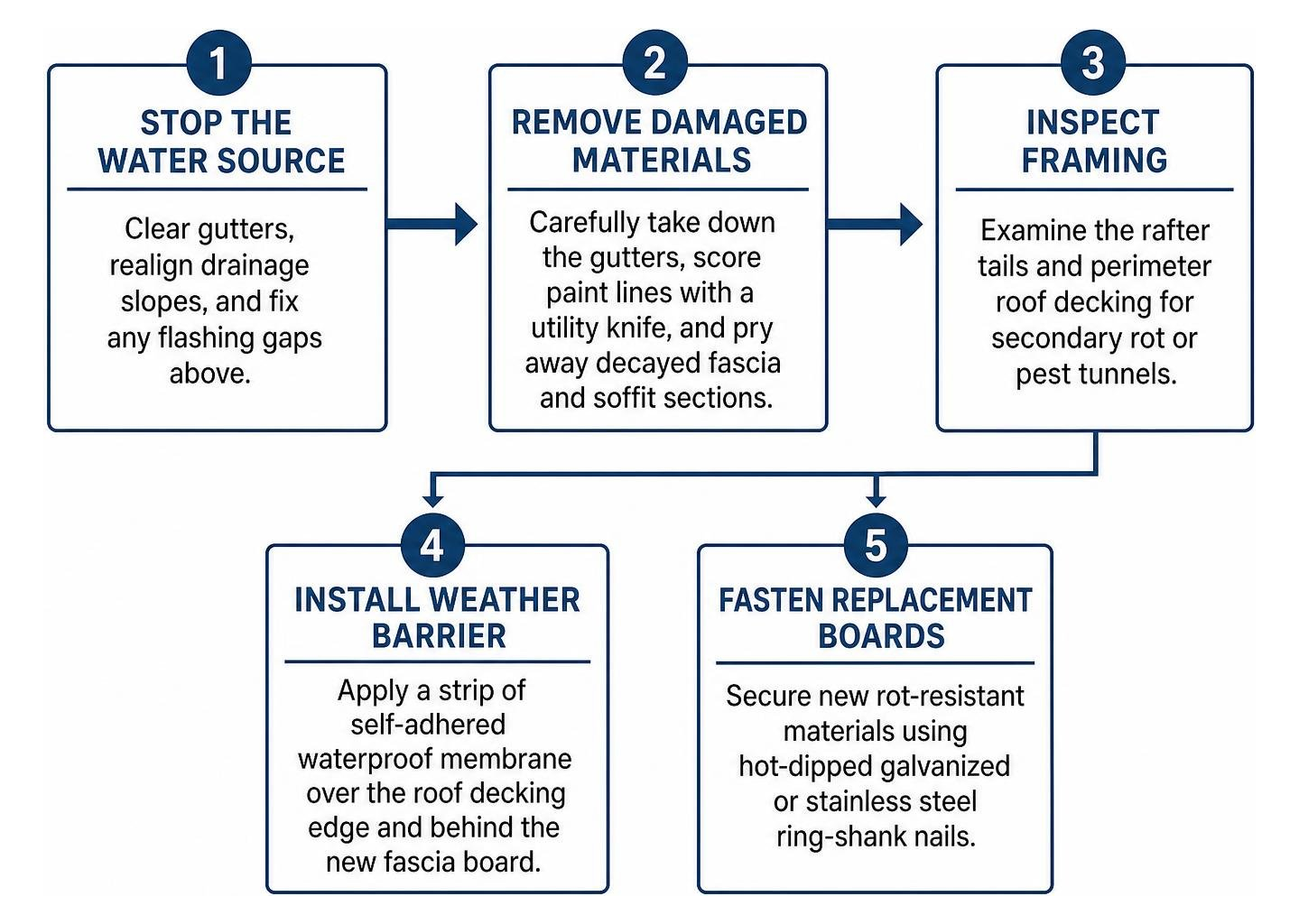
- Stop the Water Source: Clear gutters, realign drainage slopes, and fix any flashing gaps above.
- Remove Damaged Materials: Carefully take down the gutters, score paint lines with a utility knife, and pry away decayed fascia and soffit sections.
- Inspect Framing: Examine the rafter tails and perimeter roof decking for secondary rot or pest tunnels.
- Install Weather Barrier: Apply a strip of self-adhered waterproof membrane over the roof decking edge and behind the new fascia board.
- Fasten Replacement Boards: Secure new rot-resistant materials using hot-dipped galvanized or stainless steel ring-shank nails.
- Seal and Finish: Seal all joint seams with high-grade polyurethane sealant, apply an exterior primer to all cut edges, and finish with two coats of 100% acrylic exterior paint.
If your gutters are aged or damaged beyond reuse during this process, coordinating a complete gutter replacement ensures seamless water drainage along the new eave profile.
Comparing Eave Replacement Materials
Choosing the right material ensures long-term resistance against moisture and humidity:
| Material | Durability | Rot Resistance | Maintenance Needs | Upfront Investment | Best Application |
|---|---|---|---|---|---|
| Pressure-Treated Wood | Moderate | High | High (Regular paint/seal) | Low | Standard framing & budget repairs |
| Western Red Cedar | High | High | Moderate (Periodic staining) | Moderate to High | Natural wood finishes & historic trims |
| Cellular PVC | Very High | Impervious | Low (Wash occasionally) | High | High-moisture rooflines & long lifespans |
| Fiber Cement | High | Impervious | Low (Paint every 10-15 yrs) | Moderate | Fire-prone areas & rot prevention |
| Aluminum Trim Wrap | High | Impervious | Very Low (No paint required) | Moderate | Capping existing sound wood |
Proper Ventilation and Flashing Integration
A durable roofline requires proper metal flashing and ventilation. According to guidelines from the International Code Council, modern building codes require a continuous metal drip edge installed along the eaves to direct runoff away from the fascia. Flashing must tuck under the roof underlayment along eaves to keep water on top of the moisture barrier.
Additionally, continuous perforated soffit vents must remain unobstructed to maintain balanced attic intake ventilation, which helps avoid heat buildup and condensation beneath the roof deck.
Professional Considerations and Repair Budgeting
Working on roof eaves involves working at height, handling heavy materials, and detaching gutter systems. Minor cosmetic touch-ups can be handled from a stable step stool, but multi-story roofline repairs require specialized equipment, fall protection, and structural framing know-how.
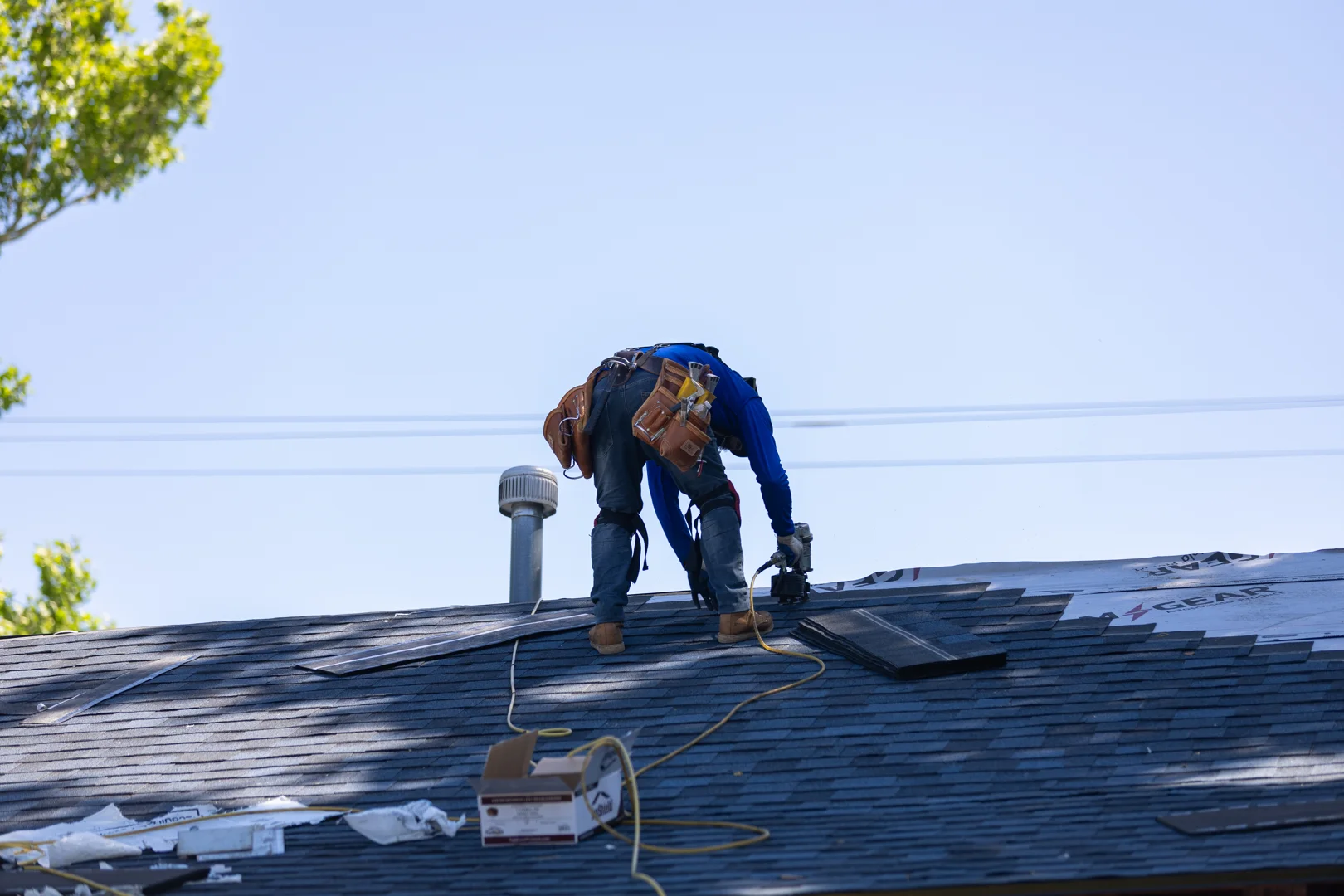
When extensive decay is uncovered along the decking edge or roof valleys, scheduling a comprehensive roof repair provides single-source accountability. An experienced team can resolve underlying roof deck damage, flashing failures, and rotted eaves all at once.
Planning Your Eave Restoration Project
Repair scopes vary based on the extent of moisture intrusion and the height of the home. Basic surface patching on a single-story home takes minimal time, whereas complete multi-story eave rebuilding involving rafter sistering and gutter reinstallation requires several days of skilled labor.
To prevent small issues from turning into major structural repairs, homeowners should set up a regular maintenance schedule and schedule a professional roof inspection after major hailstorms or extended severe weather periods.
DIY Feasibility vs. Hiring Licensed Exterior Specialists
Safety is the top consideration when deciding between DIY repair and hiring a professional contractor.
- Ladder and Fall Hazards: Working beneath eaves requires leaning away from ladder rungs while using oscillating multi-tools or pry bars, increasing fall risks.
- Hidden Structural Framing Decay: An experienced eye can detect whether a rotted rafter tail can be safely sistered or if structural roof rafters must be rebuilt.
- Specialized Tooling: Proper installation calls for pneumatic framing nailers, miter saws for clean compound joints, and specialized sheet metal benders for custom flashing.
- Warranty and Code Compliance: Licensed professionals ensure all repairs meet local building codes, secure necessary permits, and provide written craftsmanship warranties.
Frequently Asked Questions About Roof Eaves
How long does an epoxy eave repair last compared to new wood?
An epoxy repair can last between 10 and 20 years when the surrounding wood is properly stabilized and the surface is sealed with primer and paint. Structural two-part epoxies bond securely with natural wood fibers and expand and contract with seasonal temperatures.
What is the primary cause of rotted roof eaves in residential homes?
The most common cause is water intrusion from overflowing or improperly sloped gutters. When gutters fill with debris or lack a proper drip edge, water flows backward behind the gutter trough and continuously soaks the fascia board and rafter tails.
How often should Oklahoma homeowners inspect their roof eaves?
Homeowners in Oklahoma should inspect their roof eaves twice a year, once in the spring and once in the fall. It is also wise to perform a quick visual inspection following severe hailstorms or heavy winter freeze-thaw cycles.
Can I paint over soft eave wood to seal out moisture?
No. Painting over rotted wood traps active fungal spores and moisture inside the board, accelerating decay behind the fresh paint. Soft wood must either be chemically stabilized with hardeners or completely cut out and replaced.
What is the difference between an eave, a soffit, and a fascia?
The eave is the entire roof overhang extending past the exterior wall. The fascia is the vertical outward-facing board where gutters are attached, and the soffit is the horizontal underside bridging the space between the fascia and the house wall.
Why is a drip edge necessary for eave protection?
A metal drip edge creates an L-shaped barrier along the roof deck edge that directs water directly into the center of the gutter trough. Without it, water surface tension pulls runoff backward against the exposed top edge of the fascia board.
Can pests enter my attic through damaged eaves?
Yes. Decayed, soft wood provides an easy entry point for carpenter ants, termites, mice, squirrels, and wasps. Once pests penetrate rotted fascia or soffits, they can damage attic insulation and electrical wiring.
What material lasts the longest for eave replacement?
Cellular PVC and fiber cement trim boards offer the longest service lives because they are completely impervious to rot, moisture decay, and insect damage.
Does homeowners insurance cover roof eave repairs?
Insurance typically covers eave repairs if the damage results directly from a sudden, covered peril such as fallen tree limbs, hail impact, or severe wind storms. Damage resulting from deferred maintenance or gradual gutter overflow is generally not covered.
How can I tell if my rafter tails are rotted without removing the fascia?
Look for sagging gutter lines, visible downward deflection along the soffit edge, or nails backing out of the fascia board. You can also inspect the underside of the overhang from inside the attic perimeter using a strong flashlight.
Restoring Roofline Integrity: Professional Solutions for Tulsa Homes
Maintaining solid roof eaves protects your home from water damage, pests, and expensive structural framing repairs. Whether your roofline needs localized wood stabilization, new PVC fascia boards, or seamless ventilation upgrades, working with an experienced local contractor ensures long-lasting results.
The Keller Exteriors team brings over 20 years of hands-on construction experience to projects throughout Tulsa, Oklahoma, Broken Arrow, Oklahoma, Owasso, Oklahoma, Jenks, Oklahoma, Bixby, Oklahoma, and surrounding communities. For dependable craftsmanship from a trusted local team, contact our professional roof repair technicians today.