
The Architectural Value of Copper Gutters
When you evaluate premium exterior materials, copper stands in a class of its own. Unlike temporary options that degrade under the harsh Oklahoma sun, copper offers a combination of structural permanence and natural beauty. This material does not rust or pit like ordinary metal gutter products. This makes it highly resilient against the intense storms we experience in the Tulsa, OK metro area.
One of the most remarkable characteristics of copper is its natural chemistry. Copper ions are naturally antimicrobial, which actively inhibits the growth of algae, moss, and lichen. This prevents organic blockages and keeps water flowing freely. Additionally, as copper faces the elements, it undergoes a slow chemical transformation. It develops a protective barrier known as a patina. This patina shields the underlying metal from corrosion and environmental wear.
Investing in copper means choosing a material that is 100% recyclable and environmentally sustainable. It is a permanent architectural upgrade that elevates your home’s curb appeal while providing unmatched drainage security. To explore how various gutter materials protect your home’s exterior, you can read our comprehensive gutters blog category for more expert insights.
Why Professional Copper Gutter Installation Outperforms DIY
While home improvement television makes gutter hanging look like a simple weekend chore, working with copper requires specialized metalworking skills. Standard gutter installations use temporary silicone sealants to join aluminum or vinyl sections. These sealants are highly vulnerable to thermal movement and typically fail within two years, leading to persistent leaks.
In contrast, a professional copper gutter installation relies on soldered joints to create a completely seamless, unified system. Soldering copper is an art form, functioning much like traditional copper plumbing. It creates a permanent metallurgical bond that expands and contracts as a single continuous unit.
Furthermore, copper is a heavy, rigid material. Handling 10-foot sections on ladders requires physical strength and precise coordination. If installers handle copper with bare hands, skin oils leave permanent fingerprint marks. These marks disrupt the natural, even patination of the metal. Professional crews wear specialized gloves and use advanced mounting hardware to ensure the system is structurally sound.
Comparing K-Style and Half-Round Profiles
Choosing the right gutter profile is essential for both architectural harmony and hydraulic performance. We offer two primary styles for copper systems: K-style gutters and half-round gutters.
K-style gutters feature a decorative front face that mimics the elegant silhouette of interior crown molding. This profile sits flush against the fascia board and is highly popular on modern estates and traditional homes alike. Because of its flat bottom and angular design, a K-style gutter holds approximately 40% more water than a half-round gutter of equivalent width, making it excellent for managing heavy downpours on steep roofs.
Half-round gutters offer a timeless, historic aesthetic that is the undisputed gold standard for historic restorations, such as those in the historic districts of Tulsa, OK. This profile acts as a smooth, open cylinder. The rounded interior curves create a natural scouring action that carries silt and organic debris toward the downspouts, reducing standing water and corrosion by 25% compared to angular designs. Decorative external brackets typically support half-round systems, celebrating the craftsmanship of the mounting hardware.
| Feature | K-Style Copper Gutters | Half-Round Copper Gutters |
|---|---|---|
| Aesthetic Style | Modern, mimics crown molding | Historic, traditional, elegant |
| Water Capacity | High (holds 40% more water) | Standard |
| Flow Dynamics | Flat bottom can trap fine debris | Rounded bottom self-flushes silt |
| Mounting Method | Attaches directly to flat fascia | External brackets or shanks support the gutter |
| Debris Resistance | Moderate | High (smooth interior prevents clogs) |
Step-by-Step Copper Gutter Installation Process
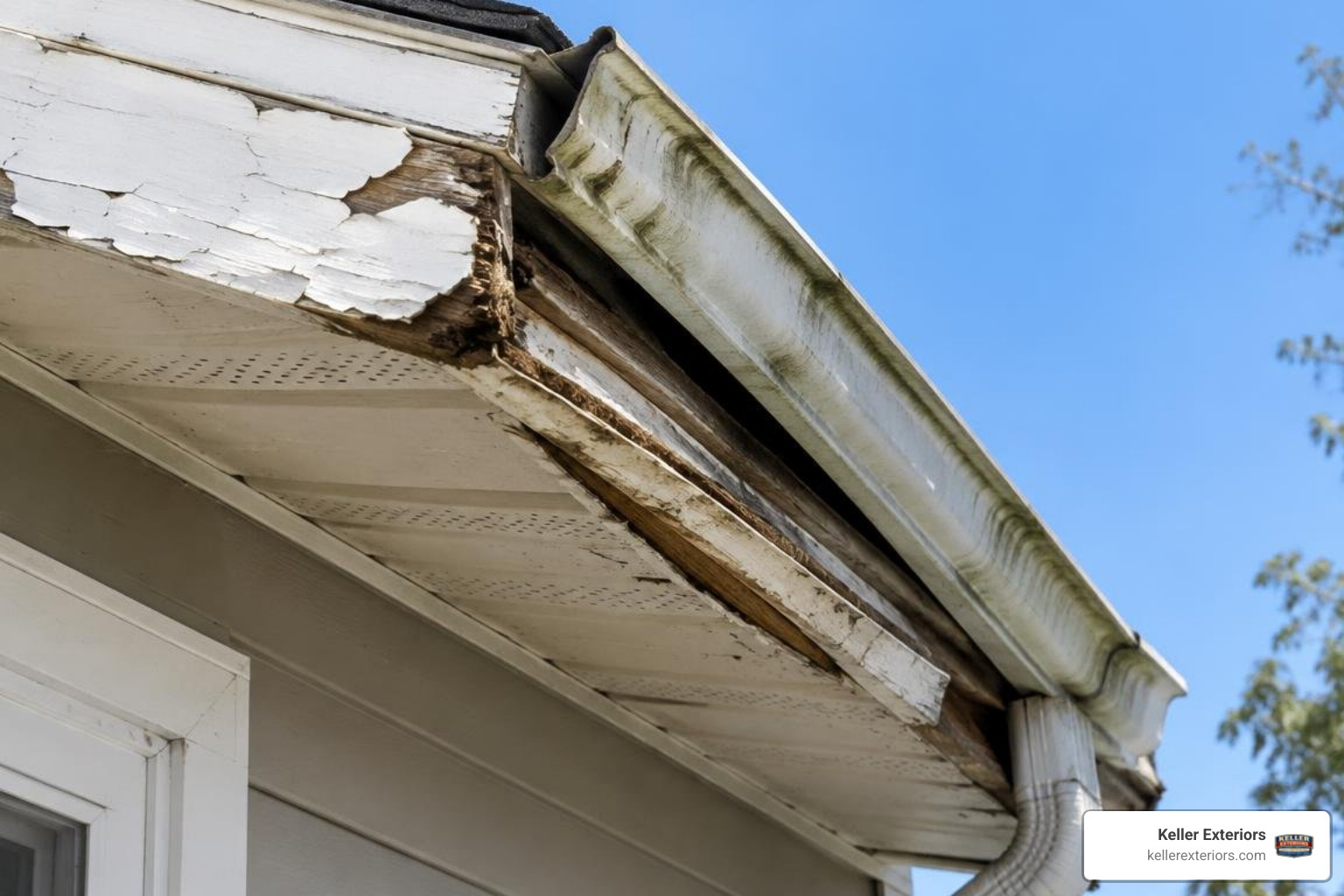
Before we cut or mount any copper, we conduct a thorough site audit. We calculate the total roof square footage and verify the roof pitch to determine if you need a 5-inch, 6-inch, or larger system. We also inspect the entire length of the fascia board. You cannot hang a 50-year gutter on a 5-year board; if we find any soft or rotting wood, we must replace it first to provide a solid structural foundation.
During this initial phase, you should schedule a professional roof inspection to ensure your roof’s drip edge and decking are ready for the upgrade.

Essential Tools and Materials for Copper Gutter Installation
Working with architectural copper requires a highly specialized toolkit. Standard retail tools will damage the material, leave jagged edges, or fail to achieve the temperatures needed for proper joinery. The essential tools and materials include:
- 300-Watt Soldering Iron: You need a heavy-duty, high-wattage iron with a thick copper tip to heat the heavy-gauge metal sufficiently. Avoid handheld propane torches, as they can burn the copper’s finish and pose a fire hazard against dry wood fascia.
- Aviation Snips: Use high-quality left-cutting, right-cutting, and straight-cutting snips for clean, burr-free cuts.
- 1/8-Inch Copper Rivets and Drill Bits: These components mechanically secure overlapping gutter sections and end caps before soldering.
- Sal Ammoniac Block and Flux: These clean the soldering iron tip and prep the copper surface so the solder flows smoothly.
- 50/50 Lead-Free Solder: This premium alloy creates a permanent, watertight metallurgical bond.
- EPDM Gutter Sealant: Installers use this selectively in modern, high-flexibility expansion joints.
Calculating Pitch and Securing Hangers
Proper water drainage depends entirely on establishing a precise, consistent slope. The industry standard is a downward pitch of 1/4 inch for every 10 feet of horizontal gutter run.
To do this, we find the highest point of the fascia board. This point is typically at the corner furthest from the downspout. We mark this point, calculate the necessary drop based on the length of the run, and mark the low point at the downspout location. We then snap a neon chalk line between these two points as a visual guide. For runs exceeding 40 feet, we often pitch the gutter downward from a central high point toward downspouts at both ends to manage the hydraulic load.
Once we establish the pitch, we install heavy-duty brass hangers. We space these hangers at a strict 24 to 32-inch interval. In areas with heavy spring storms or winter ice, spacing the hangers closer to 24 inches prevents the system from sagging or pulling away from the fascia. We use copper-plated or stainless steel fasteners to prevent material degradation.
Joining, Sealing, and Soldering Seams
Joining copper sections requires a combination of mechanical fastening and thermal welding. Manufacturers make standard 10-foot gutter sections at 118 3/16 inches. We must account for this length in our run calculations.
First, we create a 1.5-inch overlap between the two sections. We place the upstream section inside the downstream section so water flows over the joint rather than against it. Before sliding them together, we slightly bend the back overflow lip of the receiving section to ensure a flush fit. We apply a thin layer of non-pre-tinning flux to the overlapping area.
Next, we clamp the seam tightly with C-clamps to eliminate any gaps. We drill 1/8-inch holes through the overlap and secure the sections with 1/8-inch diameter copper rivets in a staggered pattern.
To solder the joint, we heat the heavy-duty soldering iron. We draw the hot iron along the seam, pulling the lead-free solder from the low side to the high side of the joint. We draw the solder deep into the 1.5-inch lap to create a solid, leak-proof barrier. For technical specifications on complex copper assemblies, you can refer to the historical guidelines on built-in copper gutter linings from the Copper Development Association.
Managing Thermal Expansion and Component Integration
Copper is a dynamic metal that reacts significantly to temperature fluctuations. A 100-foot run of copper gutter can expand or contract by nearly 1 inch when temperatures swing by 100 degrees Fahrenheit. If this movement is not accounted for, the gutter will buckle, pull fasteners out of the fascia, or tear its soldered seams apart.
To manage this movement, we leave a 1/4-inch gap at the ends of runs and install dedicated expansion joints on any continuous gutter section exceeding 50 feet. These joints utilize loose-lock connections or high-grade EPDM rubber membranes that allow the metal to slide and breathe while maintaining a watertight seal. This is especially important on homes with expansive metal roofing, where water runoff velocities and thermal shifts are highly pronounced.
Mitigating Thermal Expansion in Long Runs
When designing a drainage system for a large home, we must carefully plan the placement of expansion joints. We never pin a long run of copper rigidly to the fascia board. Instead, the heavy-duty hangers are designed to support the weight of the gutter while allowing longitudinal movement.
By using a mid-run high point and pitching the gutter outward in both directions, we naturally split the thermal movement. This layout reduces the stress on any single joint and ensures the structural integrity of your home’s exterior remains secure over decades of seasonal changes.
Installing End Caps, Miters, and Downspouts
Every component of a premium copper system must be integrated with precision:
- End Caps: We offer both flat and spherical end caps. Spherical end caps are designed to sit slightly lower than the back of the gutter. This acts as a safety overflow; if the gutter ever becomes severely clogged, excess water will spill over the front edge rather than backing up into the fascia board or soffit.
- Miters: Miters are used at the corners of the roofline. An inside miter is used where roof corners form a valley, while an outside miter is used where they form a hip. Because home corners are rarely perfectly square, we dry-fit the miters in the hangers on-site, trimming and adjusting them for a flush fit before riveting and soldering.
- Drop Outlets and Downspouts: We cut precise holes in the bottom of the gutter to install star drop outlets. These outlets are secured with interlocking tabs and soldered in place. The downspouts are then connected and secured to the exterior wall using heavy-duty copper brackets. Whether your home features brick, stone, or classic wood siding, proper bracket anchoring prevents wind damage and keeps downspouts firmly in place.
Long-Term Maintenance and the Patina Process
One of the greatest benefits of copper is that it is virtually maintenance-free. It does not require painting, sealing, or scraping. Over time, the shiny, penny-like surface undergoes a natural oxidation process, transitioning through several distinct visual phases. This weathering is not a sign of decay; rather, it is the formation of a highly durable protective layer that preserves the metal beneath.
Understanding the Natural Patina Timeline
The speed of the patina process depends on your local climate, humidity levels, and rainfall. In the Tulsa area, you can generally expect the following timeline:
- The First 12 Months: The bright salmon-pink metallic shine will gradually deepen into a rich, warm chocolate brown.
- Years 1 to 5: The dark bronze tone matures, becoming more uniform across the entire system.
- Years 5 to 15: Hints of pale green begin to emerge, particularly in areas with consistent moisture exposure.
- Years 15 to 20: The system reaches its final, classic green verdigris patina, providing a beautiful historic aesthetic.
If you prefer to maintain the original bright metallic shine, the copper must be treated immediately after installation with a high-quality carnauba wax or a specialized clear coat. However, the vast majority of homeowners choose to embrace the natural, poetic transformation of weathering copper.
Protecting Your Investment with Gutter Guards
While copper is highly durable, it can still be impacted by heavy debris. When wet leaves and organic matter accumulate in a gutter, they create a stagnant reservoir known as the “compost effect.” As this organic material decomposes, it releases concentrated organic acids that can slowly degrade even resilient metals over several decades.
To prevent this, we highly recommend installing premium copper mesh gutter guards. These guards keep leaves, twigs, and pests out of the system while allowing rainwater to flow freely.
When choosing gutter protection, material compatibility is critical. Mixing different metals can trigger galvanic corrosion, an electrochemical reaction that rapidly destroys the less noble metal. For example, installing aluminum gutter guards on copper gutters will eat through the aluminum in a matter of months. To protect your investment, always use 100% pure copper or high-grade 304/316 stainless steel components, as these alloys are electrochemically compatible with copper.
Financial Analysis: Copper Gutter Cost vs. Long-Term Value
There is no denying that copper gutters require a higher upfront investment than standard aluminum or vinyl systems. However, looking only at the initial price misses the true long-term value of the material.
Standard aluminum gutters have an average lifespan of 20 to 30 years and require regular resealing and maintenance. Vinyl gutters are even more temporary, often warping and cracking during extreme Oklahoma temperature swings. Over a 100-year period, a homeowner may need to replace an aluminum gutter system three to four times.
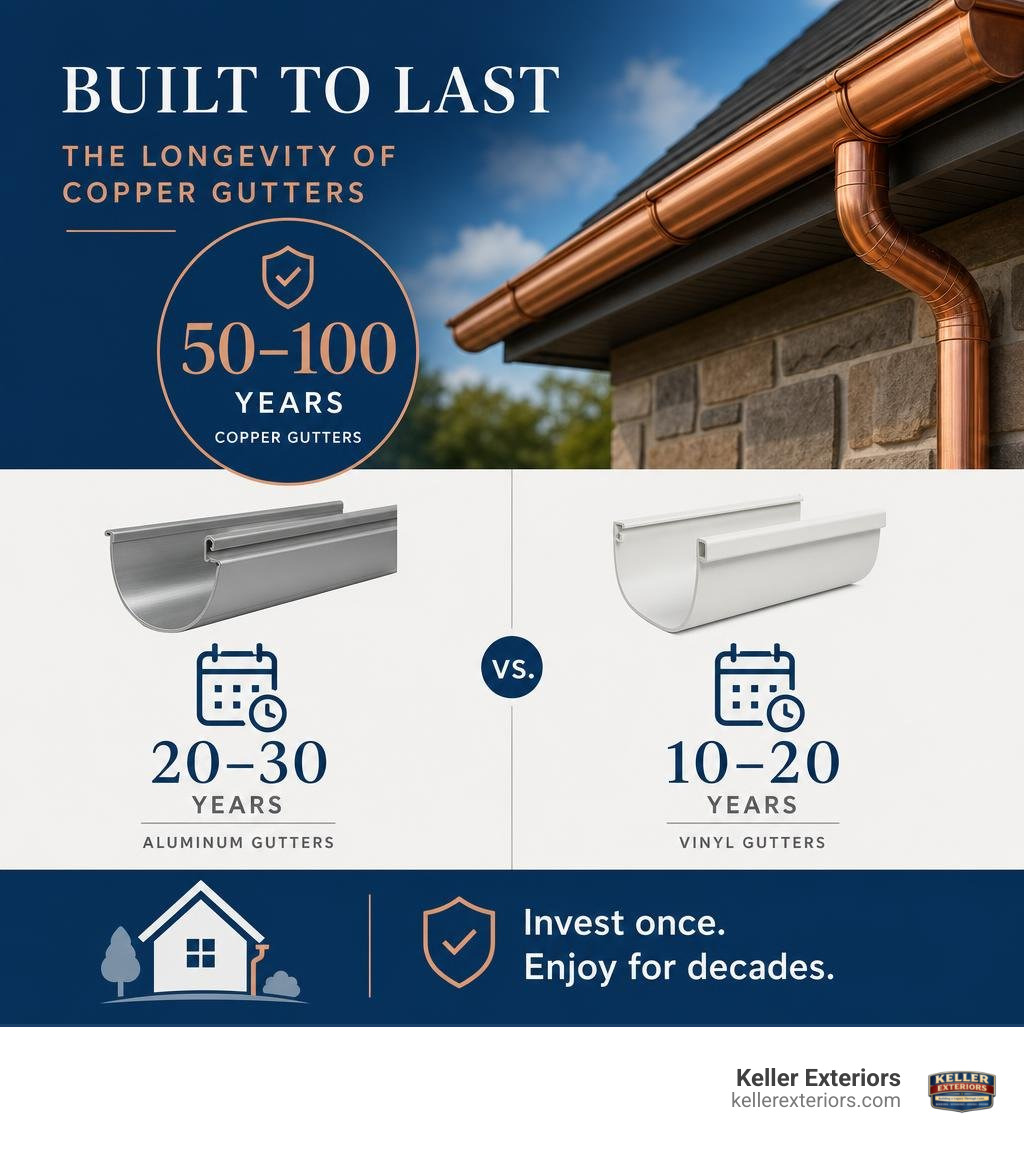
Because copper gutters last between 50 and 100 years, they are a permanent, lifetime investment. They eliminate the need for future replacement cycles, protect your home’s foundation from costly water damage, and significantly increase your property’s resale value and curb appeal. When viewed as a long-term home improvement decision, copper is highly cost-effective.
Frequently Asked Questions About Copper Gutters
How long do copper gutters typically last?
Copper gutters are exceptionally durable and typically last between 50 and 100 years. With proper professional installation and minimal maintenance, they will easily outlast the roof they protect.
Why do copper gutters change color over time?
Copper oxidizes naturally when exposed to air and moisture. This oxidation process creates a protective layer, transitioning the metal from a bright penny shine to a deep bronze and eventually to a classic sea-foam green verdigris patina.
Can I install copper gutters myself?
DIY installation is not recommended. Copper is a heavy, rigid material that requires specialized tools, precise pitch calculations, and professional soldering skills to create a watertight, structurally sound system.
How much do copper gutters cost compared to aluminum?
Copper gutters require a higher initial investment than traditional aluminum. However, because copper lasts up to a century and does not require periodic replacement or intensive maintenance, it offers superior long-term financial value.
What is the correct pitch for copper gutter installation?
The industry standard is a downward slope of 1/4 inch for every 10 feet of gutter run. This ensures that rainwater flows efficiently toward the downspouts without pooling or leaving sediment behind.
Can I use regular silicone sealant on copper gutters?
No. Standard silicone sealants fail to bond with copper’s natural patina over time and will peel away within 24 months due to thermal expansion. Joints must be soldered or sealed with specialized, high-grade EPDM sealants.
How do I prevent galvanic corrosion in copper gutter systems?
To prevent destructive electrochemical reactions, you must ensure that all hangers, fasteners, and downspout brackets are made of copper, brass, or compatible 304/316 stainless steel. Never allow copper to come into direct contact with aluminum or galvanized steel.
Do copper gutters require gutter guards?
While not strictly required, copper gutter guards are highly recommended. They prevent the accumulation of wet leaves and debris, eliminating the “compost effect” that releases harmful organic acids inside the gutter trough.
How do copper gutters handle thermal expansion?
A long run of copper can expand significantly during temperature swings. We manage this movement by leaving 1/4-inch gaps at the ends of runs and installing flexible expansion joints on sections exceeding 50 feet.
How do I choose a qualified contractor for copper gutter installation?
Look for a fully licensed and insured contractor with extensive local experience in custom metalworking. Ask to see a portfolio of their previous copper projects and ensure they specialize in soldered seams rather than temporary sealants.
Protect Your Home with a Premium Gutter System
Your home’s foundation and structural integrity rely entirely on how you manage rainwater runoff. Installing a premium, professionally crafted copper gutter system is the ultimate way to protect your property while adding timeless architectural beauty.
At Keller Exteriors, we bring more than 20 years of local experience to every project. Our dedicated team handles everything from the initial site audit to the final, hand-soldered joint with precision and care. Whether you are building a custom estate, restoring a historic home, or upgrading your existing roofline, we are here to deliver a lifetime drainage solution.
We proudly serve homeowners throughout the Tulsa metro area, including Broken Arrow, OK, Owasso, OK, Jenks, OK, Bixby, OK, and Claremore, OK. If you are ready to elevate your home’s protection and curb appeal, explore our high-performance seamless gutters and contact us today to schedule your professional consultation.