Black Wood Siding Options for a Bold, Durable Exterior
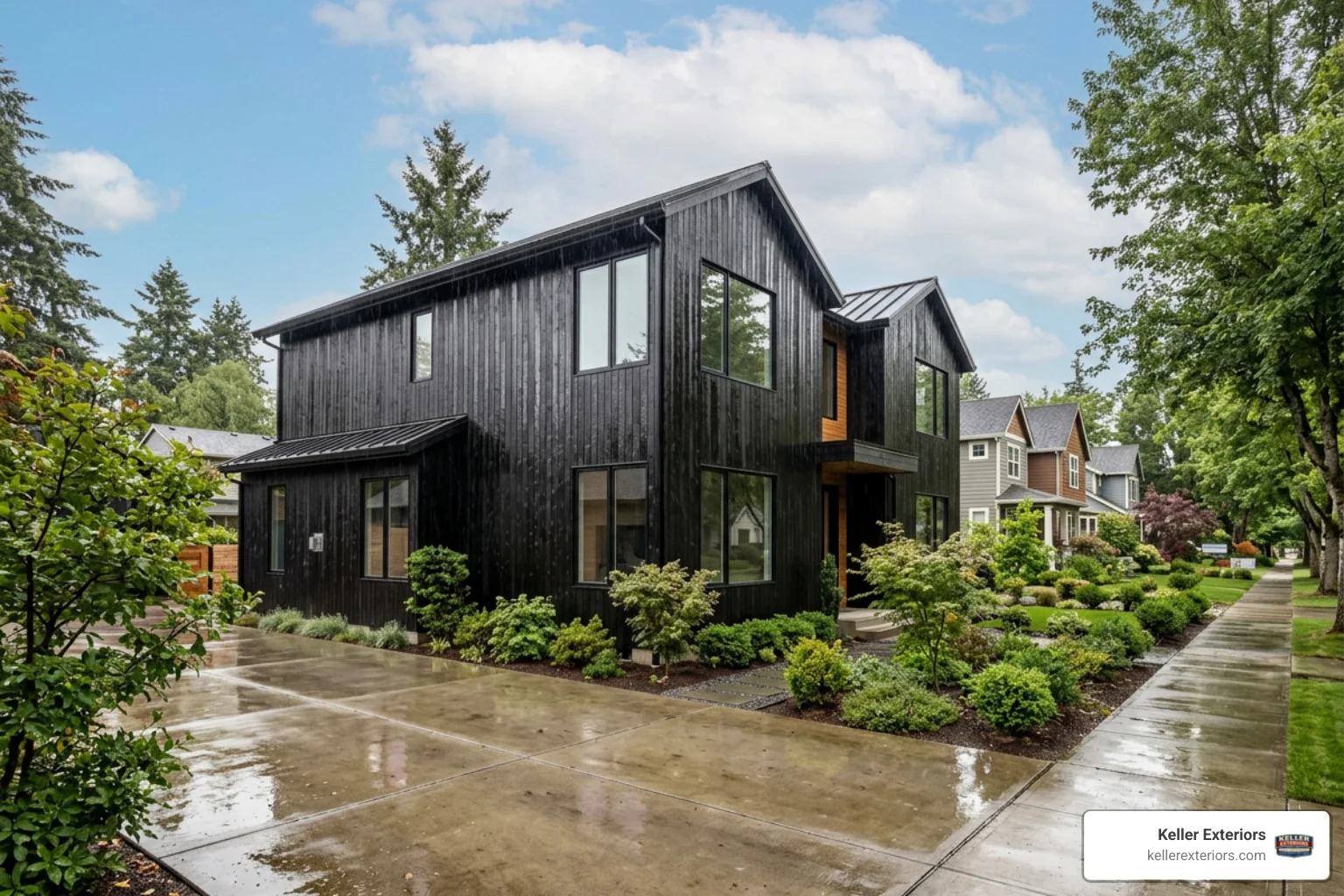
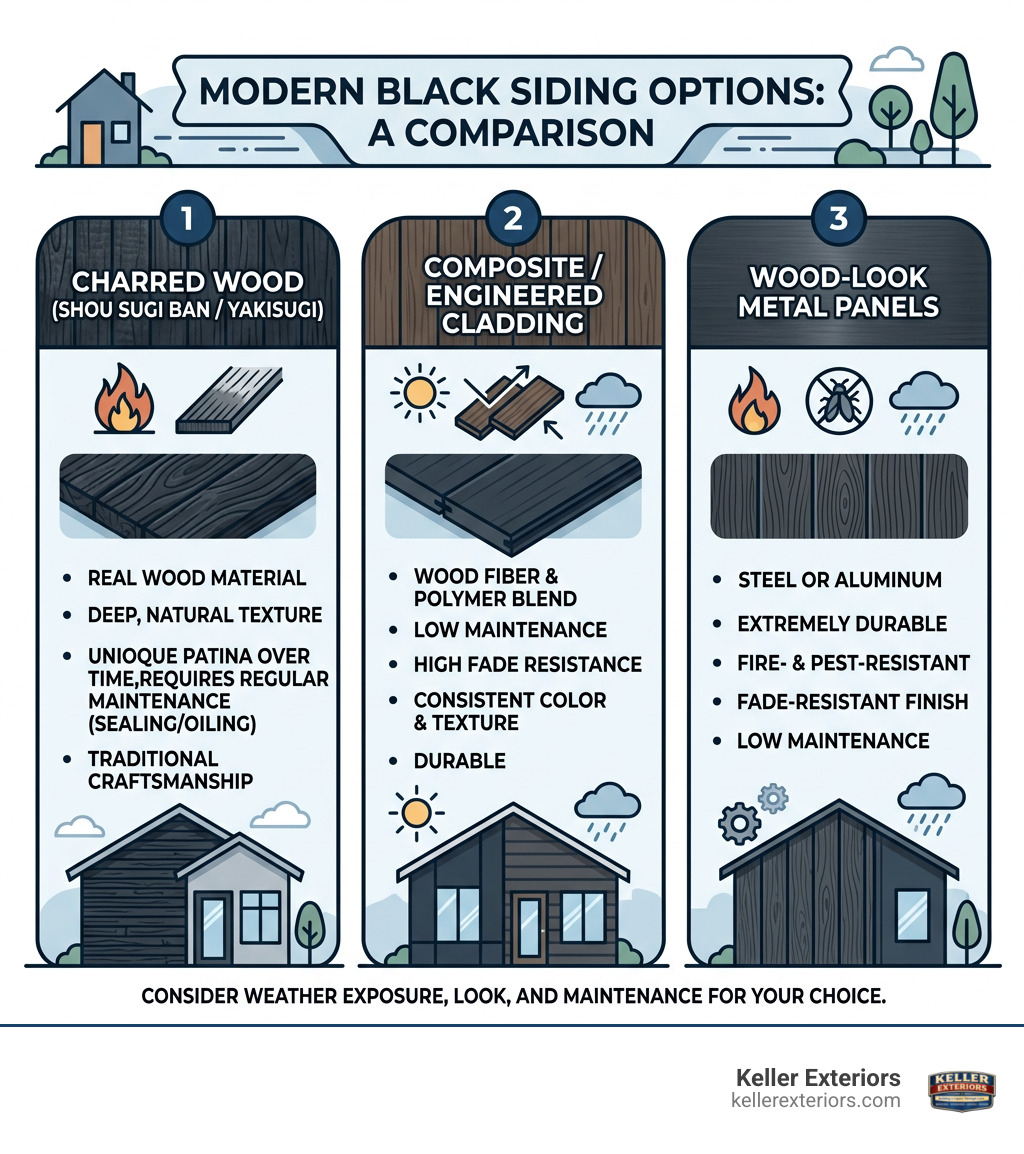
Black wood siding can give a home a modern, high-contrast look while protecting its exterior. The main options are:
- Charred wood (Shou Sugi Ban or yakisugi): Real wood with a burned or brushed black surface and natural texture.
- Composite or engineered cladding: Wood-look panels designed for low maintenance and strong fade resistance.
- Wood-look metal panels: Durable, fire- and pest-resistant siding with a printed black wood-grain finish.
The right choice depends on the look you want, your maintenance budget, and how well the material handles Tulsa, OK, sun, rain, wind, and changing temperatures. Real charred wood offers the most natural depth and patina, while composite and metal can provide more consistent color with less ongoing care.
At Keller Exteriors, our team brings more than 20 years of exterior-project experience to help homeowners compare black wood siding options based on installation needs, weather exposure, and long-term performance.
Exploring Modern Black Wood Siding Options and Materials
Modern architectural design celebrates clean lines, deep shadows, and bold visual contrast. Across neighborhoods in Broken Arrow, Jenks, and Midtown Tulsa, more property owners are moving away from pale earth tones toward deep charcoal and midnight tones. Dark cladding creates a striking outline against green lawns, stone foundations, and light brick accents.
Before choosing a specialty dark profile, homeowners can use our practical wood siding comparison checklist to weigh appearance, upkeep, and weather resistance.
| Siding Material | Core Composition | Expected Lifespan | Typical Maintenance Cycle | Primary Aesthetic Feature |
|---|---|---|---|---|
| Authentic Shou Sugi Ban | Charred natural timber, such as cedar, cypress, or acetylated wood | 40 to 80+ years | Oil recoating every 7 to 15 years | Deep textured surface, natural patina |
| Wood Polymer Composite (WPC) | Recycled wood fiber and thermoplastic polymers | 25 to 30 years | Occasional mild soap wash | Uniform matte black finish and clean linear profiles |
| High-Pressure Laminate (HPL) | Resin-treated fiber core with a decorative surface layer | 25 to 35 years | Periodic rinsing and joint-seal checks | Ultra-flat, modern panelized look |
| Wood-Grain Steel Panels | Galvalume steel with a durable factory finish | 40 to 50 years | Minimal upkeep and seasonal gutter clearing | Crisp shadow lines and concealed fasteners |
Authentic Shou Sugi Ban and Charred Black Wood Siding
Authentic charred cladding stems from yakisugi, an ancient Japanese method of surface-burning wood to create a dark, textured finish. The carbonized surface can help limit moisture exposure and insect activity when the product is properly made, finished, and installed.
Today, manufacturers create charred siding from several timber species:
- Japanese cedar (sugi): The traditional choice, with a light weight and deep char.
- Western red cedar: A stable, resin-rich option that accepts flame treatments well.
- Brushed black cypress: Tight grain lines remain visible beneath dark penetrating oils.
- Acetylated wood: A modified wood option valued for strong dimensional stability and decay resistance.
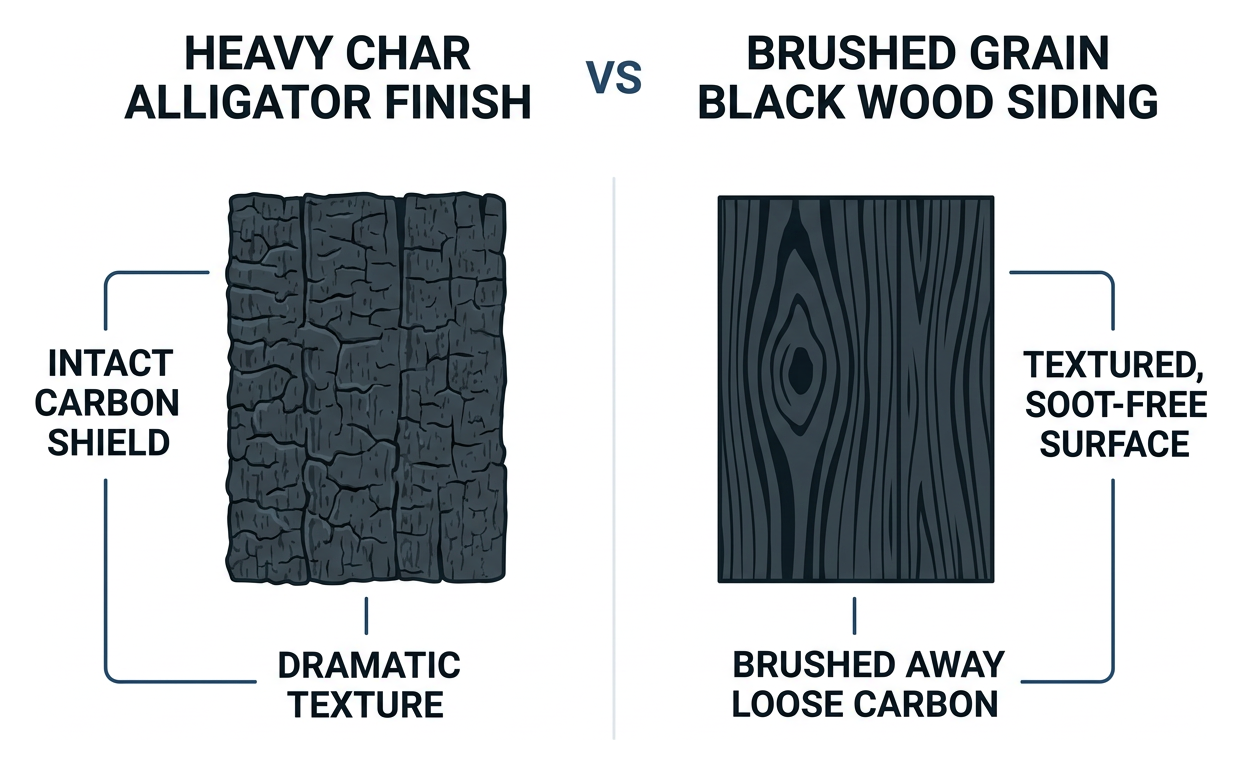
Charred profiles generally fall into two surface styles. A heavy char, often called an alligator finish, leaves a dramatic textured carbon layer. A brushed finish removes loose carbon and reveals the wood grain beneath a dark, protective oil finish.
Engineered Wood and Composite Alternatives
For homeowners who want the deep aesthetic of dark timber without the weathering variations of natural wood, modern composite systems offer an attractive alternative. Wood polymer composites combine recycled wood fiber with durable polymers to create dense, moisture-resistant siding profiles.
For a low-maintenance exterior that still delivers strong visual contrast, our vinyl siding options can help homeowners compare practical profiles and finishes for the rest of the home.
High-pressure laminate systems use a dense resin-treated core, a decorative wood-grain layer, and a UV-resistant outer surface. These materials can provide a consistent appearance with less routine maintenance than natural wood.
Wood-Look Metal and Insulated Cladding Systems
Heavy-gauge steel cladding provides another route to achieving a dark wood aesthetic. Durable factory finishes can replicate wood grain without the moisture absorption associated with natural timber.
Metal panels with concealed fasteners create clean shiplap or plank-style appearances while helping reduce concerns about insects, rot, and splitting.
In areas with fluctuating weather, our insulated siding services can help homeowners explore durable cladding options that support a more comfortable, protected exterior wall assembly.
Performance, Climate Durability, and Maintenance Realities
Choosing black exterior cladding requires understanding how dark pigments interact with sunlight and regional weather. Because dark surfaces absorb more solar radiation, the underlying siding materials experience thermal cycling.
In areas such as Sand Springs, OK, Owasso, OK, and Bixby, OK, siding must handle hot summer sun, sudden hailstorms, high humidity, and winter freezes. Natural charred timber can perform well through seasonal movement when installers provide the right clearances, flashing, and ventilation.
Natural charred wood changes gradually over time:
- Initial installation: Deep, uniform black with a rich surface sheen.
- Early maturation: The outer oil finish softens, and more of the wood grain may appear.
- Established patina: Exposed areas can take on a subtle charcoal tone. A compatible maintenance finish may restore a darker appearance when desired.
Metal and composite panels often hold a more consistent color because they use factory-applied, UV-resistant surface finishes. They do not develop the same organic patina as real wood, which can appeal to homeowners who prefer a uniform appearance.
Environmental Impact and Sourcing
Sustainable building practices play a role in the growing popularity of dark wood facades. Responsibly harvested timber from certified forestry programs can store carbon throughout the useful life of the product.
The charring process can reduce the need for some chemical treatments, but the final environmental profile still depends on the wood source, finish, transportation, and installation details. Our team can help homeowners compare these factors alongside performance and maintenance needs.
Long-Term Value and Maintenance Planning
Premium exterior cladding calls for a careful comparison of material durability, maintenance expectations, and replacement cycles. Charred timber, steel panels, and composite systems each have different installation requirements and long-term care needs.
Homeowners evaluating energy-conscious exterior upgrades can also use our guide to comparing insulated siding to understand how material choices, wall assemblies, and maintenance needs work together.
Installation Best Practices for Long-Term Structural Integrity
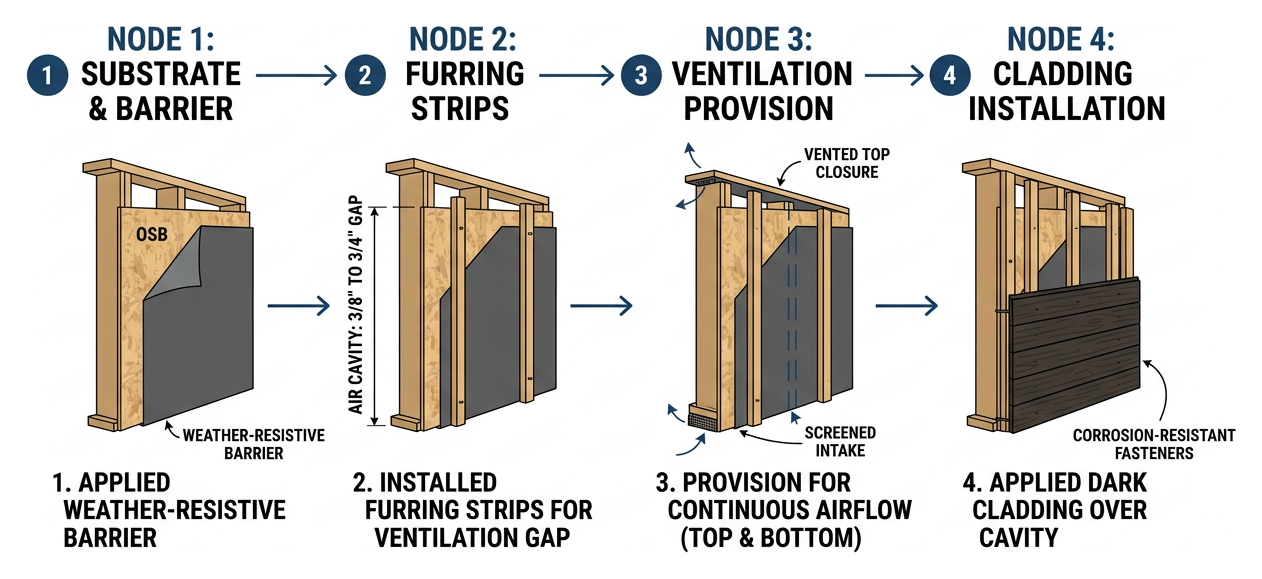
Installing dark wood siding requires precision to manage moisture, airflow, and thermal movement. Because dark materials absorb heat, proper ventilation behind the cladding is essential.
A successful installation relies on the following structural best practices:
- Rainscreen air cavity: Install vertical or horizontal furring strips over a weather-resistive barrier. This 3/8-inch to 3/4-inch gap lets air circulate, vents solar heat, and allows incidental moisture to drain.
- Corrosion-resistant fasteners: Use stainless steel ring-shank nails or screws. They help boards stay secure through repeated expansion and contraction cycles.
- Field-cut sealing: Seal exposed end grain immediately with a compatible touch-up finish or end-grain sealer to limit moisture absorption.
- Acclimation: Store natural wood siding in a dry, covered area before installation so it can adjust to local humidity conditions.
Because dark siding systems require careful moisture detailing, flashing integration, and expansion spacing, installation is best handled by experienced siding professionals. Keller Exteriors provides professional exterior siding services to help ensure each plank, panel, and trim transition is watertight and built to last.
Frequently Asked Questions About Black Wood Siding
What is black wood siding made from?
Black wood siding is typically made from naturally charred timber like cedar, cypress, or acetylated wood. It is also available as wood polymer composites (WPC) made from recycled wood fibers and plastics, or as heavy-gauge Galvalume steel formed with a dark wood-grain finish.
How long does charred Shou Sugi Ban siding last?
High-quality charred timber siding can last between 40 and 80 years. When crafted from dimensionally stable woods like acetylated timber or cypress, the charred carbon layer resists rot, insects, and decay for decades with minimal maintenance.
Does black wood siding make a home hotter in the summer?
While black surfaces absorb more solar heat, installing the siding over a ventilated rainscreen creates a thermal break. The air cavity allows heated air behind the siding to rise and vent out the top, keeping the heat from transferring into your home’s wall insulation.
How often do you need to maintain or seal black wood cladding?
Natural charred wood finished with penetrating plant oils typically needs a light recoating every 7 to 15 years, depending on sun exposure. Composite and factory-finished metal wood-look panels generally need only an occasional wash with a garden hose and mild soap.
Can black wood panels be used for interior feature walls?
Yes. Charred and prefinished black wood planks make dramatic interior accent walls, fireplace surrounds, and ceiling features. For indoor spaces, select boards finished with non-toxic, low- or zero-VOC sealers to protect indoor air quality.
How does black wood compare to traditional stained wood siding?
Traditional stained wood relies on surface pigments that break down under UV light, often requiring restaining or repainting every 3 to 7 years. Charred wood alters the wood cell structure through heat, creating a deeper, more permanent layer that resists peeling, pests, and rot.
What wood species are best for charred yakisugi siding?
Japanese cedar (Cryptomeria japonica) is the historic standard. In North America, Western red cedar, bald cypress, and acetylated radiata pine are the top choices due to their stability, weather resistance, and ability to hold a deep char.
Will black wood siding fade under intense sun exposure?
Natural charred wood gradually develops a soft charcoal patina over time as sunlight weathers the surface oils. Metal panels with PVDF coatings and composite cladding with UV-resistant caps resist fading and keep their original tone longer.
Can black wood siding withstand local seasonal weather and freeze-thaw cycles?
Yes, provided it is installed with a back-ventilated rainscreen and proper fastener spacing. Charred wood, composites, and metal panels handle heavy rain, high humidity, and winter freezes well because they shed water and resist swelling.
How do I find a qualified local contractor to install black wood siding near me?
Look for a licensed, insured exterior contractor with proven experience in rainscreen assemblies, specialized fastener systems, and moisture management. Choosing an established local team ensures the installation meets regional building codes and includes dependable warranty support.
Bring Your Black Wood Siding Vision to Life
Upgrading your home with dark wood cladding can add architectural depth, distinctive curb appeal, and dependable weather protection. Whether you choose the organic texture of authentic Shou Sugi Ban, the clean lines of composite cladding, or the durability of wood-look steel, quality materials and proper rainscreen installation make the difference.
Keller Exteriors brings decades of local exterior experience to projects across northeastern Oklahoma. When you are ready to discuss your options, contact our professional siding specialists for guidance on a durable, well-installed exterior.