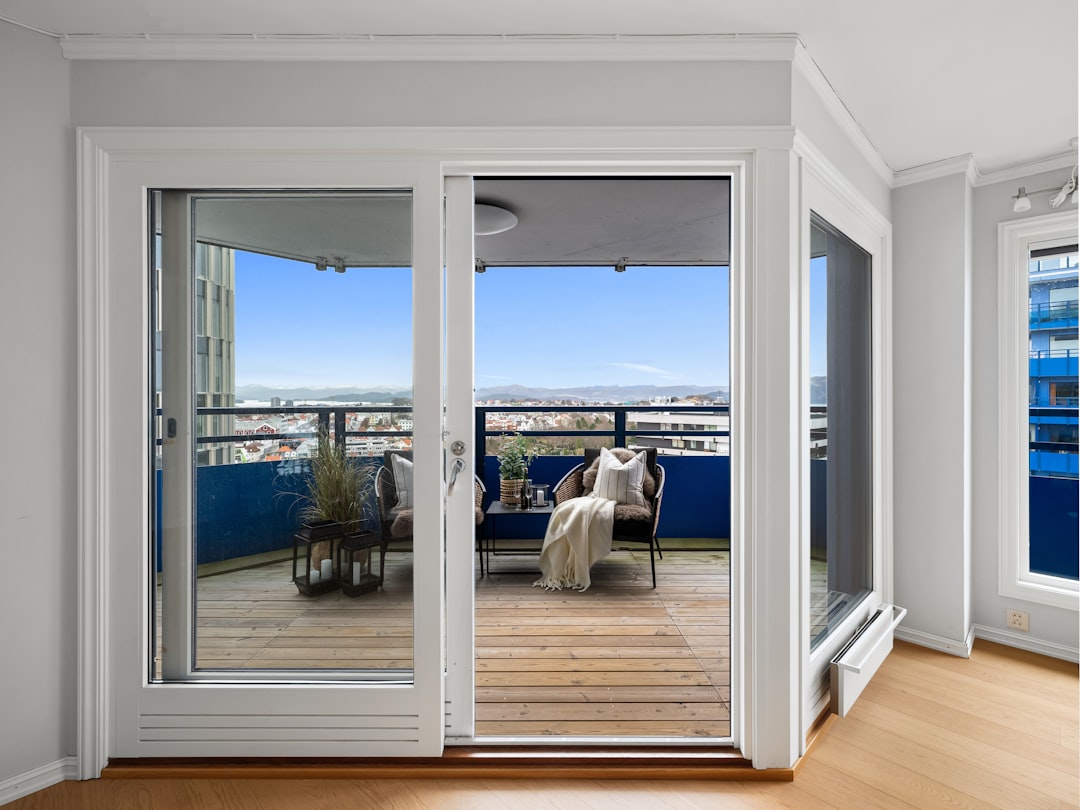
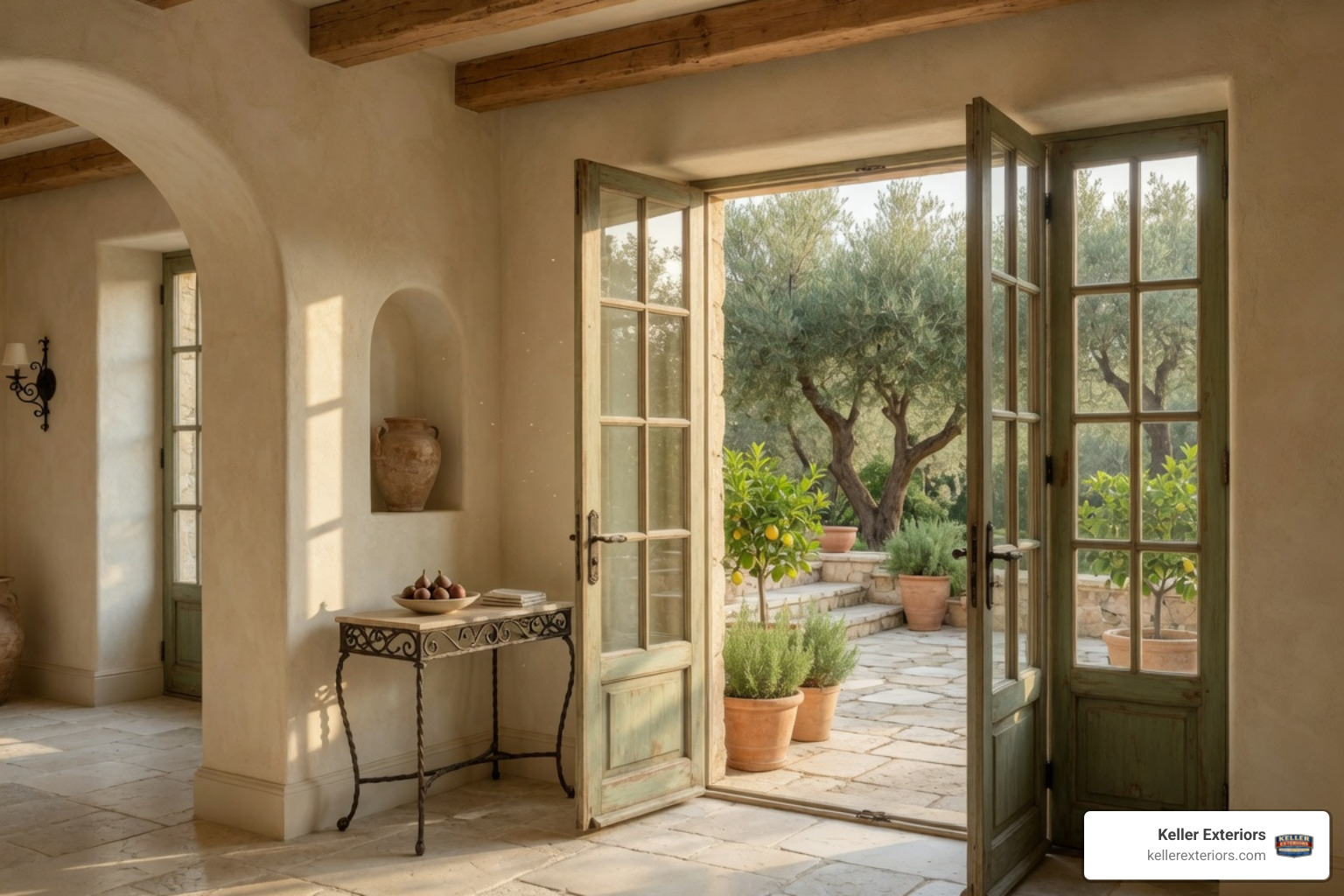
What French Doors Are and Why Homeowners Love Them
French doors are one of the most popular door styles in American homes, and it’s easy to see why. They combine function and beauty in a way that few other door types can match.
Quick Answer: What Are French Doors?
| Feature | Details |
|---|---|
| Definition | A pair of full-length glass-paned doors hinged on opposite sides of a frame |
| Most common use | Connecting interior rooms or opening to a patio or garden |
| Key benefit | Maximizes natural light and creates a wide, open passageway |
| Main styles | Interior double, exterior patio, single, with or without sidelights |
| Common materials | Wood, fiberglass, steel, uPVC |
| Typical glass options | Clear, frosted, Low-E, tempered, multi-lite patterns |
French doors rank among the top three most popular interior door styles in U.S. homes. They bring in natural light, add architectural character, and make spaces feel larger and more connected. Whether you’re replacing a sliding patio door or opening up a wall between two rooms, French doors are a practical upgrade that also lifts the look of your home.
They work in almost any setting, from a classic craftsman bungalow to a modern new build. And with so many material, glass, and hardware options available today, it’s easier than ever to find a style that fits your home’s design.
If your home has drafty, aging, or storm-damaged doors, the right French door replacement can also make a real difference in your energy bills and daily comfort.
I’m Robert Keller, owner of Keller Exteriors, and I’ve spent more than 25 years helping homeowners across the Tulsa area choose and install French doors that hold up to Oklahoma weather while looking great year after year. In this guide, I’ll walk you through everything you need to know before you buy or replace.
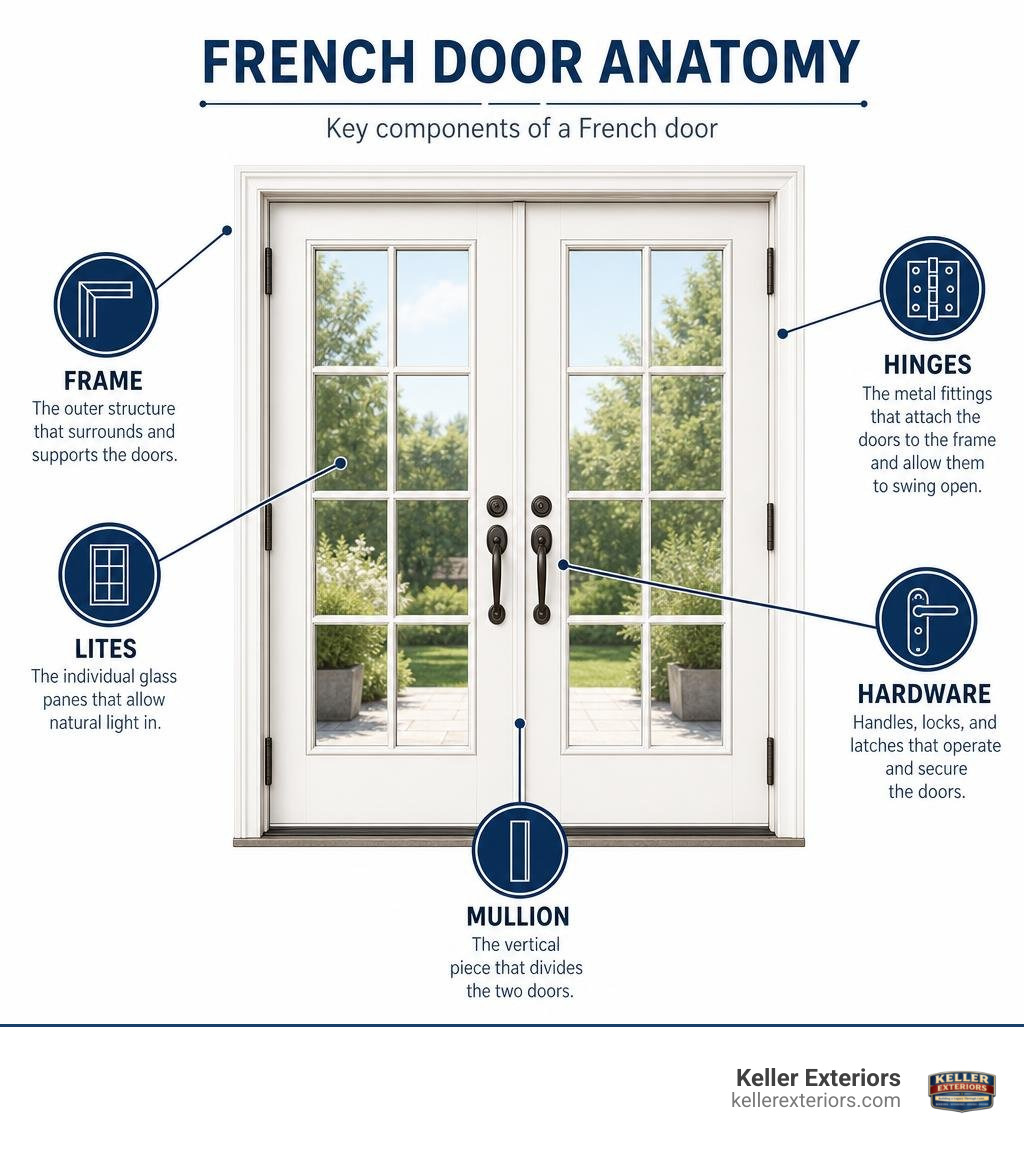
What Are French Doors and How Do They Differ From Patio Sliders?
When you want to connect your indoor living space to a patio, deck, or backyard, you usually choose between French doors and sliding glass doors. While both options bring in plenty of sunlight, they function quite differently.
The main difference lies in how they open. Sliding doors slide horizontally on a track, meaning one pane of glass always remains stationary. You can only ever open up half of the total doorway width at any given time.
In contrast, French doors operate on hinges and swing open either inward or outward. When you open both doors of a double French unit, you remove the central barrier entirely. This design leaves a wide, clear opening that makes it easy to move large furniture, host indoor-outdoor gatherings, and enjoy maximum ventilation.
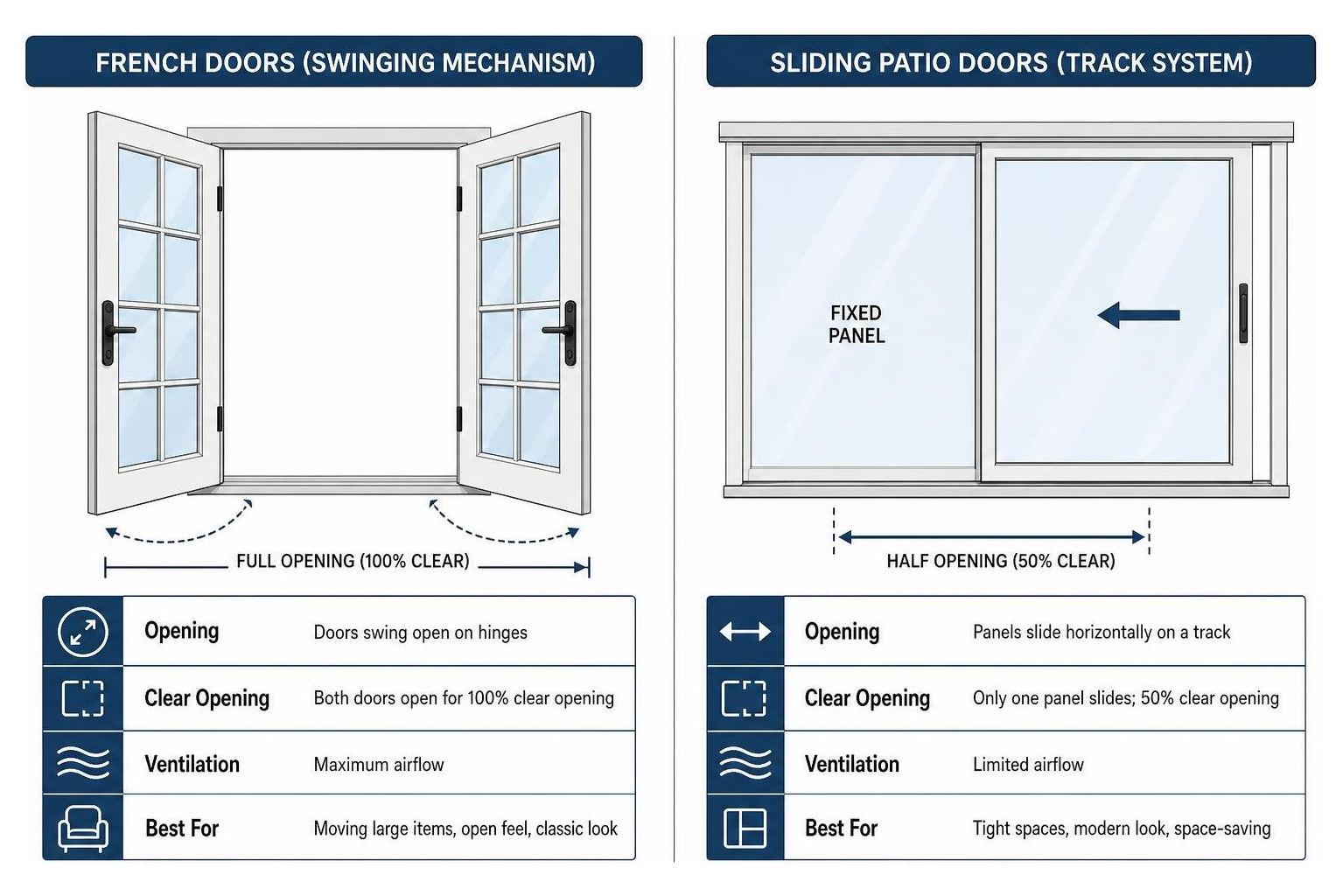
Sliding doors offer a sleek, modern look and do not require any floor space to swing open, making them ideal for tight layouts. However, French doors deliver unmatched architectural elegance. The classic design, characterized by multiple glass panes and traditional hardware, adds a sense of luxury that sliding doors rarely match.
Interior vs. Exterior French Door Styles
You can use French doors on both the inside and outside of your home, but the design requirements for each application are very different.
Interior French Doors
Inside the home, these doors serve as elegant room dividers. They are perfect for separating a home office, dining room, or library from the main living areas. Because they feature glass panes, they allow light to share across rooms while keeping noise under control.
Interior doors do not need heavy weatherstripping or thick insulation. They are often made of lighter wood species or primed composite materials. You can find them in single-door configurations for narrow closets or double-door setups for wide entryways.
For a classic look, homeowners often choose a primed wood French door with a traditional 10-lite glass pattern, which uses ten distinct panes to create a timeless grid. If you want more privacy for a home office or bedroom, you can opt for frosted, textured, or seeded glass instead of clear panes.
Exterior French Doors
Exterior doors must protect your home from the elements. They are built much tougher than interior models, featuring heavy insulation, thick weatherstripping, and robust locking systems.
Exterior styles often include double doors that open onto a backyard patio, pool deck, or garden. Many modern exterior designs also feature sidelights, which are narrow, stationary glass panels installed on one or both sides of the door frame to let even more sunlight into your entryway.
Current design trends for 2026 favor minimalist profiles, such as thin black steel or dark fiberglass frames, which maximize the glass area for an unobstructed view of the outdoors.
Choosing the Right Materials for Your Home
The material you choose for your French doors will determine how much maintenance they require, how long they last, and how well they insulate your home. Here is how the most common materials stack up:
| Material | Durability | Maintenance | Energy Efficiency | Best Suited For |
|---|---|---|---|---|
| Wood | High (if maintained) | High (requires painting/staining) | Excellent | Historic homes, interior spaces |
| Fiberglass | Very High | Very Low | Excellent | High-traffic exterior patios |
| Steel | High | Low | Good | High-security entryways |
| uPVC | High | Very Low | Very Good | Budget-friendly, wet climates |
Wood Doors
Wood is the traditional choice. It offers unmatched natural beauty and a solid, premium feel. You can stain wood to show off its natural grain or paint it to match your home’s color scheme. However, exterior wood doors require regular painting or staining to prevent rotting, warping, and peeling, especially during humid Oklahoma summers.
Fiberglass Doors
Fiberglass is arguably the best all-around material for exterior French doors. It mimics the look of real wood grain but will not warp, rot, or rust. Fiberglass doors contain a thick foam core that provides outstanding insulation, making them incredibly energy-efficient. They require almost no maintenance beyond an occasional wipe-down.
Steel Doors
Steel doors offer maximum security and excellent durability. They will not crack or warp, and they feature an insulated inner core to keep out the cold and heat. While steel is highly durable, it can dent if struck hard, and scratches must be painted quickly to prevent rust.
uPVC Doors
Unplasticized polyvinyl chloride, or uPVC, is a popular, low-maintenance option. High-quality uPVC doors use steel-reinforced profiles to ensure structural strength. They resist moisture, never need painting, and provide great thermal performance. If you already have energy-efficient vinyl windows installed, pairing them with uPVC patio doors creates a cohesive, low-maintenance exterior for your home.
Key Considerations When Selecting French Doors
Choosing the perfect pair of doors involves more than just picking a style and material. You must also consider sizing, hardware, and safety features.
Sizing and Prehung vs. Slab French Doors
Before ordering, you need to understand the difference between slab doors and prehung units.
- Slab Doors: This is just the door itself, without a frame, hinges, or hardware. Installing a slab door requires you to cut mortises for the hinges and prep the door to fit your existing frame. This is a highly precise job that is best left to experienced carpenters.
- Prehung Units: These doors come already mounted inside a complete frame, with hinges installed and holes pre-bored for the locks. Prehung units are much easier to install and ensure a tight, weather-resistant seal for exterior walls.
When measuring, always calculate your rough opening, which is the unfinished opening in the wall frame. You should add at least two inches to both the width and height of the door unit to find the required rough opening size.
For interior projects, a high-quality option, like engineered wood French door resists warping, making it a reliable choice for long-term performance.
Security and Hardware for French Doors
Because exterior French doors meet in the middle rather than closing against a solid wall stud, they require specialized security hardware.
We always recommend installing a multipoint locking system on exterior units. Unlike a standard deadbolt that only grips the door at one central point, a multipoint system locks the door at three separate locations: the top, the middle, and the bottom of the frame. This secures the active and passive doors together, making them incredibly difficult to force open.
For hardware finishes, satin nickel, matte black, and oil-rubbed bronze remain top choices for hinges and handles. Additionally, make sure your doors feature tempered safety glass. Tempered glass is physically stronger than standard glass and crumbles into small, dull pieces if broken, preventing dangerous injuries.
Step-by-Step Installation and Maintenance Guide
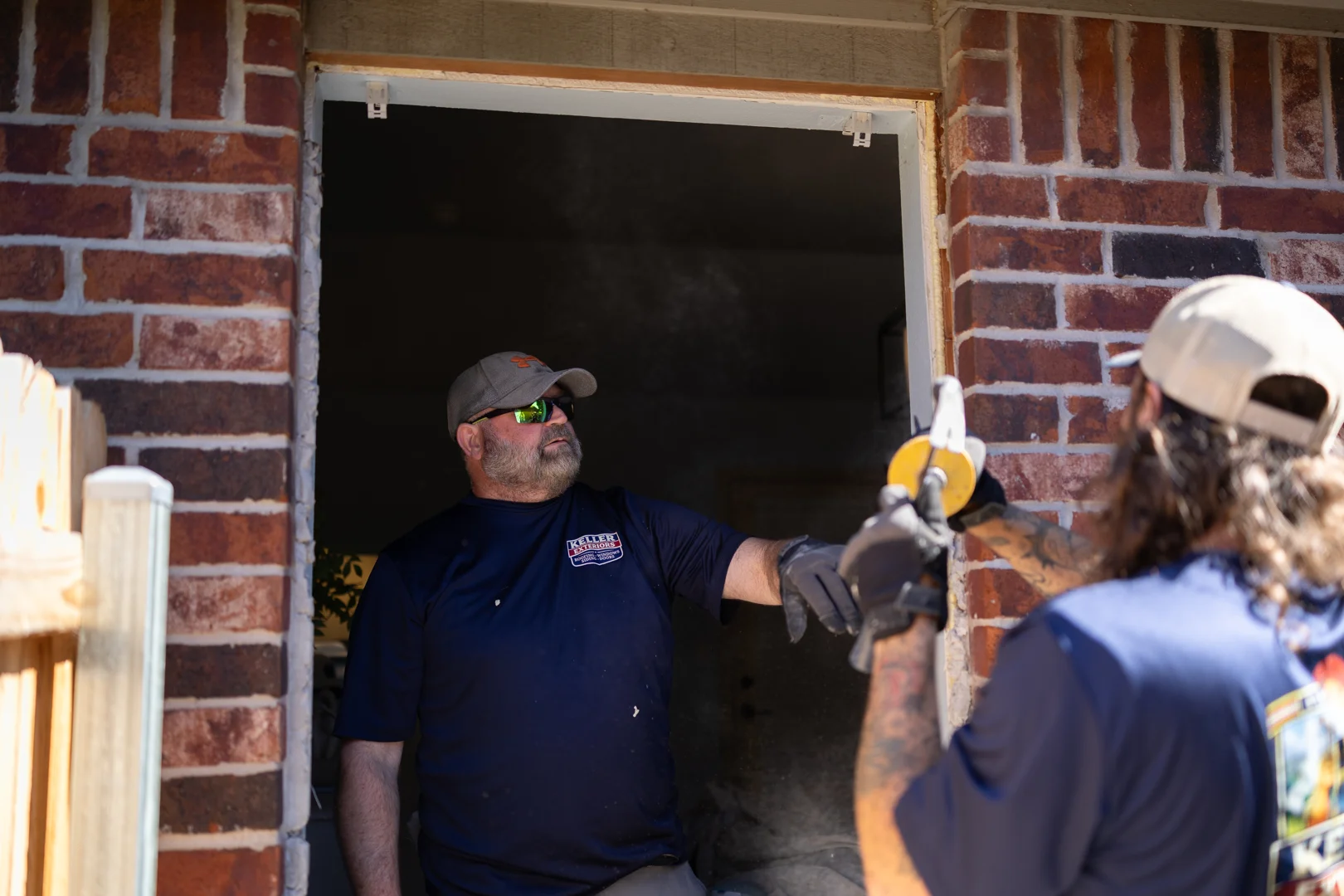
Installing French doors requires careful attention to detail. If the frame is even slightly out of alignment, the doors will not latch correctly, and air drafts will find their way inside.
The Installation Process
- Prep the Opening: Remove the old door and frame. Inspect the subfloor and wall studs for water damage or rot. Repair any damaged framing before proceeding.
- Apply Flashing Tape: Protect the sill and rough opening corners with self-adhesive flashing tape to keep water from seeping into your walls.
- Dry Fit the Unit: Place the prehung door frame into the opening to check the fit. Mark any areas on the floor or studs that need adjustment.
- Set and Shim: Apply a thick bead of silicone sealant along the sill. Place the door unit into the opening. Use wooden shims behind the hinge points to ensure the frame is perfectly level, plumb, and square.
- Secure the Frame: Drive long casing screws through the hinges and frame into the wall studs. Check the swing of the doors frequently during this step to make sure they do not bind.
- Seal and Insulate: Fill the gaps between the door frame and the wall studs with low-expansion foam insulation. Apply exterior-grade silicone caulk around the outside trim.
Overhang Requirements for Wood Doors
If you choose natural wood for your exterior doors, you must have an adequate roof overhang to protect them from sun and rain. A standard rule of thumb is that the depth of your overhang should be at least half the height of the door unit. Without this protection, water can quickly ruin the wood finish and void your manufacturer warranty.
Maintaining Your Doors in Oklahoma
The weather in places like Tulsa, OK, Broken Arrow, OK, and Owasso, OK can be tough on exterior doors. We experience freezing winters, humid summers, and severe spring storms.
To keep your doors performing their best, check the weatherstripping every autumn. If you notice drafts or visible wear, replace the weatherstripping immediately. Clean the glass and frames regularly, and lubricate the hinges and locking mechanisms once a year with a silicone-based spray to keep them operating smoothly.
If you ever notice major sagging, wood rot, or broken seals in your double-pane glass, it is best to seek professional help. Homeowners in the area can rely on trusted local services, such as professional door repair in Bixby, OK, to restore their doors to working order.
Frequently Asked Questions About French Doors
What is the difference between a French door and a double door?
A double door refers to any pair of doors that hang side-by-side in a single frame. French doors are a specific style of double door where both panels feature glass panes extending for most of their length.
Do French doors open inward or outward?
They can do either. Inswing doors are more common because they protect the hinges from the weather and do not require outdoor clearance. Outswing doors are great for saving indoor floor space, but they require heavy-duty, tamper-proof hinges for security.
How secure are modern exterior French doors?
Modern designs are highly secure. By using multipoint locking systems, heavy-duty frames, and tempered safety glass, they offer excellent resistance against forced entry.
Can I install French doors in a standard rough opening?
Yes, as long as the rough opening matches the door’s dimensions. If you are replacing a standard sliding door, a double French door unit will often fit into the exact same structural opening with minimal framing adjustments.
What is the average lifespan of fiberglass French doors?
High-quality fiberglass doors can easily last 30 years or more. They do not rot, rust, or warp, making them one of the most durable options on the market.
How do I improve the energy efficiency of my glass doors?
Look for doors with double-glazed or triple-glazed glass, argon gas fills, and Low-E coatings. Ensuring your weatherstripping is tight and properly sealed is also crucial for preventing energy loss.
Do interior French doors require a bottom track?
No. Unlike sliding doors, interior French doors swing on hinges and do not require a bottom floor track, leaving your flooring completely clear and seamless.
What is the purpose of an overhang for exterior wood doors?
An overhang shields natural wood from direct sunlight and heavy rain. This prevents the wood from warping, cracking, or rotting and is often required to keep the manufacturer’s warranty valid.
How do I choose between prehung and slab doors?
If you are building a new wall or replacing an entire old door frame, choose a prehung unit. If your existing frame is perfectly square and in excellent condition, you can opt for a slab door, though it requires precise carpentry to hang.
Who provides professional door installation in Tulsa, OK?
When you want the job done right, hiring a local contractor with deep experience in the local climate is key. Working with a skilled local team ensures your doors are sealed properly against drafts and storms.
Upgrade Your Home with Keller Exteriors

Installing a new set of French doors is a fantastic way to beautify your home, improve energy efficiency, and bring in more natural light. However, proper installation is critical to ensure your doors lock securely and keep out the elements.
At Keller Exteriors, we have spent over 20 years serving homeowners in Tulsa, OK, Broken Arrow, OK, Owasso, OK, Jenks, OK, Bixby, OK, and throughout the surrounding communities. We pride ourselves on being your single, trusted local team for all of your exterior home improvement needs.
Whether you are looking to replace an old sliding patio door, update your siding, or handle a full exterior remodel, we are here to help. We also specialize in high-quality siding installation services and reliable residential roofing solutions to keep your entire home protected and looking its best.
If you are ready to transform your home with beautiful, energy-efficient doors, contact our team today. The experts at Keller Exteriors are ready to help you choose the perfect style and provide top-tier installation. Schedule a consultation with us to get started on your professional door replacement services.