Understanding the Flat Seam Metal Roof and How It Works
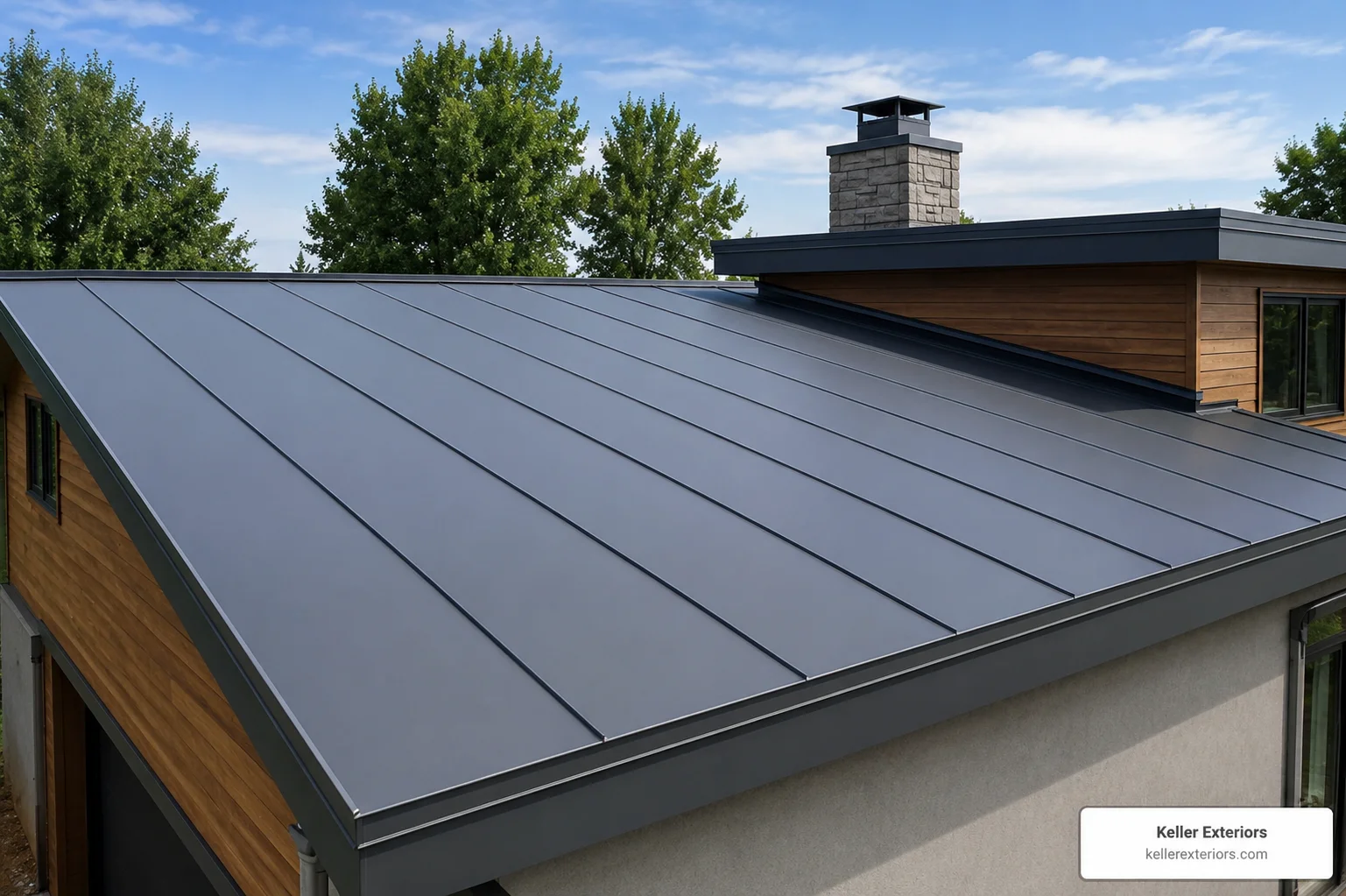
A flat seam metal roof is a roofing system made of interlocking metal panels with flat, soldered or clipped seams that lie flush against the surface, creating a smooth, low-profile finish with no visible fasteners.
Quick Answer: What Is a Flat Seam Metal Roof?
- Flat panels interlock at all four edges using hemmed seams
- Seams are folded flat and soldered (on low slopes) or clipped
- Common materials include copper, zinc, stainless steel, and aluminum
- Best suited for low-slope roofs, domes, turrets, barrel vaults, and wall cladding
- Panels are held in place with concealed metal cleats, not exposed screws
- Standard copper panel blank size is 18″ x 24″ with 3/4″ interlocking locks
Metal roofing has earned a strong reputation for durability, weather resistance, and long-term value. But within the metal roofing category, systems vary widely. Standing seam panels have raised vertical legs. Corrugated panels use a wave pattern with exposed fasteners. Flat seam metal roofing is different from both. It sits nearly flush with the surface, uses concealed fasteners, and produces a clean, uniform look that works on everything from historic building restorations to modern commercial facades and complex curved surfaces like domes.
It is a system that rewards careful installation. Slopes, seam preparation, material choice, and thermal movement all matter. Get those right, and a flat seam roof can last 60 years or more with minimal upkeep. Get them wrong, and you will face leaks, buckling, or premature failure.
This guide walks through everything you need to know before buying or specifying a flat seam metal roof: how it works, which materials perform best, how it installs, what it costs over time, and how it compares to other systems.
I’m Robert Keller, owner of Keller Exteriors, and with more than 25 years in the home improvement industry, I have seen how the right flat seam metal roof performs over decades when it is installed correctly on the right structure. That hands-on experience shapes everything in this guide.
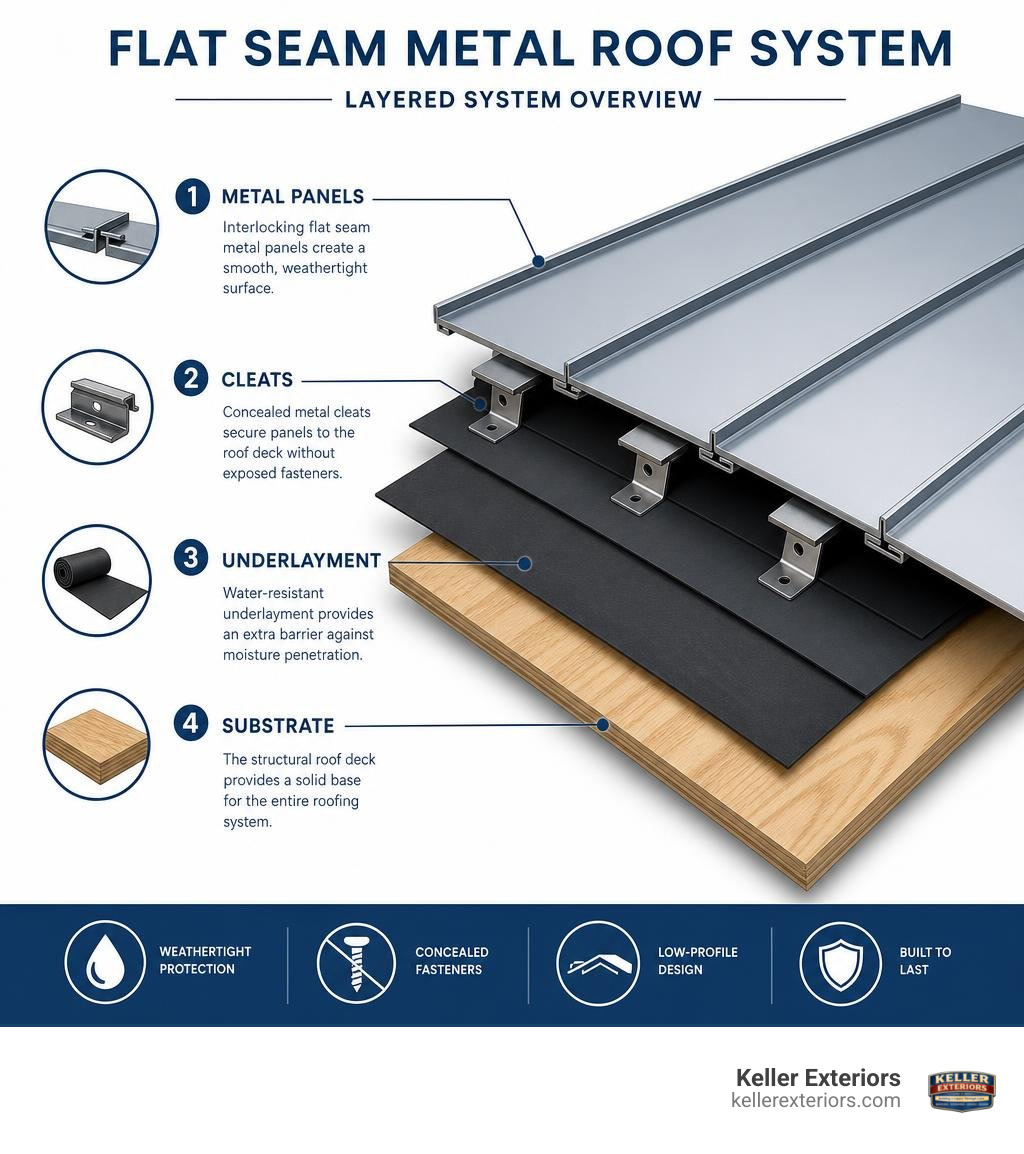

A flat seam metal roof relies on a series of rectangular or diamond-shaped metal pans. We form these pans with folded edges on all four sides. During installation, these edges hook into adjacent panels. This interlocking action creates a continuous, water-shedding surface. Because the seams fold completely flat against the roof deck, the system maintains a low profile.
Unlike standard roofing systems, you will not see any screws or nails on the surface. We secure the panels to the roof deck using concealed metal clips, also known as cleats. We hook these cleats directly into the interlocking seams before laying the next panel. This design completely hides the fasteners from the elements, eliminating a primary source of roof leaks.
Standing Seam vs Flat Seam
Standing seam roofing features prominent vertical ribs. These ribs project upward, typically between 1 and 3 inches. They create strong shadow lines and are excellent for shedding water on steep slopes. However, those vertical legs make standing seam systems less practical for flat or extremely low-slope surfaces where water can pool.
A flat seam metal roof features a flat profile. The seams sit nearly flush with the roof deck, typically rising less than an inch. This flush design makes flat seam systems highly adaptable. They easily conform to complex architectural shapes, curved surfaces, and low-slope areas where standing seam ribs would disrupt water flow or look awkward.
Corrugated Panels vs Flat Seam
Corrugated metal panels use a simple wave or rib pattern. They rely on exposed fasteners, meaning screws pierce directly through the face of the metal panel to secure it to the building. Over time, the rubber washers on these screws degrade, which can lead to leaks.
In contrast, a flat seam metal roof uses entirely concealed fasteners. The interlocking design protects the attachment points from rain, wind, and sun. Furthermore, corrugated panels require a steep slope to shed water safely. Flat seam panels can handle very low slopes, even down to flat surfaces, provided we solder the seams to create a completely watertight seal.
Common Materials and Technical Specifications
Selecting the right metal is the most critical decision in planning a flat seam project. Different metals behave differently when bent, soldered, or exposed to the elements.
Material Options for a Flat Seam Metal Roof
- Copper: The traditional choice for flat seam roofing. Copper is highly malleable, making it easy to form around complex curves. It is also exceptionally easy to solder, which is vital for low-slope installations. Over time, copper develops a protective green patina. We typically use 16-ounce or 20-ounce cold-rolled copper sheets.
- Zinc: Known for its self-healing properties, zinc develops a natural protective gray patina over time. It offers incredible longevity. We generally install zinc at a thickness of 0.8mm. Zinc requires specialized handling because it can become brittle in cold temperatures.
- Stainless Steel: This material provides maximum strength and corrosion resistance. We typically use 22-gauge stainless steel. It maintains a clean, modern look and does not react with other building materials.
- Aluminum: Lightweight and highly resistant to rust, aluminum is a popular choice for modern designs. We usually specify aluminum at a thickness of 0.04 inches. However, aluminum is very difficult to solder, which limits its use on low-sloped roofs.
- Painted Steel: We offer steel panels coated with high-performance PVDF finishes like Kynar 500. These finishes provide excellent color retention and weather resistance. Like aluminum, prepainted steel cannot be soldered without destroying the paint finish, so we limit its use to steep slopes or wall cladding.
Standard Dimensions of a Flat Seam Metal Roof
Standard flat seam panels start as flat sheets of metal, known as blanks. For copper, the industry standard blank size is 18 inches by 24 inches. We fold a 3/4-inch lock on all four edges. This folding process reduces the finished, visible size of the panel to 16.5 inches by 22.5 inches.
For aluminum and steel, we often start with larger blanks, such as 24 inches by 30 inches. These blanks yield a finished panel size of 22.5 inches by 28.5 inches. To ensure a watertight seal on low slopes, we pretin the edges of copper panels to a width of 1-1/2 inches before folding. This step ensures the solder flows smoothly and bonds perfectly during installation.
Typical Applications and Architectural Uses
A flat seam metal roof is incredibly versatile. Because the small, interlocking panels can conform to tight radiuses, we frequently install them on curved architectural features. You will often see flat seam systems on domes, turrets, barrel vaults, and cupolas. The small panels fit together like scales, allowing us to cover complex, three-dimensional shapes smoothly.
We also use flat seam panels on low-slope roofs where standard metal panels would fail. If a roof section has a slope of 3:12 or less, water drains slowly. By interlocking flat seam panels and soldering the joints, we create a continuous, metal membrane that prevents water from backing up under the seams.
This system is also ideal for wall cladding, internal roof valleys, and hog valleys. For homeowners in the Tulsa, OK area, flat seam panels offer a beautiful, custom option for modern home additions, bay window hoods, and transition areas between different roof levels.
Step-by-Step Installation and Engineering Requirements
Installing a flat seam roof requires a high level of craftsmanship. It is not a project for a general handyman. If you want a roof that lasts for generations, you must invest in professional roof installation services from an experienced team.
The process begins with a solid, clean substrate. We require a minimum of 15/32-inch plywood or 7/16-inch OSB decking. We cover this deck with a high-quality underlayment, typically a layer of 30-pound asphalt-saturated felt. For diamond flat seam panels, we also install a layer of building paper over the felt. This slip sheet prevents the metal panels from sticking to the asphalt felt when the Oklahoma sun heats the roof.
The Role of Cleats and Fasteners
We secure the panels to the roof using concealed cleats. We hook these cleats directly into the 3/4-inch locks of the panels. We then nail the flat tail of the cleat to the wood deck.
For copper roofs, we use 16-ounce or 20-ounce cold-rolled copper cleats. We space these cleats no more than 12 inches apart along both the horizontal and vertical seams. This close spacing ensures the roof can withstand severe wind uplift forces, keeping the panels locked securely to the structure during spring storms in Broken Arrow, OK.
Soldering Requirements for Low-Slope Applications
For roof slopes of 3:12 or less, we must solder the seams to ensure a watertight seal. Before we fold the panel edges, we clean the metal, apply flux, and pretin the outer 1-1/2 inches of the sheet. Pretinning coats the metal with a thin layer of solder, which makes the final soldering process much more reliable.
Once we lock the panels together, we use heavy, furnace-heated soldering coppers weighing at least 5 pounds per pair, or torch-heated coppers with heads weighing at least 3 pounds. We run the hot copper along the seam to melt the solder, drawing it deep into the lock. This creates a solid, fused metal joint that water cannot penetrate.
Managing Thermal Expansion with Battens
Metal expands when it gets hot and contracts when it cools. If we do not manage this movement, the metal will buckle, crack, or tear at the soldered joints. On roofs where the continuous run of panels exceeds 30 feet, we must install expansion joints.
We use tapered wood expansion battens to divide the roof into smaller sections. These battens are typically 3 inches wide at the top, 2-1/4 inches wide at the bottom, and at least 1-1/2 inches high. We space them no more than 30 feet apart. We lock the metal panels into the sides of these battens, allowing the roof to expand and contract safely without putting stress on the soldered seams.
Pros, Cons, and Performance Metrics
Before deciding on a flat seam metal roof, it helps to review how the system performs under pressure.
Advantages of Flat Seam Systems
- Incredible Durability: A properly installed copper or stainless steel flat seam roof can easily last 60 years or more.
- Superior Wind Resistance: Because the panels are small and locked tightly on all four sides with heavy cleats, they can withstand wind speeds over 140 miles per hour.
- Class A Fire Rating: When installed over a proper fire-resistant underlayment, metal panels provide the highest level of fire protection.
- Low Maintenance: Metal roofs require very little upkeep. Homeowners typically spend less than $100 annually on basic maintenance, compared to $150 to $300 per year for asphalt shingles.
- High Resale Value: A premium metal roof can boost a home’s resale value by up to 6%.
Potential Drawbacks and Limitations
- Higher Upfront Investment: The materials and the intense hand labor required for soldering make this system more expensive initially than asphalt shingles.
- Complex Installation: Finding installers with the specialized sheet metal skills required to solder these roofs correctly can be difficult.
- Oil Canning: This refers to a slight, visible waviness in the flat areas of the metal panels. It is a natural characteristic of light-gauge metals and does not affect the roof’s structural integrity, but some homeowners dislike the look.
- Material Limitations: You cannot use prepainted metals on low slopes because the heat from soldering will burn off the paint finish.
Cost Analysis and Long-Term ROI
While a flat seam metal roof requires a larger initial investment, it offers remarkable long-term savings. Over a 60-year lifespan, a metal roof actually costs 68% less than a flat built-up or single-ply roof because you do not have to replace it every 15 to 20 years. At the 20-year mark, the total cost of a metal roof is 22% less than a flat roof, and by year 40, it is 60% less.
If you have an existing metal roof that is starting to show its age, you might not need a full replacement. Metal roof restoration costs significantly less than a total tear-off and replacement. In fact, restoration can recover over 61% of its cost within just two years through energy savings and extended roof life. To see how you can save on your next project, explore our exclusive roofing specials.
Restoring or installing a reflective metal roof can also lower your annual cooling bills by up to 25%, saving around $500 annually in hot climates. Over 50 years, those energy savings can add up to $25,000. Additionally, many insurance companies offer premium discounts of up to 35% for homes with durable, impact-resistant metal roofing.
| Roof Type | Average Annual Upkeep | Expected Lifespan | 60-Year Relative Cost |
|---|---|---|---|
| Flat Seam Metal Roof | Under $100 | 60+ Years | Baseline (68% Less) |
| Standard Flat Roof (TPO/Built-up) | $150 – $300 | 15 – 20 Years | 3x Higher |
| Asphalt Shingles | $150 – $300 | 15 – 25 Years | 2.5x Higher |
Frequently Asked Questions About Flat Seam Metal Roofing
What is a flat seam metal roof?
A flat seam roof is a system made of flat, rectangular or diamond-shaped metal panels. The edges of these panels fold over to create interlocking seams that lie flat against the roof deck. We secure the panels using hidden metal clips, creating a smooth, fastener-free surface.
How does a flat seam metal roof differ from standing seam?
Standing seam roofs have raised vertical ribs that project outward from the roof surface. Flat seam roofs have flat, interlocking joints that sit flush with the roof deck. This low profile makes flat seam systems ideal for curved surfaces and low-slope roofs where raised ribs would block water flow.
Can a flat seam metal roof be installed on a flat roof?
Yes. Because we solder the interlocking seams on low-sloped surfaces, we can install flat seam roofing on flat or very low-slope areas. The soldered joints fuse the metal panels together, creating a continuous, watertight barrier.
Do flat seam metal roofs require soldering?
We always solder the seams on roof slopes of 3:12 or less to prevent water from backing up under the locks. On steeper slopes or vertical walls, we can use synthetic sealants or simple mechanical locks instead of solder.
What is the lifespan of a flat seam metal roof?
A flat seam roof made of high-quality materials like copper, zinc, or stainless steel can easily last 60 years or more. Regular inspections and simple upkeep will ensure the system protects your home for generations.
What materials are best for flat seam metal roofing?
Copper is the traditional favorite because it is highly malleable and easy to solder. Zinc and stainless steel also offer incredible durability and a modern look. Aluminum and painted steel work well on steep slopes but are difficult to solder for low-slope applications.
How does a flat seam metal roof handle thermal expansion?
We install tapered wood expansion battens every 30 feet on long roof runs. These battens allow the metal panels to expand and contract safely as temperatures change, preventing the soldered joints from cracking or buckling.
What is oil canning and does it affect flat seam roofs?
Oil canning is a visible waviness that can appear in the flat areas of metal panels. It is caused by thermal movement, subassembly movement, or minor variations in the metal thickness. It is purely cosmetic and does not affect the performance of the roof.
Are flat seam metal roofs energy efficient?
Yes. Metal roofs reflect solar heat instead of absorbing it. Installing a reflective metal roof can lower your cooling costs by up to 25%, saving you money during the hot summer months in Oklahoma.
How much maintenance does a flat seam metal roof require?
Metal roofs require very little maintenance, typically costing less than $100 per year. Homeowners simply need to clear away fallen leaves, check the gutters, and schedule a professional inspection after major hailstorms.
Choosing the Right Metal Roofing System for Your Home
A flat seam metal roof is an excellent investment for homeowners who want a durable, beautiful, and low-maintenance roofing system. Whether you are restoring a historic home in Midtown, OK, building a modern home in Stone Canyon, OK, or updating a commercial property in downtown Tulsa, OK, this system delivers unmatched reliability.
At Keller Exteriors, we bring more than 20 years of experience to every project. Our team handles all aspects of exterior home improvement. If you are updating your home’s exterior, we can also help you explore high-quality siding options or install durable steel doors to complete your home’s new look. We serve homeowners throughout the region, including Broken Arrow, OK, Owasso, OK, Jenks, OK, Bixby, OK, and Sand Springs, OK.
Whether you need a new flat seam installation, a professional inspection, or a complete exterior renovation, the team at Keller Exteriors is ready to help. Schedule your professional roof installation services today to protect your home for decades to come.