
How to Choose Wood Siding for a House
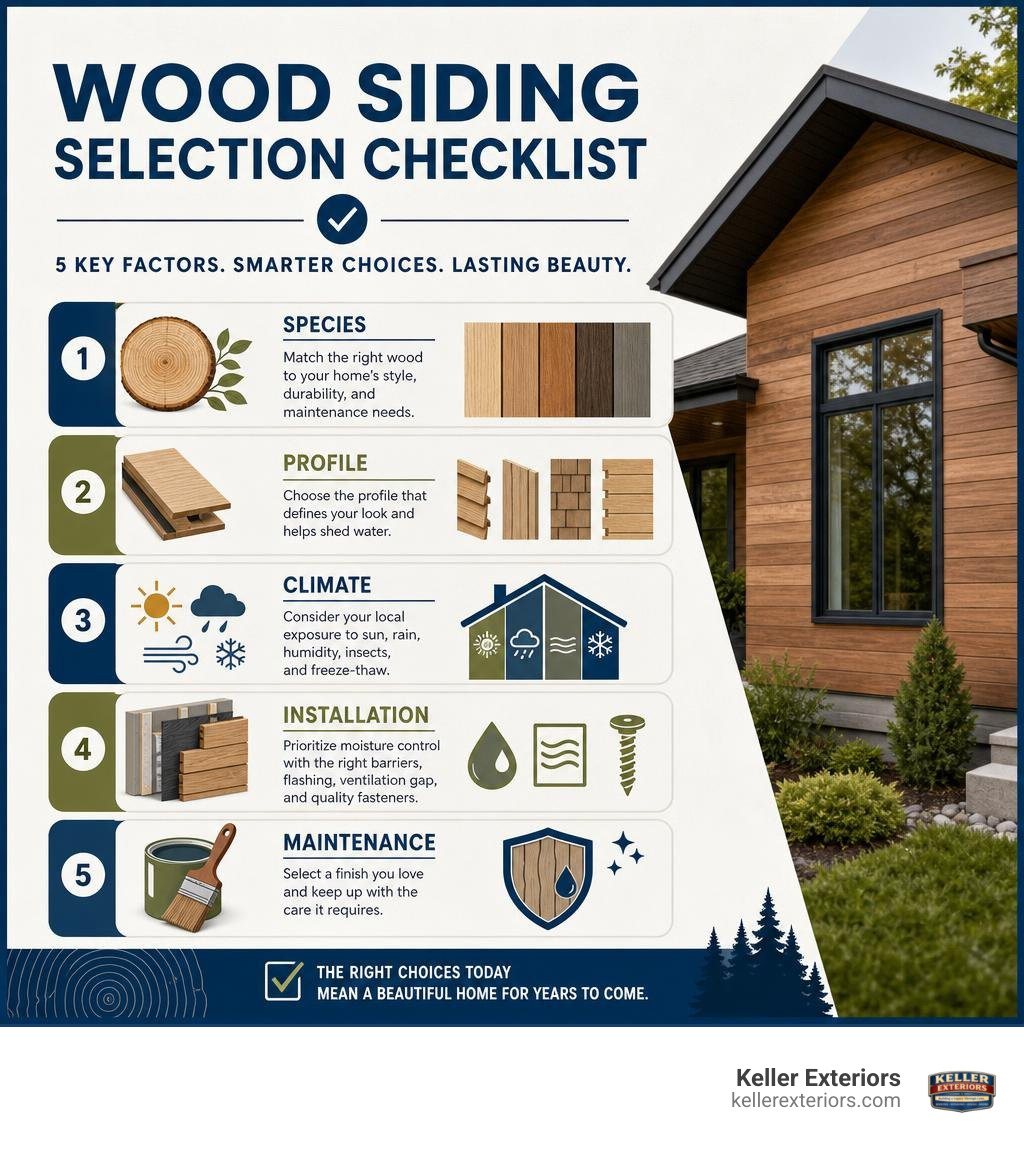
Choosing wood siding for a house gives your home’s exterior authentic natural grain, warmth, and character that synthetic cladding cannot fully duplicate. Evaluating lumber species, profile designs, moisture management, and ongoing maintenance early ensures a successful long-term investment.
| What to Compare | Why It Matters |
|---|---|
| Wood species | Cedar, redwood, pine, cypress, and thermally modified timber differ in rot resistance, density, and maintenance needs. |
| Siding profile | Bevel lap, board and batten, shingles, shiplap, and tongue and groove change aesthetic shadow lines and water shedding. |
| Climate exposure | Sun exposure, humidity, rain, insects, and freeze-thaw cycles impact overall material durability. |
| Installation details | Weather-resistive barriers, flashings, rainscreen gaps, and stainless fasteners protect wall assemblies. |
| Finish and upkeep | Stains, paints, and clear sealers dictate UV protection and refinishing frequency. |
Natural wood performs reliably for decades when properly installed and maintained. Selection depends on lumber quality, climate dynamics, wall ventilation, and finish commitments.
At Keller Exteriors, our team brings over 20 years of hands-on industry experience guiding homeowners through siding evaluations. This checklist highlights essential performance factors for lasting curb appeal.
Key Factors When Choosing Wood Siding for a House
Selecting natural timber requires evaluating dimensional stability, volumetric shrinkage rates, and natural decay resistance. Homeowners across Tulsa, OK and Broken Arrow, OK must consider how lumber cuts react to changing weather patterns. Species vary in density, grain configuration, and coating receptivity.
Understanding lumber grading standards simplifies material choices. Softwoods are divided into clear and knotty grades. Clear Vertical Grain (CVG) represents the premium tier, cut perpendicular to growth rings to create straight grain lines that minimize expansion and holding finishes longer.
Select Knotty and Common grades showcase visible knots and flat-grain patterns. Flat-grained boards expose wide latewood bands that expand more during humidity changes. While knotty grades offer rustic charm for modern farmhouses, they require strict moisture monitoring.
Comparing softwoods to hardwoods impacts project labor demands. Softwoods like cedar offer lightweight workability for efficient installation. Dense hardwoods provide extreme durability but require specialized tools and pre-drilling. Balancing material quality against maintenance helps homeowners in Owasso, OK and Jenks, OK construct resilient wall assemblies.
Assessing Wood Species for Your Wood Siding for a House Project
Selecting the proper timber species dictates how well your exterior resists decay, sun exposure, and physical impact:
- Western Red Cedar: Natural extractives called thujaplicins defend against rot and insects. Cedar features low density, strong dimensional stability, and rich warmth.
- Redwood Heartwood: Harvested from mature tree cores, redwood heartwood offers superior decay resistance and deep reddish hues, ideal for homes in Midtown, OK and Brookside, OK.
- Thermally Modified Timber: Vacuum kilns heat softwoods to alter cellular structure, cooking out sugars to achieve non-chemical insect and fungal resistance.
- Tropical Hardwoods: Species such as Ipe, Cumaru, and Garapa feature extreme density and Class-A fire resistance, requiring penetrating oil finishes rather than standard paint.
- White Pine and Ponderosa Pine: Pine provides an economical softwood option but lacks natural protective oils, requiring thorough back-priming and sealing.
- Bald Cypress: Rich in cypressene oils, cypress heartwood offers strong decay resistance and attractive grain patterns for humid environments in Coweta, OK and Glenpool, OK.
Material Profiles and Architectural Styles
Siding profiles dictate water runoff efficiency and establish architectural character. Homeowners can review our siding styles and materials to visualize shadow lines and wall depth.
Bevel lap siding features horizontal overlapping boards that shed bulk water effectively. Board and batten uses wide vertical boards capped with narrow strips to highlight height and drain rain efficiently in Bixby, OK and Claremore, OK. Shiplap offers rabbeted joint fits with clean shadow lines, while tongue and groove interlocking edges hide fasteners and block wind-driven rain. Cedar shingles and shakes provide rustic textured patterns, while T1-11 plywood panels offer economical vertical coverage for secondary structures.
Wood Siding Performance, Climate, and Rainscreens
Installing wood siding for a house requires accounting for environmental stressors like freeze-thaw cycles, solar exposure, and humidity. In regions like Sand Springs, OK and Bartlesville, OK, wood cladding must handle frequent temperature swings and ambient moisture shifts.

Wood continuously absorbs and releases ambient moisture. When moisture content exceeds the fiber saturation point (roughly 28% to 30%), cell walls expand, shrinking again as the material dries. Continuous wet-dry cycles create internal stresses leading to cupping, surface checking, and loosened fasteners.
Biological threats like fungal rot (brown, white, and soft rot) and wood-boring insects also target timber. Selecting heartwood rich in natural extractives or thermally modified wood deprives organisms of food and moisture. Keller Exteriors can help homeowners compare real wood siding choices for long-term exterior durability.
Moisture Control and Decay Prevention
Decay prevention relies on keeping lumber moisture content below 20%. Fungal spores require oxygen, mild temperatures, organic food, and elevated moisture to germinate. Controlling wood moisture provides the ultimate defense against rot.
Using kiln-dried lumber with a certified 12% to 15% moisture content locks in initial stability. When materials arrive in Collinsville, OK or Catoosa, OK, boards should be stored flat on elevated dunnage under protective, ventilated wrapping. Allowing boards to acclimate on-site for 7 to 14 days and sealing all fresh end-cuts minimizes moisture absorption.
Building Science: Rainscreen Systems and Ventilation
Modern building science recommends ventilated rainscreen assemblies behind real timber cladding. A rainscreen creates an air cavity between the weather-resistive barrier and the back face of the siding. This natural wood siding technical resource explains how back-ventilation helps protect wall framing.
Installers attach vertical furring strips over housewrap to form a 3/8-inch to 3/4-inch vertical gap. Driven rain drains freely down the water-resistive barrier and exits through bottom vents. Convective airflow equalizes vapor pressure across the boards, preventing paint blistering, reducing warping, and extending finish lifespans significantly.
Real Wood vs. Synthetic and Reclaimed Alternatives
Homeowners comparing exterior cladding options evaluate natural timber against manufactured synthetics and reclaimed barnwood. Real wood delivers environmental benefits through carbon sequestration and complete biodegradability, whereas synthetic products depend on petroleum or energy-intensive production.
Natural timber displays depth, grain variation, and warmth that printed synthetic products cannot duplicate under direct sunlight. Although real wood requires routine maintenance, property owners in Pryor, OK and Stone Canyon, OK can refinish or restain natural boards whenever architectural preferences change.
Real Wood vs. Fiber-Cement and Synthetic Cladding
Synthetic products aim to match natural visual character while reducing upkeep. Key trade-offs include:
- Fiber-Cement Siding: Composed of cement, sand, and cellulose, fiber-cement offers non-combustible Class-A fire resistance and rot immunity. However, panels are heavy, produce silica dust when cut, and require sealing at exposed edges.
- Vinyl Siding: Vinyl provides low initial costs and requires no painting. However, panels expand and contract in temperature extremes, buckle under high heat, and crack upon cold impacts. Homeowners comparing durability and maintenance can also review our vinyl siding guidance before choosing a material.
- Insulated Siding Systems: Rigid foam backing enhances impact resistance and building energy efficiency. Our insulated siding overview explains how backer boards reduce thermal bridging.
- Real Wood Cladding: Authentic lumber delivers warmth, impact resilience, and flexible field-staining choices, supported by scheduled maintenance.
Fresh Timber vs. Reclaimed Wood Siding Planks
Reclaimed wood siding offers historic character and sustainable resource reuse. Sourced from decommissioned agricultural and industrial structures, reclaimed planks feature tight old-growth ring patterns and natural weathering.
Processing plants inspect reclaimed boards for hidden metal, de-nail the lumber, resaw faces, and kiln-sterilize the wood. Kiln heat eradicates active insect larvae and fungal spores while stabilizing dimensions. Experienced installers carefully manage variable board thicknesses and unique rustic widths.
Best Practices for Installing Wood Siding
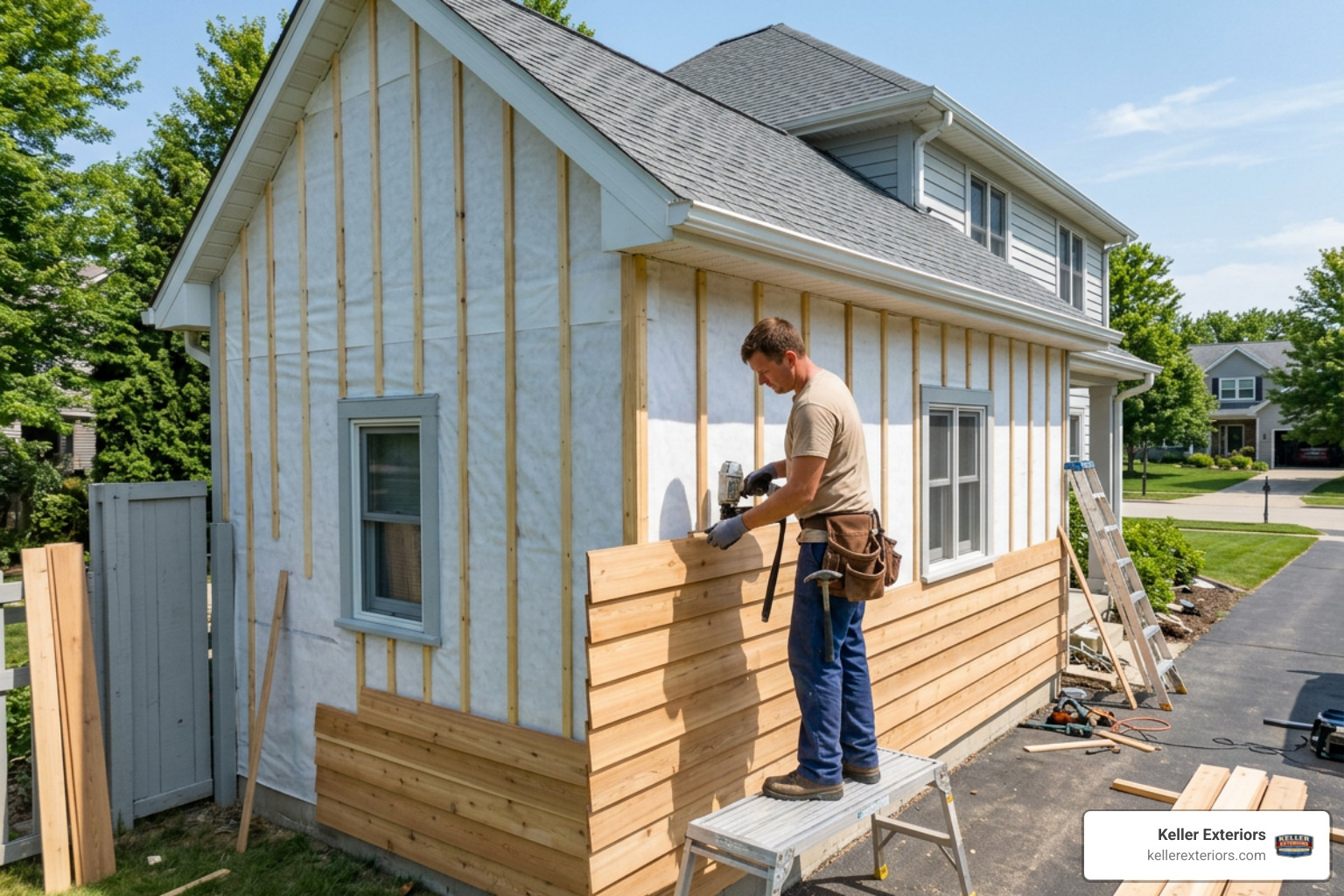
Installing wood siding for a house requires accurate carpentry, substrate prep, and building code compliance. Before hanging boards on projects in Tulsa Hills, OK, installation crews inspect wall sheathing, verify plumb framing, and check ground clearances. Codes require keeping wood siding at least 6 inches above exposed soil and 2 inches above paved surfaces or roof intersections.
Proper installation calls for pneumatic coil nailers set to flush drive depths, carbide saw blades, and complete protective gear. Professional siding installation guides emphasize back-priming and sealing all raw cuts during assembly.
Moisture Barriers, Sheathing, and Rainscreen Prep
Long-term performance starts with a solid substrate. Installers verify 1/2-inch CDX plywood or OSB sheathing attachment, applying a high-performance vapor-permeable weather-resistive barrier across the wall face.
Horizontal housewrap seams overlap by at least 6 inches and vertical seams by 12 inches. Self-adhering flashing membranes seal window and door openings. Metal Z-flashing sits over window heads and horizontal joint transitions to shed bulk water.
Installers execute a full back-priming protocol before fastening boards. Applying stain-blocking primer or sealer to front faces, backs, side edges, and cut ends balances moisture absorption across the entire board cross-section, preventing cupping.
Fasteners, Nailing Patterns, and Joint Details
Fastener selection directly affects exterior appearance. Natural tannins in cedar and redwood react chemically with standard steel or electrogalvanized nails, leaving permanent black streaks down the siding face.
Contractors must specify Grade 304 or Grade 316 stainless steel ring-shank nails. Ring-shank threads grip wood fibers securely, resisting thermal backing out. High-tensile aluminum nails also perform well, though installers must avoid pairing them with galvanized metal flashings to prevent galvanic reaction.
Nail heads should sit flush with the board face without crushing outer wood fibers. Deep countersinking creates small pockets that collect rainwater. On horizontal bevel lap siding, installers drive one nail per stud crossing just above the lower board overlap seam, allowing natural seasonal expansion without board splitting. Vertical board and batten layouts secure main boards in the center and batten strips through the gap, leaving 1/8-inch expansion gaps at butt joints.
Finishes, Maintenance, and Common Problem Prevention
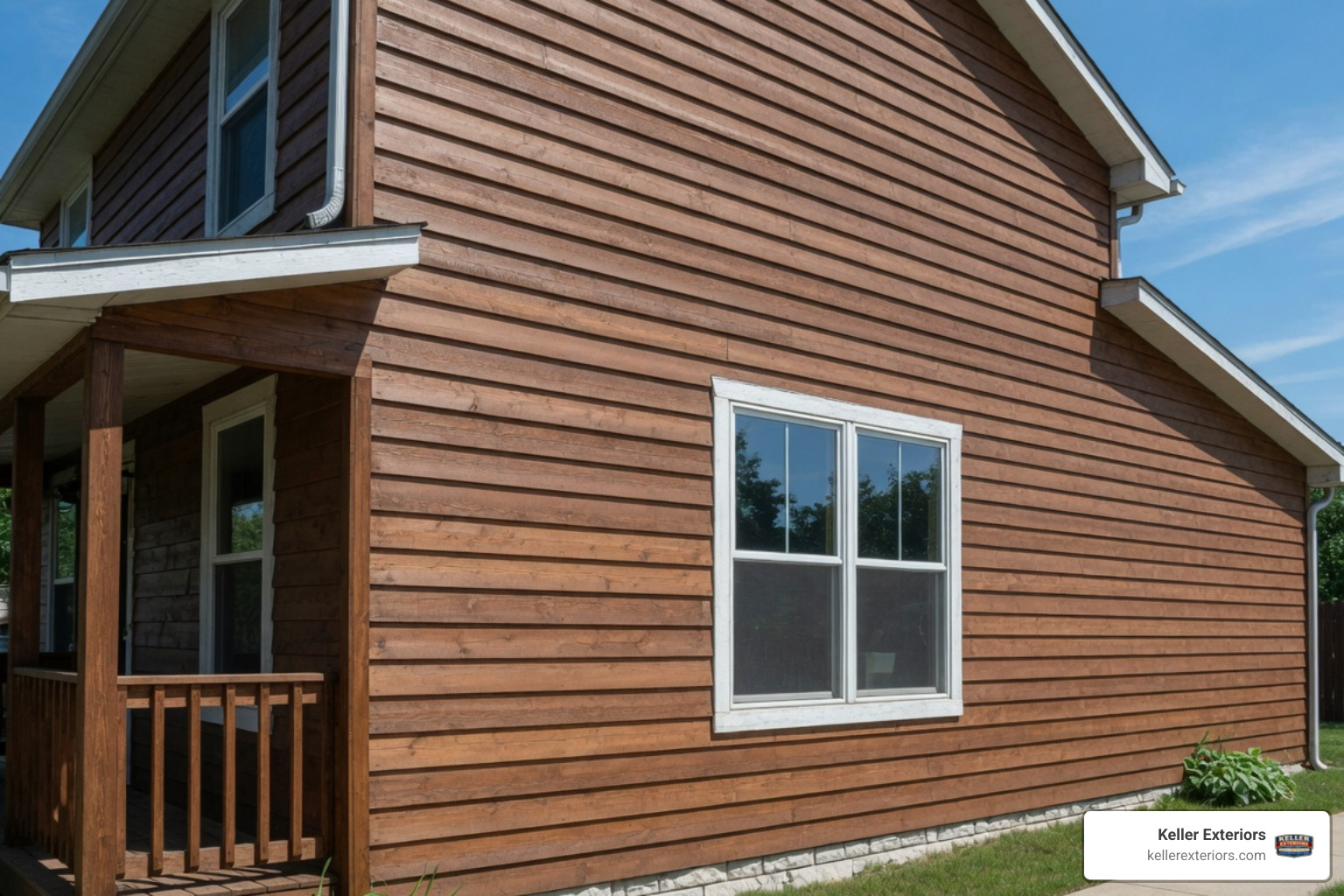
Protective surface finishes guard wood siding against ultraviolet light degradation, liquid water absorption, and fungal spores. Solar UV rays break down lignin, the organic binder holding wood fibers together, causing unprotected timber to turn gray and loosen.
Finishes with higher pigment content deliver superior UV resistance. Clear sealers retain visible grain but require frequent reapplication. Solid color stains and 100% acrylic latex paints block solar radiation effectively to protect underlying wood fibers.
Factory pre-finishing provides substantial benefits over field painting. Controlled factory machines apply primers and stains evenly across all six sides of every board, ensuring uniform film thickness and maximum coating adhesion before installation.
Protective Finishes: Paint, Stain, and Water Repellents
Selecting a protective coating balances aesthetic goals with maintenance schedules:
- Water Repellents and Clear Sealers: Penetrating oil formulations containing paraffin wax or silicone repel water while letting wood age to a silver-gray patina. Reapplication is needed every 1 to 3 years.
- Semi-Transparent Penetrating Stains: Containing light pigments, semi-transparent stains highlight natural grain while offering moderate UV defense without peeling risks. Reapplication occurs every 3 to 5 years.
- Solid Color Stains: High pigment loads create a breathable matte film that hides wood grain while retaining natural texture, lasting 5 to 7 years.
- 100% Acrylic Latex Paint Systems: Applying acrylic topcoats over stain-blocking alkyd primers creates a weather-resistant finish lasting 8 to 15 years over rainscreens. If you want a finish plan that matches your home, Keller Exteriors can walk you through custom wood siding options that improve durability.
Refinishing Schedules and Troubleshooting Siding Issues
Routine preventive care protects your cladding investment. Washing siding annually with gentle water pressure and mild soap removes dust and bio-films. Homeowners in Sand Springs, OK and Forest Ridge, OK should inspect caulking seams and monitor sun-exposed elevations regularly.
Paint blistering and peeling soon after application typically stems from trapped backside moisture. Without ventilated rainscreen cavities, interior vapor or driven rain migrates through boards, lifting the paint film. Scraping loose paint, fixing moisture sources, and priming with stain-blocking formulations resolves the issue.
Tannin bleeding appears as dark brownish spots when water-soluble extractives migrate through topcoats. Cleaning affected areas with an oxalic-acid solution, letting boards dry, and applying alkyd stain-blocking primer fixes the discoloration.
Watch for these four warning signs indicating maintenance is required:
- Fading pigment color, surface chalking, or loss of gloss across sun-exposed elevations.
- Water soaking into board ends and darkening wood after rainfall rather than re-beading.
- Fine surface checking, grain cracking, or micro-flaking along paint edges.
- Mildew accumulation, soft wood fibers, or dark extractive tannin streaks bleeding through topcoats.
Cost Factors and Material Calculations
Budgeting for wood siding for a house involves evaluating total project costs, including raw lumber, wall flashing, rainscreen components, stainless fasteners, skilled labor, and finishing. Homeowners should weigh initial installation expenses against long-term lifecycle performance.
Selecting clear vertical grain lumber or imported tropical hardwoods increases upfront material costs. However, higher material grades reduce long-term maintenance cycles and minimize structural wood repairs over a 30 to 50 year service life. A full review of our siding services can help property owners plan the right scope before starting.
How to Estimate Material Needs and Costs for Wood Siding for a House
Accurately calculating material requirements prevents project delays and reduces material waste:
- Calculate Gross Wall Area: Multiply total building exterior perimeter by finished wall height to establish total surface area.
- Subtract Wall Openings: Deduct combined square footage of all windows and door openings larger than 15 square feet.
- Apply Exposure Multipliers: Account for board overlaps. A 6-inch bevel board installed with a 1-inch overlap leaves a 5-inch exposed face. Dividing total board width (6 inches) by exposed face width (5 inches) yields a 1.20 linear multiplier.
- Include Waste Factor Allowances: Add a 10 percent waste allowance for simple rectangular wall designs, increasing to 15 or 20 percent for complex multi-story designs with dormers and gables.
Key Drivers of Material and Installation Expenses
Several core factors shape overall project investments across Midtown, OK and Glenpool, OK:
- Lumber Species and Grade Selection: Clear vertical grain cedar, redwood, and tropical hardwoods sit at the top of the material cost scale, while knotty pine offers budget-conscious value.
- Installation Labor Complexity: Installing board and batten or tongue and groove profiles requires greater carpentry skill than standard lap siding. Multi-story homes requiring scaffolding also increase labor costs.
- Substrate and Rainscreen Assembly: Adding vertical furring strips, drainage mats, stainless steel ring-shank fasteners, and factory pre-priming increases upfront expenses while extending total assembly lifespan.
- Lifetime Maintenance Investment: Factoring in routine cleaning and repainting every 5 to 10 years ensures accurate financial planning throughout the lifespan of your siding.
Frequently Asked Questions About Wood Siding
How long does unpainted cedar siding typically last?
Western Red Cedar heartwood contains natural extractive oils that help protect it against fungal decay. In dry environments, unpainted cedar can remain structurally intact for 20 to 30 years. However, exposure to rain and UV rays will weather raw cedar to a silver-gray color within 1 to 3 years. Unfinished boards remain vulnerable to surface checking and fiber loss, which is why applying a penetrating sealer helps maximize total service life.
Which wood species are naturally resistant to decay and insects?
Western Red Cedar, Redwood heartwood, Bald Cypress, and dense tropical hardwoods such as Ipe, Cumaru, and Garapa deliver outstanding natural resistance to rot and insects. This natural protection comes from organic extractives concentrated in the dense heartwood of mature trees. Softwood sapwood lacks these natural extractives and must be avoided or treated before outdoor installation.
What is a rainscreen system and why is it recommended for wood siding?
A rainscreen system creates a continuous 3/8-inch to 3/4-inch vertical ventilation gap between the back face of the wood siding and the water-resistive barrier using furring strips. This gap allows driven water to drain quickly while enabling convective airflow to dry out damp boards. Rainscreens reduce hydrostatic pressure behind the boards, stopping board warping, eliminating paint peeling, and extending coating lifespans by up to 50 percent.
How often does real wood siding need to be refinished or painted?
Refinishing schedules depend on coating type, local climate exposure, and surface preparation quality. Clear water repellents need reapplication every 1 to 3 years, while semi-transparent penetrating stains last 3 to 5 years. Solid color stains require fresh coats every 5 to 7 years. High-grade 100% acrylic latex paint systems applied over stain-blocking primers last 8 to 15 years when installed over a rainscreen.
What are the main signs that wood siding needs repair or replacement?
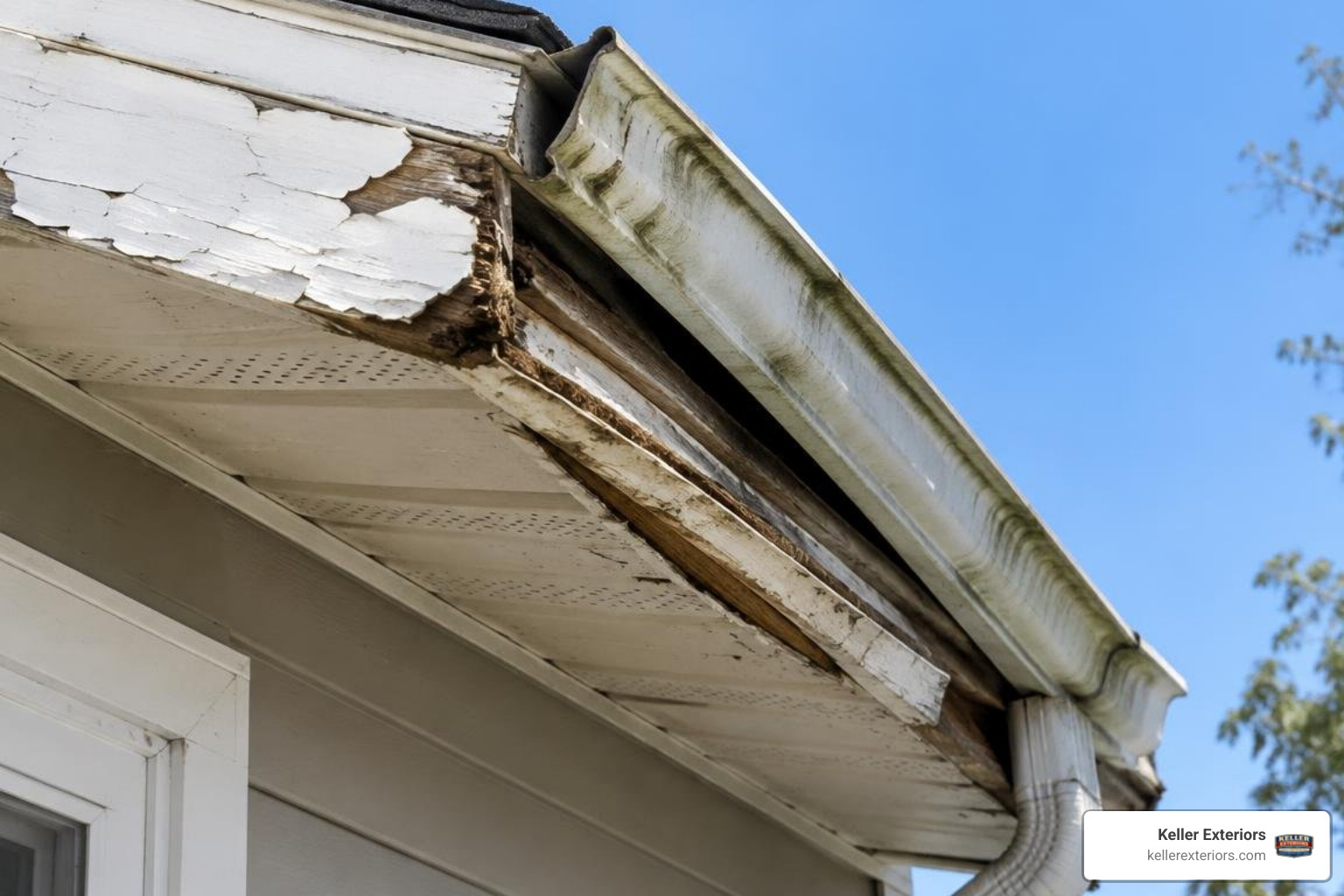
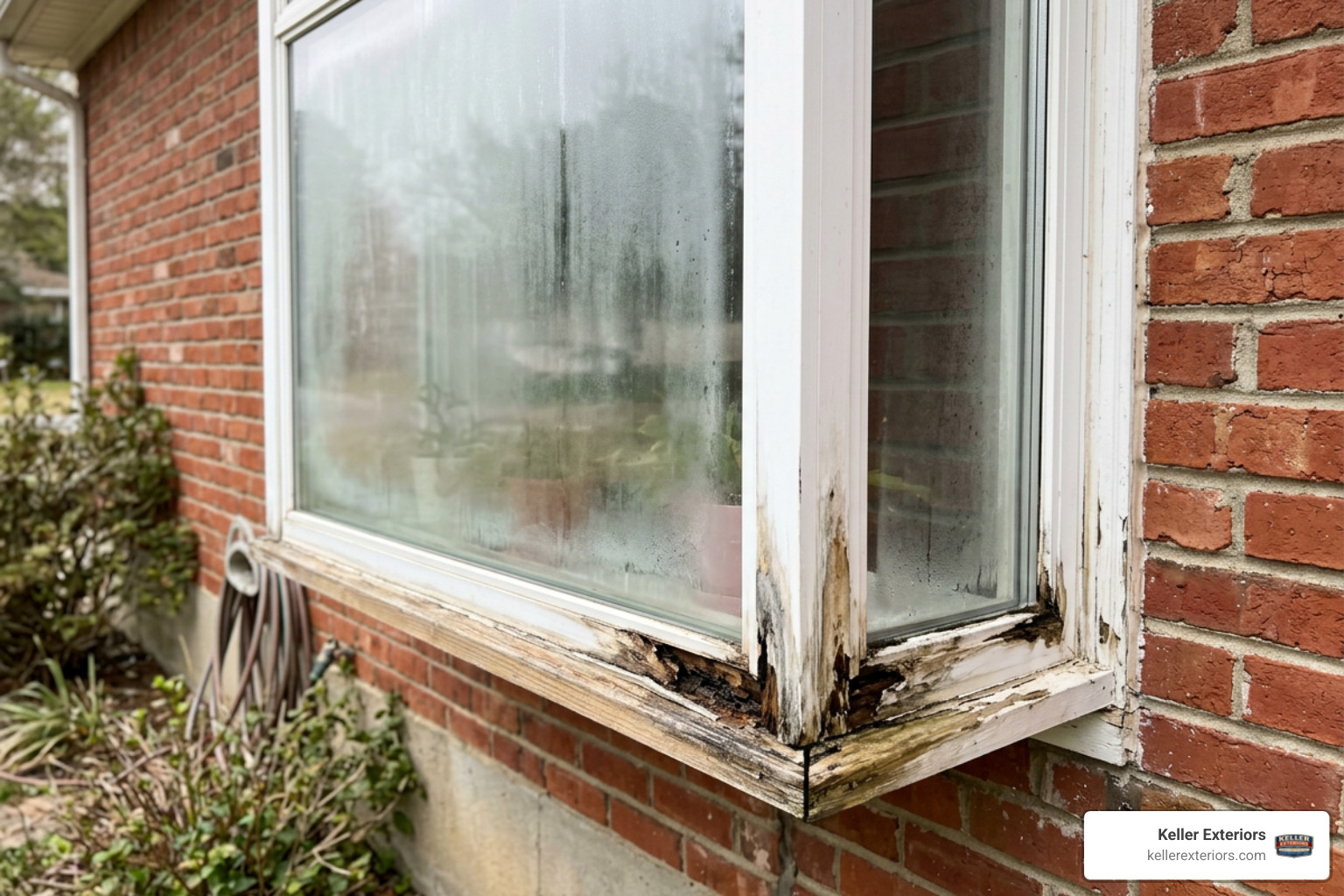
Key warning signs include soft, crumbling wood fibers that indicate active fungal rot, along with recurring paint peeling or flaking. Severe board warping, twisting, or cupping that pulls fasteners away from wall studs also indicates damage. Additionally, water stains on interior sheathing or insect exit holes around wall perimeters signal that your siding requires attention.
Can tropical hardwoods like Ipe or Garapa be painted?
No, tropical hardwoods should not be painted. Species like Ipe, Cumaru, and Garapa feature high cellular density and natural oils that prevent film-forming primers and paints from adhering properly. Paint applied to tropical hardwoods quickly blisters and peels away. Homeowners should let these dense woods weather naturally to a gray patina or preserve their rich color using specialized penetrating oil finishes.
What fasteners should be used to prevent dark metal stains on cedar or redwood?
Always use Grade 304 or Grade 316 stainless steel ring-shank nails when installing cedar, redwood, or cypress siding. Water-soluble tannins in these species react with standard steel or electrogalvanized fasteners, creating dark, indelible streak stains around nail holes. Stainless steel fasteners eliminate tannin reactivity and deliver superior corrosion resistance.
How does fiber-cement siding compare to authentic wood siding?
Fiber-cement siding offers non-combustible Class-A fire resistance, immunity to rot, and lower routine maintenance demands. However, authentic wood siding provides genuine grain depth, superior impact resilience, and field-staining flexibility. Wood siding can also be sanded, repaired, and re-stained in custom colors over time, whereas damaged fiber-cement panels usually require full replacement.
What is the ideal moisture content for wood siding prior to installation?
Wood siding should acclimate to match the Equilibrium Moisture Content of your local installation site before boards are fastened to walls. In most climate zones across Oklahoma, ideal installation moisture content ranges between 10 and 12 percent. Installing damp or excessively dry lumber causes dimensional movement, board splitting, open joint seams, and popped fasteners as the wood adjusts to ambient air conditions.
How do you calculate the square footage needed for a siding project?
Multiply total building exterior wall perimeter by finished wall height, then subtract window and door openings larger than 15 square feet to establish net coverage area. Multiply net area by your profile exposure conversion factor to account for board overlaps. Finally, add a 10 percent waste allowance for basic walls or 15 to 20 percent for complex walls with gables and dormers to determine total order volume.
Final Evaluation Checklist and Expert Wood Siding Services
Selecting and installing wood siding for a house requires balancing natural lumber species, structural board profiles, ventilated rainscreen details, corrosion-resistant fasteners, and protective surface finishes. By choosing kiln-dried heartwood lumber, back-priming every board face, incorporating a 3/8-inch rainscreen gap, and specifying Grade 316 stainless steel ring-shank nails, you protect your building envelope against moisture damage and fungal decay. Real wood cladding delivers outstanding architectural character, high impact strength, and sustainable environmental performance that increases overall property value.
Partnering with an experienced exterior contractor ensures your custom wood siding installation meets exact building science standards. Over the past two decades, our team has built a reputation across Tulsa, OK, Broken Arrow, OK, Owasso, OK, and surrounding communities by delivering expert craftsmanship and exceptional customer care. Whether you are building a custom home in Stone Canyon, OK or renovating a classic residence in Midtown, OK, Keller Exteriors delivers full-service exterior solutions, including roofing, windows, siding, doors, and gutters. Contact our team to plan your wood siding project and start planning your wood siding installation today.